
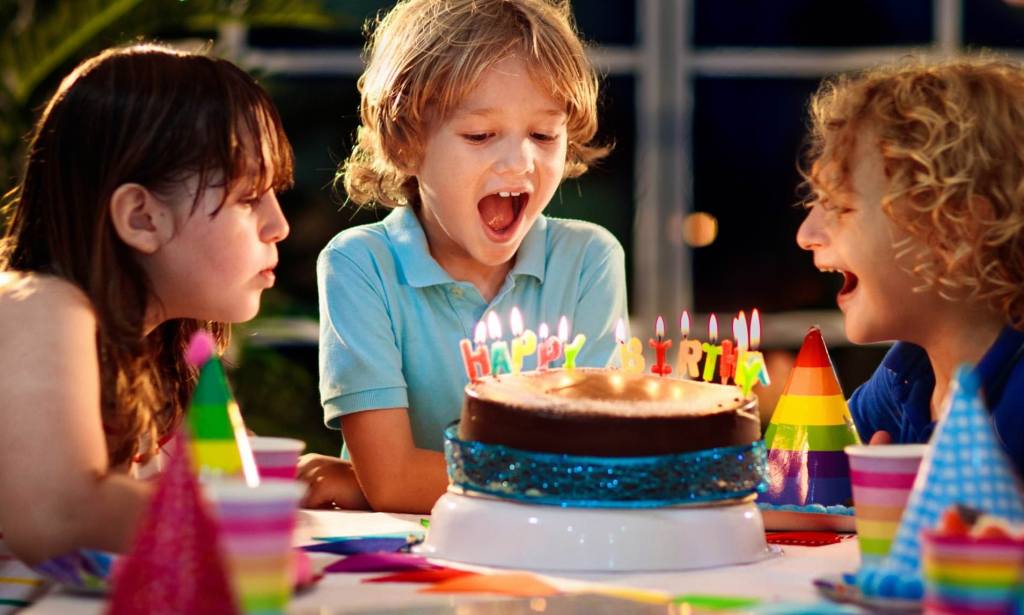
Labour has taken action against young children consuming birthday cake, urging schools and daycare centers to provide ‘fruit arrangements’ as an alternative to encourage better dietary practices.
The Department for Education (DfE) advises that parents should avoid bringing sugary snacks to celebrate their child’s special occasion.
Nutrition guidance from the initial phase suggests students should arrive with fresh fruit – or perhaps avoid any festive food entirely.
It implies that students might distribute non-food gifts, like stickers or bubble bottles.
And the controversial policy has now faced criticism for diverting attention from more significant public health issues the UK is dealing with.
Shadow health minister Stuart Andrew stated that theTelegraph the advice is ‘performative’ and ‘selfish’.
“Accusing the birthday cake is merely a diversion that accomplishes nothing in fixing the system,” he stated.
Households do not require the state to regulate party meals, but rather guidance that prioritizes community health.
The Department for Education (DfE) document regarding the Early Years Foundation Stage (EYFS) states: ‘Many families enjoy commemorating their child’s birthday and other significant occasions by bringing a cake or treats to the setting to share.’
This might indicate that certain children consume these unhealthy foods multiple times each week.
The dietary and nutrition policy might offer suggestions for specific occasions to ensure that any food brought from home is well-rounded and complies with the establishment’s food standards (for instance, advising on fruit arrangements to distribute or non-food alternatives for celebration like bubbles or stickers).
The guidance emphasizes that it is important for parents to be informed about this new method, so they can be ‘aware and actively engaged in promoting healthy eating practices within early years settings’.
It is known that a primary school sent a letter to parents stating that the new guidelines prohibit giving students cake or candy on their birthdays entirely.
School bosses instead recommended parents send their children in with treats like a book, fruit, bubbles or stickers.
And a number of particular organizations have clearly been recognized as complying with the recommendations.
The primary school in Morden, Surrey, known as Hillcross, has prohibited students from distributing cake due to concerns about jeopardizing its designation as a ‘healthy school’.
Employees also voiced worries about not having enough time to distribute the snacks to each class.
It was suggested that parents should provide their children with a book for the class library, a game for the wet play area, or an item from the school’s Amazon wish list.
In a similar manner, Roxbourne Primary School in the Harrow region of northwest London has banned cake in an effort to encourage healthier dietary choices.
Managers mentioned that it also helps prevent problems related to allergies or specific dietary needs.
They proposed that students might alternatively contribute supplies for the class or a book for the school library.
In the meantime, at Tufnell Park Primary School, located in the northern part of the capital, educators have replaced cake with actions such as songs, cards, and hats.
Belmore Primary School in Hayes, west London, described cake as a potential health and safety hazard, allowing students to wear their own attire on their birthdays.
And students at Springfield Primary School in Rowley Regis, West Midlands, are also missing out on cake.
It has been prohibited, according to the staff, due to reasons including diet, faith, health, allergies, and individual preferences.
Former Conservative MP Sir Jacob Rees-Mogg mentioned that his children are sent to school with cake, something he personally enjoys in excess.
He called it a harmless pleasure, and its removal symbolized the presence of an overbearing government.
Parents have also turned to social media and online communities to voice their anger over the policy.
A mother stated: “I would be furious if my children’s nursery had done something like that. How disgraceful can it get?”
We must teach parents and children about nutritious food, but banning cake and desserts is outside your authority.
They inspect children’s lunch boxes and take away what they consider to be unhealthy. We are turning into a protective state.
Another person stated: “Regrettably, some children might not receive a birthday cake because of challenges within their household.”
So, I don’t think there’s any issue with exercising your judgment and honoring the children who will never have their special day. Just a one-time indulgence!
Another person wrote: “Absurd! Let children be children. They can enjoy a little birthday cake.”
It followed accusations that the government was acting like a “nanny state” earlier this year regarding another part of its initiatives promoting healthy eating.
Announcements made in June indicated that food businesses are required to simplify the process for customers to purchase nutritious options.
The authorities will collaborate with supermarkets and food producers in England to promote healthier choices when shopping for the week.
How precisely retailers accomplish this will be their decision – but it may include modifying store designs and encouraging the purchase of healthy food through promotions or reward points.
The proposals might include altering products to enhance their healthiness.
To enhance responsibility, retail outlets will provide updates on the sales of nutritious food, compared to goals set jointly by the industry and the government.
Government officials believe the suggestions will simplify nutritious eating and reduce obesity levels.
They are among various public health programs included in the NHS’s ten-year strategy for England.
However, the shadow secretary for work and pensions, Helen Whately, referred to the intervention as an instance of a nanny state.
She said to Sky News: “Deciding what people should purchase, I think, is not the role of the government. I support individual accountability.”
The Department for Education has been approached for a response.
- Is the SNP’s restriction on birthday cakes in nurseries considered an excessive intervention or a vital measure to prevent unhealthy behaviors?
- Will swapping birthday cakes for ‘unique excursions’ please children as the SNP implements extensive snack restrictions in nurseries?
- What extreme actions are being suggested to address the obesity crisis among children in the UK and safeguard their valuable well-being?
- Is the Labour Party’s campaign against sugar, often referred to as a ‘nanny state’ approach, about to expand to include milkshakes in a courageous effort to address childhood obesity?
- British people criticize the government’s ‘nanny state’ approach as new regulations limit sugary treats! Could this mark the end of your cravings for sweets?



 jasdooit
Leave a comment