
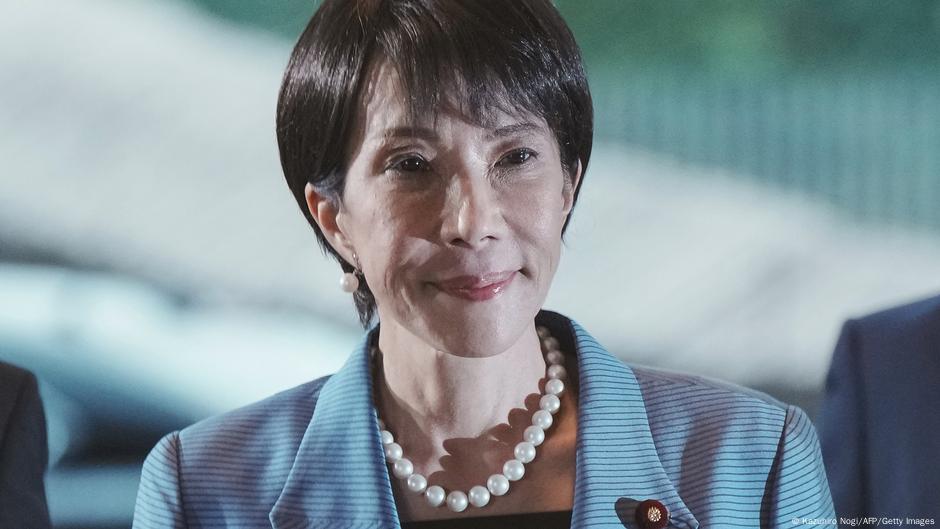
The inaugural female prime minister of Japan has established a coalition and is outlining a policy plan that features economic changes, increased wages, and focus on national security.
Conservative Sanae Takaichi was chosen as representativeJapan’s initial woman prime ministerfollowing a vote in a lower house of parliament on Tuesday.
She quickly began assigning names to the cabinet, which she hopes will lead to the social, economic, and national security changes she will require if her administration is to escape the brief duration of many recent ones.Liberal Democratic Party (LDP) governments.
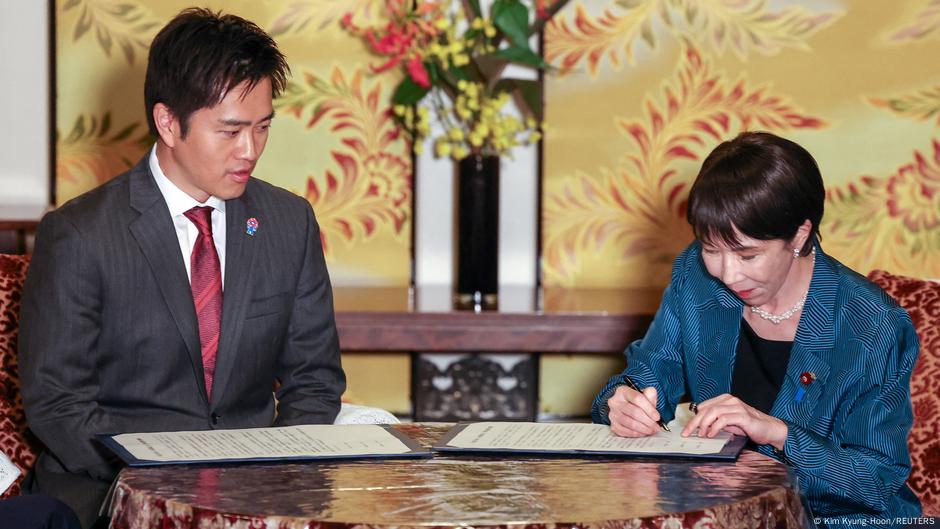
Takaichi secured 237 out of 465 votes cast in Japan’s lower house of Parliament for the position of prime minister, with her conservative Liberal Democratic Party (LDP) backed by its new coalition ally, the right-leaning Japan Innovation Party (JIP).
Based in Osaka, the JIP is currently a small regional party and aims to expand its electoral support throughout Japan.
Although there are significant political disagreements with the LDP, the JIP’s leadership believes that joining the ruling coalition will provide political credibility and broaden its electoral influence.
Considering the magnitude of the issues the incoming administration must address, it is equally likely that an unhappy voting public may criticize both the LDP and the JIP in the upcoming election.
And this implies Takaichi has no time to waste if she aims to remain in her position longer than her immediate predecessor,Shigeru Ishiba, who officially resigned on Tuesday morning following 386 days in power.
Top priority: Mend the LDP division
“The top focus for the new prime minister will be addressing the significant division within the party and restoring public confidence in the LDP,” stated Jeff Kingston, head of Asian Studies at Temple University Japan (TUJ).
Meanwhile, she needs to determine how to get this unusual coalition functioning,” he said. “Currently, the alliance seems to be built on unclear commitments and a plan without a schedule.
The main concern for most regular Japanese individuals will be policies that at least alleviate the “economic hardship” they are experiencing, according to Kingston.
There is a feeling of economic dissatisfaction, and the new administration needs to discover methods to tackle rising costs for essential household items, as many people believe they are struggling financially right now.
A devoted follower of the late former Japanese Prime Minister Shinzo Abe, Takaichi isexpected to bring back several of his initiatives, said Naomi Fink, global chief strategist at Amova Asset Management in Tokyo.
The Tokyo Stock Exchange welcomed the selection of Takaichi, who is recognized for advocating broad fiscal policies and monetary relaxation. The Nikkei stock index closed on Tuesday at a record high exceeding 49,000 points, fueled by expectations of increased stability within Japan’s domestic political landscape.
High costs, stagnant wages
However, worries still exist regarding slow wage increases and a rising proportion of Japan’s workforce in temporary roles, a problem that Takaichi must tackle quickly.
Tadashi Anno, a politics professor at Tokyo’s Sophia University, notes that the voting population expressed its discontent with the LDP inThe election in July for the upper house of parliament— a poor performance for the party, which was already operating as a minority government and a result that eventually concluded Ishiba’s tenure.
“People shared their emotions regarding the economy’s condition, the weak yen, and increasing costs,” he stated, noting that although the LDP and JIP have talked about a strategy to lower the prices of everyday items, it is still uncertain how fast the laws can be enacted and assist individuals in managing their expenses.
An additional challenge approaching soon is the three-day official visit by US President Donald Trump, scheduled to begin in Tokyo on Monday, followed by a trip to South Korea.
Although Japan has provided the president with a $550 billion (€473 billion) investment plan, Tokyo remains worried that he could come with further requests.
Trump is highly unpredictable,” Anno stated. “In terms of security, Japan implemented a significant policy shift in 2022 byallocating 2% of GDP towards military expenditureHowever, there is an impression that the US believes Japan needs to contribute more, and I think it is probable that Japan will face increased pressure on this issue.
The government’s financial condition could complicate matters, he mentioned, but Tokyo will strongly recognize that Trump has previously warned of removing U.S. troops from allied countries, particularly Japan and South Korea, if they do not comply with his requests. Takaichi will be striving hard to prevent being presented with an ultimatum regarding this matter.
According to the law, Takaichi is not required to hold another general election until the autumn of 2028, and she aims to navigate through critical issues with her alliance with the JIP, particularly the budget that must be approved by the end of February.
However, since she leads a government that lacks a majority, a unified opposition could create significant challenges in her political efforts.
Coalition ally seeks flexibility
“The JIP doesn’t include any cabinet members, so it’s evident they are aiming for flexibility in their partnership with the LDP,” stated Anno.
This leaves the coalition’s future uncertain. If the JIP aims to implement certain policies, it will remain with the LDP, but I don’t believe this arrangement will continue in the long run.
Kingston concurs.
“The JIP will not be able to assist the LDP electorally, as its former coalition partner Komeito did, and I believe this will result in the LDP losing 20% of its seats in the upcoming election,” he stated.
“I believe this administration will endure for approximately a year, and that Japanese politics is returning to patterns where prime ministers serve for about a year before being compelled to resign,” he stated.
The sole guarantee moving ahead, he stated, is uncertainty.
Edited by: Keith Walker
Author: Julian Ryall (based in Tokyo)


 jasdooit
Leave a comment