
European legislators will argue in favor ofwildlife traffickingto be acknowledged as organized crime by 2030 during the upcoming United Nations meeting in Uzbekistan, which will address wildlife conservation against excessive exploitation caused by global trade.
Among the animals listed in the agreement approved by legislators on Wednesday are elephants, rhinoceroses, wild birds, and amphibians, with specific concerns raised about China’s opacity concerning its pangolin reserves.
Legislators called for enhanced safeguards for shark and ray populations and suggested a legally enforceable agreement to combat the illegal trade of ivory within the European Union.
“There has been a rise in the demand for protected endangered species, particularly via online transactions. We have observed covert hunting of these listed animals. We require illegal trade to be sustainable,” said lawmaker Esther Herranz-Garcia (Spain/EPP) on Wednesday during a debate in the European Parliament.
The objective is to guarantee that the only trade involving wild animals and plants is lawful and sustainable, according to legislators, aligning with the long-term preservation of species and efforts to stop the decline in biodiversity.
European legislators will urge all nations to enhance their implementation of the UN treaty, highlighting existing measures to prohibit and limitwildlife trafficking are “inadequate”.
“We require more digitalization and improved traceability to maintain control over the trade of these species. Alongside border control and enforcement actions in cases of illegal activities,” added Herranz-Garcia.
European Environment Commissioner Jessika Roswall stated that the EU’s participation in the UN conference regarding the Convention on International Trade in Endangered Species of Wild Fauna and Flora will provide a chance to “enhance the battle against wildlife trafficking” and “strengthen multilateral cooperation.”
“It will be a significant moment for global initiatives aimed at preventing certain trade routes from endangering the existence of threatened wildlife,” stated Roswall.
Conserving wildlife should take precedence over financial gain
Brussels has been working to address wildlife trafficking since 1983, when it started overseeing trade at the European Union level. However, it wasn’t until 2016 that the union introduced its initial strategy to fight the illegal wildlife trade.
The group of 27 members also backs online enforcement networks that facilitate information exchange between customs, police, and environmental agencies.
All member countries are also urged to adopt United Nations rules to guarantee that the trade of threatened species is closely monitored, even though some legislators view these initiatives as inadequate.
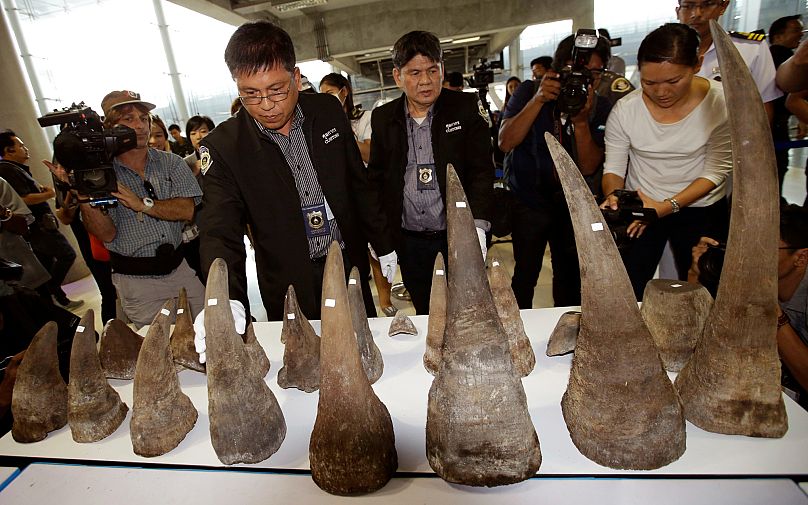
The International Fund for Animal Welfare (IFAW) praised the Parliament’s resolution and urged the European Commission and EU member states to take into account the legislators’ viewpoint when forming the EU’s unified negotiation approach in Samarkand.
The EU continues to serve as a key center and target for animals that have been illegally taken from the Americas, Africa, Eastern Europe, Asia, and Oceania,IFAW’s report reveals, indicating the group’s heightened duty in preventing poaching.
This decision highlights that the European Parliament is urging the EU to genuinely accept responsibility for its part in the international wildlife trade,” said Ilaria Di Silvestre, director of policy and advocacy for Europe at IFAW. “It sends a strong signal that safeguarding species should be prioritized over financial gain.
The Convention on International Trade in Endangered Species of Wild Fauna and Flora, held by the United Nations, will be hosted in Samarkand, Uzbekistan, from November 24 to December 5.



 jasdooit
Leave a comment