
The core of autumn is first felt through smell—the lasting fragrance of the past, going beyond geographical areas.
For example, Gangnam-gu has the largest number of street trees in Seoul. Among these, ginkgo trees are the most common, with 6,946 in total, and 30% of them are female. Female trees produce fruit. Each year, this “bomb” of fruit weighs about 4 tons. A representative from Gangnam-gu mentioned, “Although we quickly clean it up, due to budget and manpower constraints, we have focused on solving the problem at its source. Since two years ago, we have started replacing female ginkgo trees with male ones. This year alone, we removed 115 female ginkgo trees along Seolleung-ro and Iwon-ro and replaced them with male trees.” This is a deodorization effort that prevents fruit formation at the source, thereby eliminating the chance of odor.
◇Are There No Ginkgo Berries in Northern Seoul?
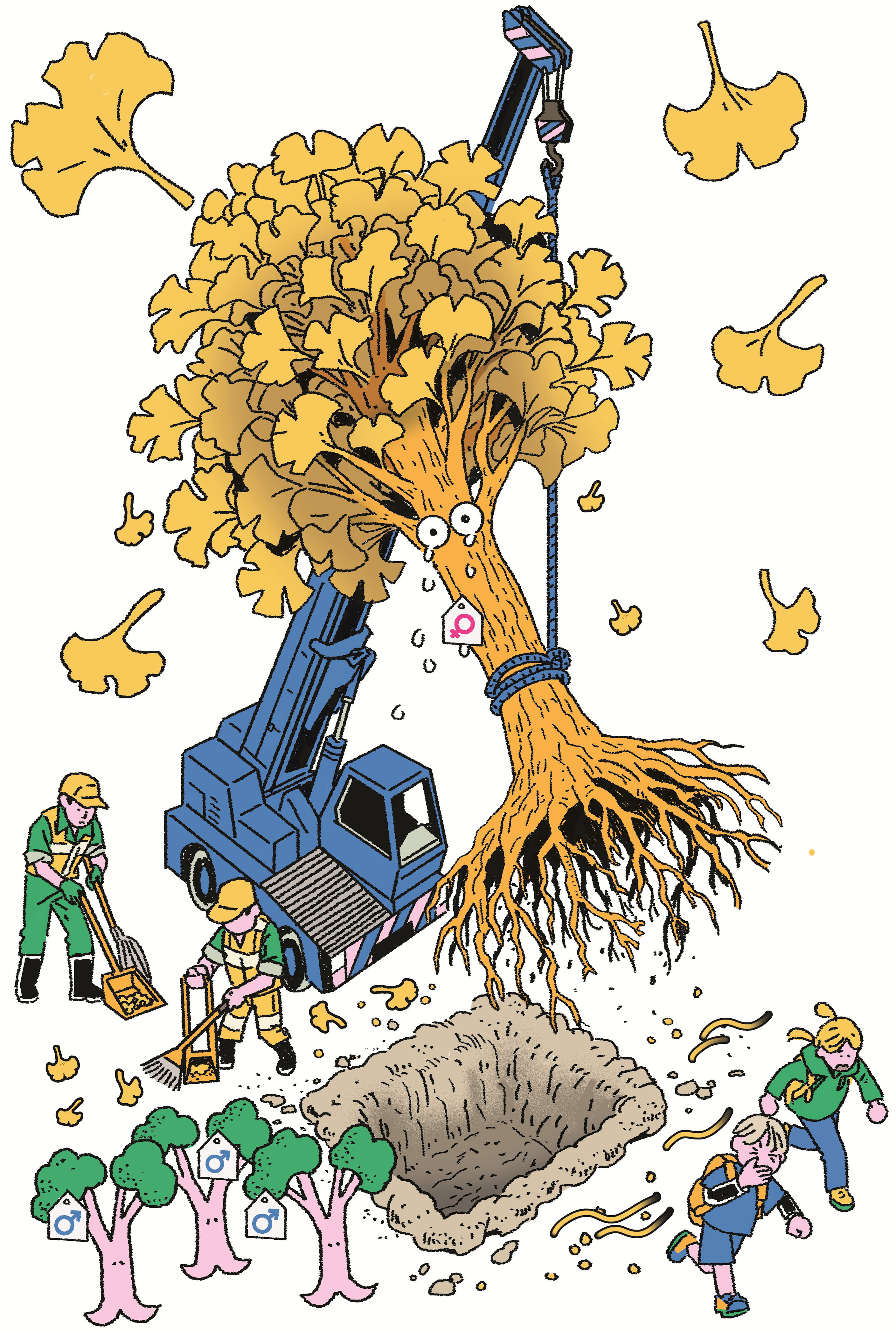
In Gangbuk-gu, none of the street trees are female ginkgo trees. A representative from the district office stated, “We have replaced all 1,053 female ginkgo trees along roads (excluding parks) with male ones. As a result, ginkgo fruits no longer appear on the streets, and complaints about odors have disappeared.” The Seoul Metropolitan Government has been conducting a comprehensive campaign in collaboration with district offices since August to address the issues caused by ginkgo fruits during autumn. Techniques such as “ginkgo harvesting,” which involves collecting fruits before they mature and fall to the ground, are being used. However, the most effective approach remains “eradicating them.” With financial support for this work, the number of female ginkgo trees in Seoul has gradually declined from around 31,000 in 2016 to 25,127 last year.
The unpleasant smell of ginkgo fruits has become a nationwide problem. Last year, Gimhae City in Gyeongnam Province changed its city tree from ginkgo to chaste tree. Although the fruits were often gathered and given to senior centers, many now refuse them because of worries about pesticides and heavy metals, leading to the fruits being discarded. This is why local governments across the country are actively working on “eradicating female trees.” The most prominent example is Daejeon, which planted 926 male trees this year, completely removing female ginkgo trees in Dong-gu and Jung-gu. Over the past three years, a total of 2,500 trees were replaced, resulting in a 70% replacement rate throughout the city. A representative from the city stated, “Since male and female ginkgo trees look the same, we mark trees that produced fruit the previous autumn with paint.” Incheon’s Michuhol-gu also put identification tags on female trees this year.
◇What’s the Reason ‘Misogyny’ Is Mentioned Here?
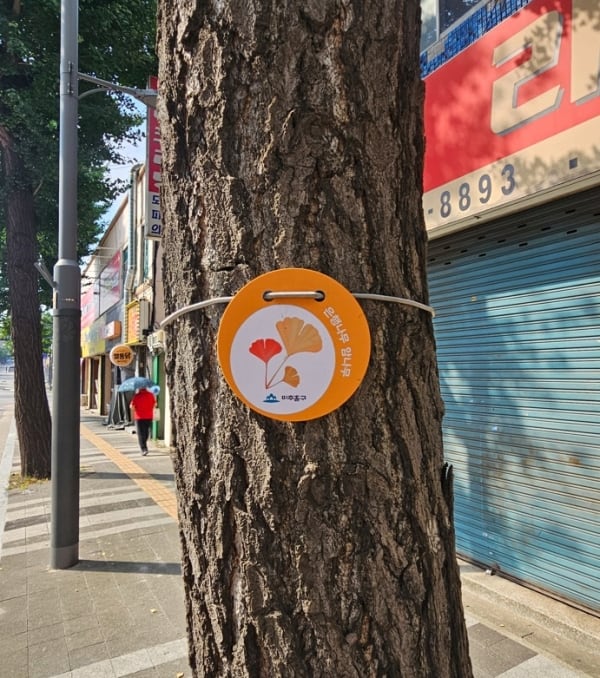
A ridiculous debate broke out. In 2020, when complaints about “unbearable smells” and “filthy streets” increased every autumn, Manan-gu in Anyang City decided to act. In May of that year, they placed “♀” symbols on female trees. This led to unexpected criticism. Some women’s and environmental organizations released a statement opposing the decision, describing it as “stigmatization that portrays female trees as harmful and something to be avoided by linking them with smell and negativity.” They stated, “This policy demonstrates a lack of gender awareness, using symbolic signs to exclude and attack femininity, depicting it as something to be controlled and dominated. It openly shows how public power regulates nature and reproduction.”
Trunk injections” also came under fire. This technique, employed by numerous local authorities to limit fruit production or cause premature fruit drop in female trees, was criticized. Women’s and environmental organizations questioned, “Should female trees be subjected to tags and injections merely because they are female?” They suggested, “If smell is an issue, employ public workers during the harvest period to gather fruits before they open.” Although some dismissed this as “misogynistic outrage,” the district office removed all tags following the public reaction, noting, “We value the opinions.
◇Ginkgo Trees on the Surgical Table
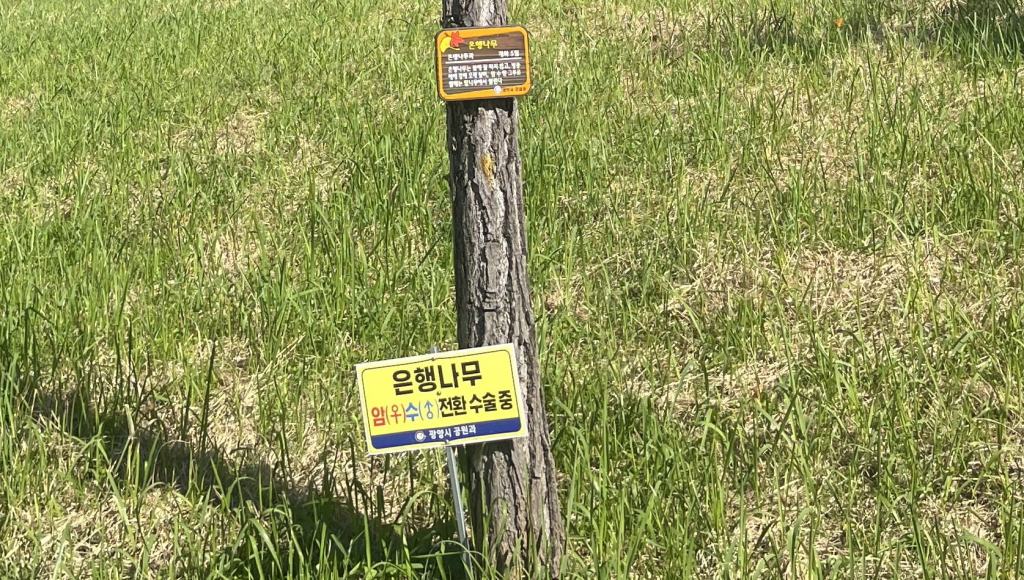
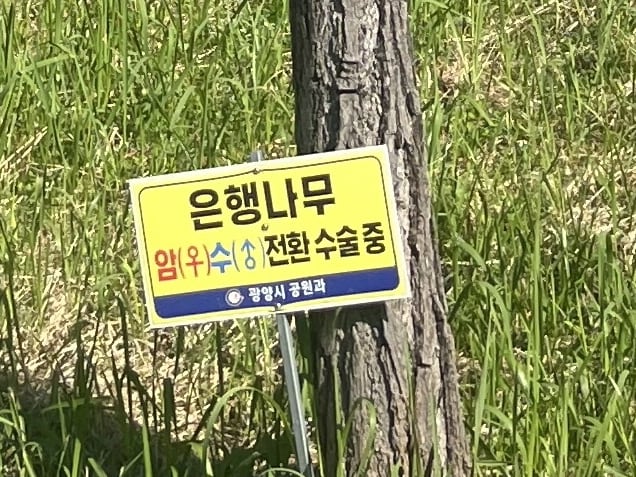
In the Usan Well-being Theme Park located in Gwangyang City, Jeollanam-do, a sign states, “Ginkgo Tree Gender Reassignment Surgery Underway.” By employing grafting—a method commonly used in plant cultivation—they connected male branches to female trees to stop fruit production. A representative from Gwangyang City mentioned, “Complaints regarding dropped fruits near pedestrian areas prompted us to attach male branches to 26 female trees. The initiative was finished two years ago, and there have been no fruits since.”
In earlier times, trees were planted without discrimination. Due to the fact that ginkgo trees require at least 15 years to show their gender following germination, it was considered a risky endeavor. A peculiar tale from the *Sinjeung Dongguk Yeoji Seungnam* describes that during the mid-Joseon era, Yun Tak (1472–1534), a former education minister, planted two ginkgo trees in the courtyard of Sungkyunkwan. Representing Confucius and Confucianism, they continue to be the university’s official tree. Nevertheless, the foul odor of the yearly fruits and the disturbance caused by cleaners turned into an annoyance. An exasperated scholar conducted a ritual to curse the trees, after which they ceased producing fruit. Today, such rituals are no longer required.
After three decades of research, the National Institute of Forest Science created ‘Ireum No. 1,’ a fruitless ginkgo tree suitable for urban environments, and finalized its variety protection registration last year. By gathering and propagating 39 different specimens, they discovered a unique male tree that does not produce fruit. They mentioned, “This is anticipated to address the issue of autumn odors. Its upward growth pattern makes it ideal for narrow urban areas.” Efforts are being made to expand its numbers and distribute it across the country. Seoul is also testing the grafting of male branches onto female trees, conducting experiments with three trees near the Jamsil Sports Complex. However, time is limited, as growing trees takes a decade.
◇Thankful… and Sorry
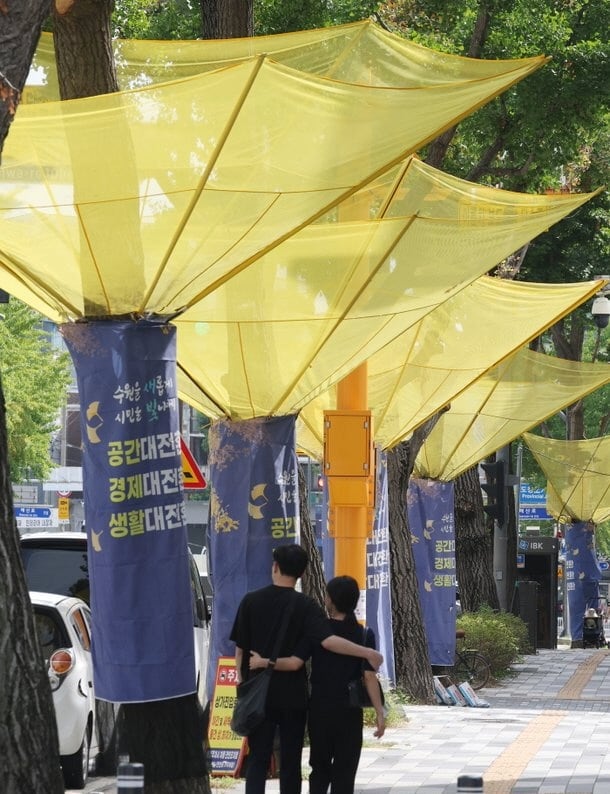
Although there is yearly disruption, ginkgo trees cannot be discarded because of their outstanding performance as street trees—cleaning the air, being resistant to fires, and enduring pests. The replacement cost is about 1 million South Korean won per tree. Replacing 1,000 trees would amount to 1 billion South Korean won in tax money. Last year, Seongbuk-gu intended to remove 221 female ginkgo trees and substitute them with male ones. Locals raised objections. One individual stated, “This is not the right time to waste funds and resources by cutting down established trees under the excuse of smell. Vehicle emissions, cigarette smoke, and restaurant grease are far more significant sources of pollution.” The initiative was stopped.
Concepts such as umbrella-like “fruit collection nets” are becoming more common to stop fruits from dropping. Young male trees planted to replace cut female ones take 20 years to mature into effective street trees. Some individuals wonder if the smell problem is worth the financial and social expenses involved in replacing them. A representative from Chuncheon City, Gangwon-do, mentioned, “Ginkgo trees are large, and their replacement involves modifying sidewalks, which is financially impractical. It’s unfortunate that people overlook the year-round advantages that trees offer and remove them simply because they can’t endure 30 days of odor.”



 jasdooit
Leave a comment