

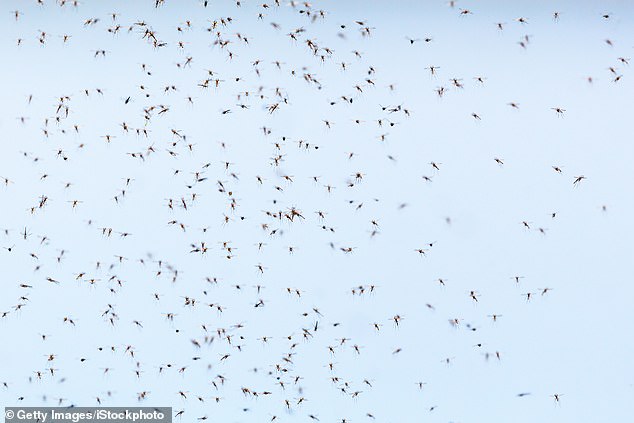
Mosquitoes have been found in Iceland for the first time, indicating a significant change in the range of one of the most dangerous insects globally.
Scientists warn that mosquitoesthey are rapidly adapting as they spread into Iceland, enduring lower temperatures, utilizing man-made breeding areas, and finishing their life cycles in an area that was once unsuitable.
These covert insects now present a possible danger to humans and environments that have never come across them. The finding indicates that Antarctica is the sole place on the planet free from the insect that spreads diseases.
The first sighting was mentioned on October 16 by insect lover Björn Hjaltason in Kjós, who shared to theFacebookgroup centered around a ‘strange fly.’
After capturing the insect, Hjaltason found it to be a female mosquito. Entomologists from the Natural Science Institute of Iceland verified that three mosquitoes, including two females and one male, were caught using red wine traps designed to attract moths.
The appearance of mosquitoes in Iceland is part of a larger trend connected toglobal warming, as the nation becomes warmer, fueled by a continuous influx of warm air from the south.
Increased temperature speeds up the maturation process of mosquitoes, leading to higher survival rates and a longer period during which they are active, whereas rain and moisture provide optimal environments for reproduction and population expansion.
Researchers warned that the existence of mosquitoes might lead to wider ecological and health consequences. Mosquitoes are carriers of life-threatening illnesses, such as malaria, dengue, and chikungunya, even though Iceland has never experienced any outbreaks.
The precise method by which these pests reached Iceland is still a mystery, although researchers believe they might have arrived on board ships or been concealed within transported containers, CNN reported.
It remains uncertain how the mosquito reached Iceland, although hypotheses suggest it may have arrived through ships or cargo containers. Additional surveillance will be required in the spring to determine if the species can endure the winter and “effectively establish itself in Iceland,” according to Alfreðsson.
Since their arrival, the mosquitoes, known as Culiseta annulata, have shown their impressive ability to adapt.
The species has utilized man-made water sources, including buckets, rain barrels, cisterns, and flowerpots, to deposit eggs in an area where natural still water is limited.
Their life cycles are synchronized with Iceland’s short summer period, allowing them to develop rapidly before the colder weather sets in.
In terms of behavior, these mosquitoes are quiet and take advantage of opportunities, feeding mostly during early morning, late evening, and nighttime, which helps them avoid being noticed while still reproducing efficiently.
Their eggs are also capable of surviving in concealed water sources for long durations, enabling communities to grow discreetly and endure environmental difficulties.
This mix of cold resistance, adaptable reproduction, and covert feeding behaviors demonstrates how the species is successfully adjusting to an environment that was once unfriendly.

Insect experts have warned that although Iceland is currently free from mosquito-borne disease outbreaks, the insects’ capacity to adapt to new habitats highlights the possibility of future health threats if harmful pathogens are brought in.
Their existence could also change local environments, offering a fresh food option for predators while vying with indigenous insects for supplies.
Citizen scientists have been essential in tracking the spread of mosquitoes, as demonstrated by Hjaltason’s example, which showed how public reports can aid in monitoring populations and notifying officials about new dangers.
Applications such as iNaturalist, Mosquito Alert, and NASA’s GLOBE Observer enable the general public to submit observations, assisting researchers in tracking the insects’ continuous evolution and spread.
The arrival of mosquitoes in Iceland highlights a broader worldwide trend: rising temperatures are allowing these insects to thrive in areas that were previously considered secure.
The capacity of the species to utilize new environments, reproduce rapidly, and endure more extreme weather conditions highlights how well it is adapting to settle areas that were once difficult to reach.
- Discover the reasons why mosquito-related dangers become more significant due to climate change, transforming cooler regions into ideal habitats for West Nile virus and other hazardous illnesses!
- What role is climate change playing in turning deadly mosquitoes into a growing concern for Europe during the most recent chikungunya outbreak?
- Is the UK’s rising temperature creating a pathway for harmful mosquito-transmitted illnesses?
- Will climate change trigger the spread of mosquito-borne illnesses in the UK? Specialists highlight the growing risk as temperatures rise.
- Is climate change genuinely going to unleash a surge in mosquito-transmitted illnesses such as West Nile virus across the UK, requiring increased monitoring?



 jasdooit
Leave a comment