
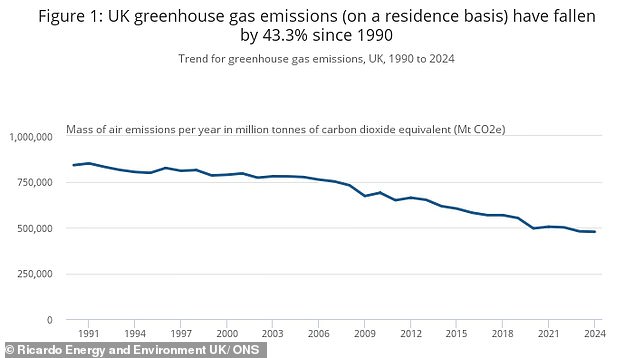
Official data reveals that the United Kingdom’s greenhouse gas emissions have almost been reduced by half since 1990.
Preliminary figures for 2024 indicate a 43.3 percent drop over the past 35 years, representing a significant decline in the quantity of dangerous gases released into the air.
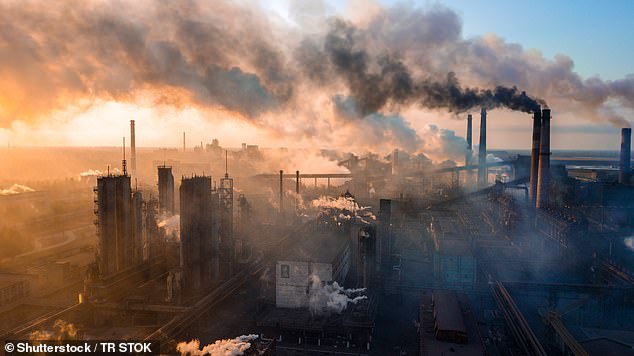
This encompasses carbon dioxide (CO2) that is emitted through combustion.fossil fuelsand retains heat from sunlight, leading to an increase in the planet’s temperature.
The decrease also includes methane – a gas generated by the fossil fuel sector and animal farming – and nitrous oxide, which is emitted by synthetic fertilizers.
Other dangerous gases that have been reduced include hydrofluorocarbons, mainly used for cooling and air conditioning systems and which also possess highglobal warming potential.
The numbers, provided by theOffice for National Statistics, suggest a move away from coal and the growth of renewable energy options like wind and solar.
In comparison to 2023, the manufacturing industry experienced the most significant drop in emissions, declining by 7.4 percent.
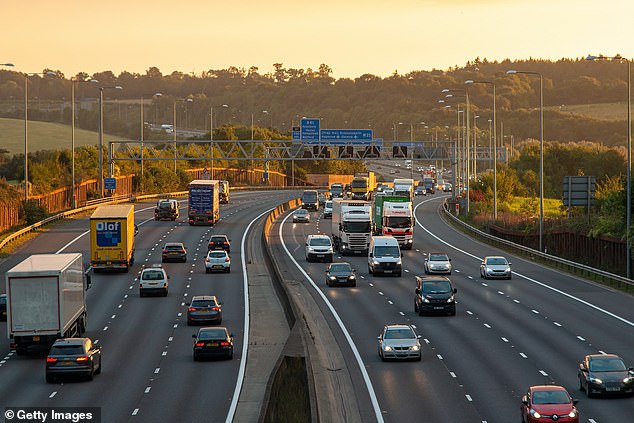
Nevertheless, transportation emissions rose by 4.5 percent – maintaining an overall upward trend largely due to the extensive use of automobiles.
Domestic emissions increased for the first time since 2021, primarily due to gas-powered boilers, water heaters, and cooktops.
Additional sectors that experienced an increase in greenhouse gas emissions since 2023 are construction, hospitality and food services, financial and insurance operations, and education.
Diane Crowe, the Group Sustainability Director at Reconomy, an international expert in the circular economy, stated: ‘The current data indicates consistent advancement in business emissions, especially in the manufacturing sector, but the increase in household emissions highlights that consumption still presents a significant issue.’
The British economy still functions in a mostly straightforward manner – obtaining new resources to satisfy needs, with insufficient focus on reusing, recycling, and efficient use of materials.
This loop of resource use is creating excessive strain on the planet’s environments, with the mining and handling of materials contributing to approximately half of all worldwide carbon emissions.
Addressing this gap and decreasing the use of materials is therefore essential for confronting the linked issues of climate change, biodiversity decline, and environmental pollution.
Overall, global greenhouse gas emissions keep increasing, reaching a new high in 2023. Countries such as China, the United States, and India are among the top sources of these emissions.
The World Meteorological Organization has cautioned that carbon dioxide is building up in the atmosphere at a rate not seen throughout human history.
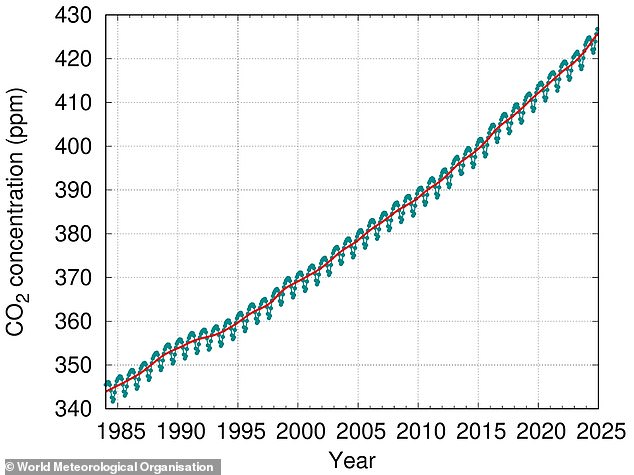
Between 1990 and 2023, the radiative forcing—the warming impact on Earth’s climate—caused by long-lived greenhouse gases rose by 51.5 per cent, with carbon dioxide being responsible for most of this increase, as reported by the National Oceanic and Atmospheric Administration.
“Global temperatures will keep increasing as long as emissions persist, causing greenhouse gases to build up in the atmosphere,” the WMO stated earlier.said.
Due to the prolonged presence of CO2 in the atmosphere, the current temperature levels are expected to remain stable for many decades even if emissions are swiftly brought to net zero.
The previous instance when the Earth had a similar level of CO2 was between 3 to 5 million years ago, during which the temperature was 2 to 3°C higher and the sea level was 10 to 20 meters greater than today.
- Are the UK’s summers set to become extremely hot, with unprecedented temperatures by 2050 because of rising CO2 emissions?
- Have the latest record-breaking greenhouse gas emissions signaled irreversible harm to the Earth’s future climate?
- Will global CO2 emissions reach a concerning all-time high in 2024?
- Is the United Kingdom preparing for challenges as it moves forward with an ambitious target to reduce emissions by 81% by 2035?
- Is the UK facing a climate crisis as 2025 breaks records for both sunlight and extreme heat?




 jasdooit
Leave a comment