
It must be among the most frightening mythical beings in British history.
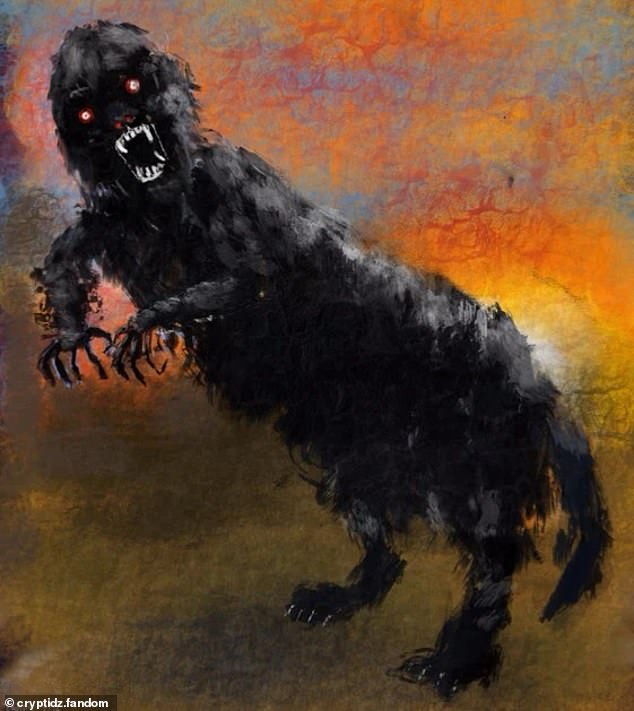
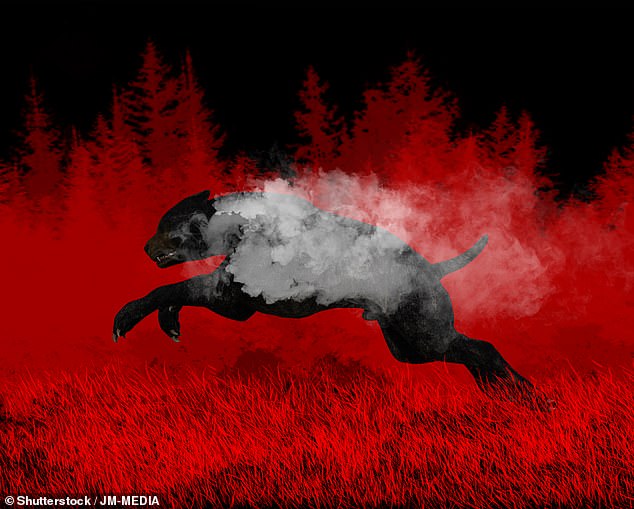
The feared Shug Monkey, standing approximately eight feet high, is a massive crossbreed creature believed to roam the countryside of Cambridgeshire.
It is said to have the body of a jet-black dog and the face of a monkey, featuring fiery red eyes and long, flat “claws” similar to human fingernails.
In some instances, the demonic creature is described as walking on its hind legs, whereas in other cases, it is observed moving on all fours.
And some residents think seeing the dark figure is a sign of death.
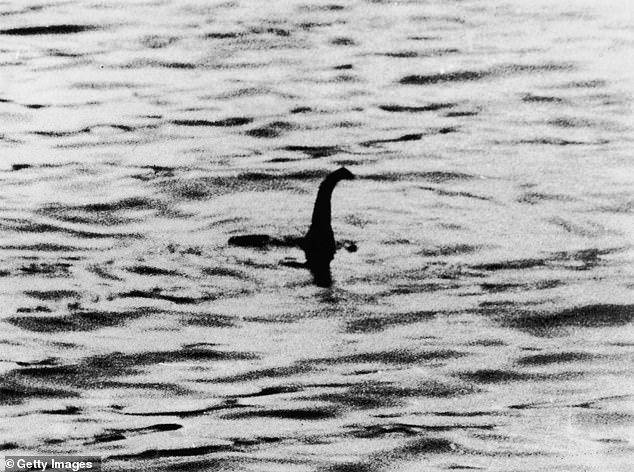
Now, specialists have finally uncovered the reality about the famous creature, which stands besideLoch Ness and Black Shuck in Great British folklore.
Robin Dunbar, an evolutionary psychologist from the University of Oxford, stated that these sightings are “by no means rare.”
“Unusual visions are typical on dark nights, maybe slightly more noticeable after a enjoyable evening at the pub,” he said to the Daily Mail.
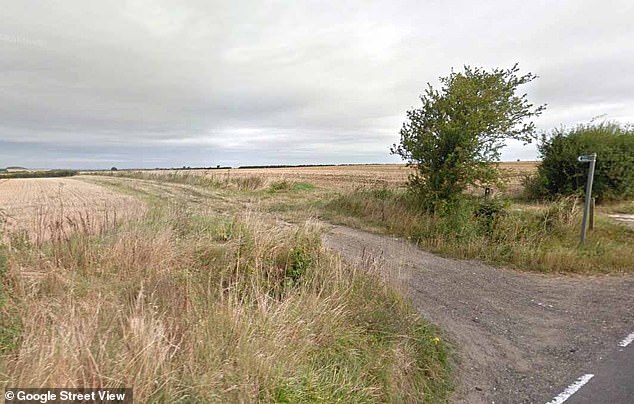
The Shug Monkey is said to linger near Slough Hill Lane, a path connecting the village of West Wratting to the nearby town of Balsham, located southeast of Cambridge.
According to Daniel Codd, a folklore expert who researches history and the supernatural in Britain, there have been documented reports of sightings in the region for over 100 years.
In his 2010 publication ‘Mysterious Cambridgeshire’, he portrays the Shug Monkey as ‘a large, coarse-furred creature with big, intensely bright eyes’.
He states: “Children would steer clear of the location after nightfall in the early 1900s, but the precise nature of this unkempt figure remains uncertain.”
It seems not to have been considered as an animal like a Yeti-like being, or even a captured primate.
Dr. David Waldron, a historian and anthropologist at Federation University in Australia, stated that the term “shug” originates from the Old English word “scucca,” which means devil.
And traditional stories about the creature are frequently connected to the shape-shifting devil dog myths of the area, suchthe Black Shuck.
“Shug Monkey is frequently associated with isolated paths, doorways, and for those on the move, it serves as a cautionary symbol or sign of bad luck,” he said to the Daily Mail.
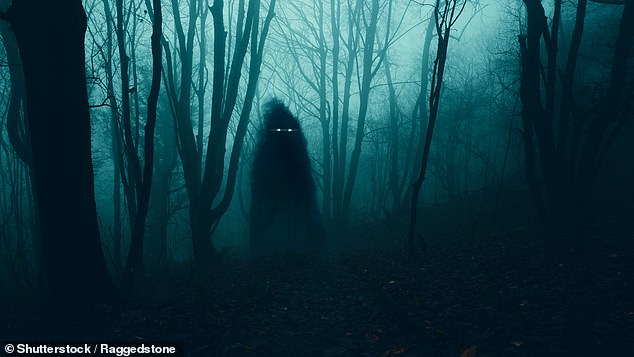
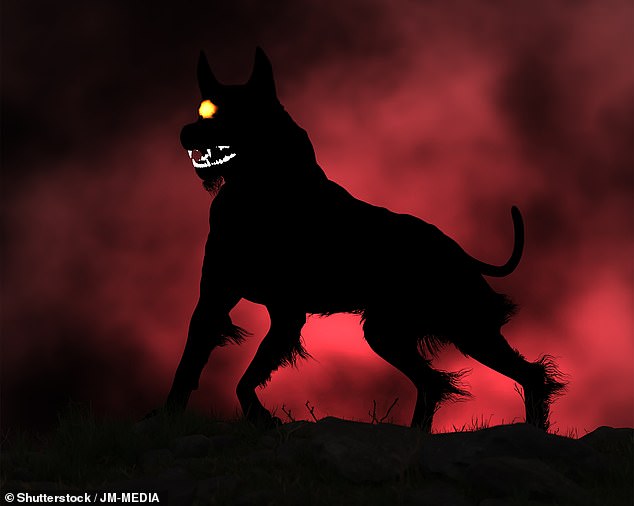
Nevertheless, the majority of images resembling a half-monkey, half-dog are probably caused by unusual shapes on the road, combined with inadequate lighting during the night.
“Hedgerows, gates, and moving shadows ‘leap’ into animal shapes,” said Dr. Waldron.
Alternatively, individuals might be observing a dog, a fox, or a deer, as fog and vehicle headlights produce ‘halos and glare that make heads and eyes appear larger’.
Regarding the demonic red eyes, larger animals in Britain possess a reflective layer behind their retinas which could cause their eyes to appear red.
As per Dr. Waldron, there is “no conclusive proof” that the Shug Monkey exists in a tangible form, yet it definitely lives on “as a continuing tradition.”
England is also a challenging environment for a large animal like that to remain unnoticed,” he said. “The name transforms fear in a lane into a tale that others can share (and, at times, experience again), and it links people to their heritage, the land, and customs.
Tim Coulson, a zoology professor at Oxford University, mentioned that he spent his childhood a few miles away from the region where the Shug Monkey is said to have been seen.
“I regretfully never came across the Shug Monkey, but this isn’t surprising since I’m certain it doesn’t exist,” Professor Coulson said to the Daily Mail.
Once a tale of this nature begins, individuals frequently assert they have witnessed it.
They may have briefly spotted a fox, badger, or deer and then convinced themselves they saw the legendary Shug Monkey.
Dr Brian Sharpless, clinical psychologist and Writer of ‘Monsters on the Couch’, referred to as descriptions of the Shug Monkey ‘fascinating’.
However, supposed witnesses of the creature might be suffering from ‘pareidolia’ – the human brain’s inclination to perceive familiar shapes in random visual inputs.
“Our minds often create significance from disorder,” Dr. Sharpless said to the Daily Mail.
Pareidolia tends to happen more frequently in dimly lit settings and in situations that are tense or frightening.
Thus, our brains could be transforming ordinary things such as trees, shadows, or red deer into frightening creatures.
Dr. Jason Gilchrist, an ecologist and professor at Edinburgh Napier University, believes the enigma surrounding ‘cryptids’—creatures whose existence is debated—is ‘self-sustaining’.
Among the most well-known cryptids around the globe are the Loch Ness Monster, Bigfoot, and the Abominable Snowman.
“Reports over time are probably due to ‘expectant attention’ — people perceiving what they anticipate,” Dr. Gilchrist said to the Daily Mail.
Once a legend or tale about something unusual gains traction, individuals become eager to witness “the monster” and are inclined to perceive or interpret events that their mind subsequently aligns with the mental image of “the monster.”
If it is a creature recognized by science, there must be a breeding population to account for sightings over a century.
- Could the ancient reports of the devilish Black Shuck lurking in the dark be just legends, misunderstandings, or collective panic?
- Could this unusual creature spotted at Bristol Zoo Project be the UK’s new Loch Ness Monster?
- Has the famous Exmoor Beast made a comeback, or are doubters correct in questioning the recent reports of large cats throughout Britain?
- Could obscure footage from a Welsh forest document the first-ever recorded appearance of Bigfoot’s elusive silhouetted form in the UK?
- Is the faith in enigmatic creatures such as Nessie a delightful legend or an unsupported fixation that requires a different approach?




 jasdooit
Leave a comment