
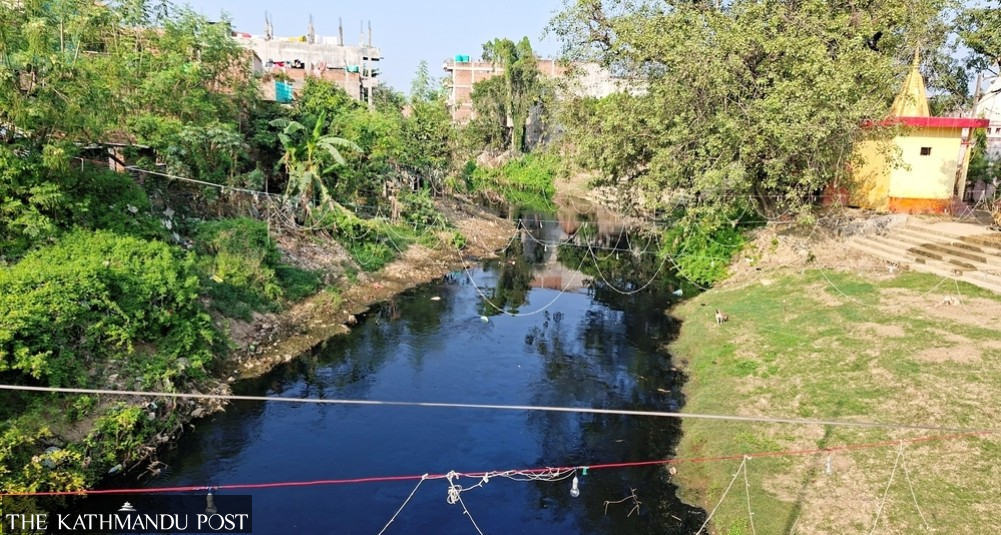
Birgunj, Oct. 25 — Despite the Chhath festival, pollution levels in the Sirsiya river in Birgunj remain unchanged, causing frustration among local people.
Residents claim that factories located along the Parsa-Bara Industrial Corridor keep releasing untreated waste into the river, ignoring the spiritual feelings of worshippers who conduct ceremonies by its shores.
Brijeshwar Prasad Chaudhary, the secretary of the Sirsiya River and Birgunj pollution-free initiative, stated that factories have been ignoring repeated appeals to cease releasing industrial waste into the river during the festival.
“Previously, industries would stop releasing waste at least a week before Chhath, but this year they have kept going without any worry,” he said.
Social activist Prakash Tharu mentioned that approximately 15 Chhath ghats have been built along the river in Parsa and Bara, where hundreds of worshippers come together to pray to the sun as it sets and rises while standing in the river. “Permitting such pollution during this holy festival is an unacceptable act,” he stated.
Born in the Ramban region of Simara within the Bara district, the Sirsiya River becomes contaminated just three kilometers downstream. By the time it arrives at Birgunj, the water is completely black, rendering it unfit for even agricultural or household purposes.
Ranjan Kumar Singh, head of the Ranighat Chhath Puja organizing committee, mentioned that pollution has significantly impacted religious practices. “In the Chaite Chhath earlier this year, we had to create two artificial ponds so that worshippers could carry out their ceremonies,” he stated. “Without stringent measures from the authorities against polluting factories, this issue will continue.”
A regulatory committee established approximately 15 years back recognized 48 sources of pollution in the river—46 of these being factories located within the Parsa-Bara industrial zone, one being the Birgunj Metropolitan Office, and the other an unauthorized alcohol distillery.
The Sirsiya River is culturally significant not only in Nepal but also in India, where numerous devotees observe the Chhath festival along its shores. Consequently, pollution in the river has impacted people living in Raxaul and surrounding regions in Bihar.



 jasdooit
Leave a comment