
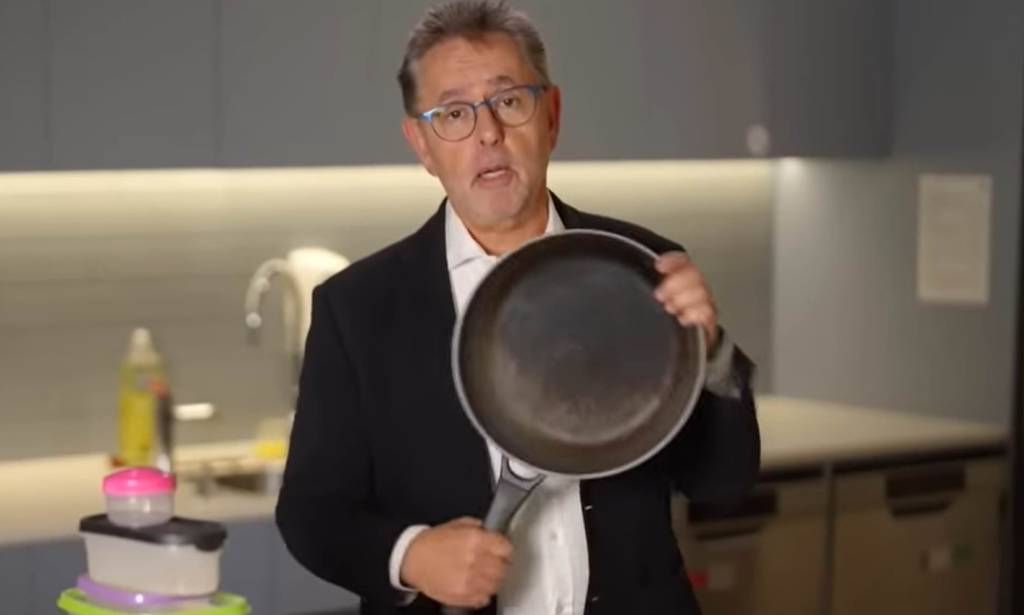
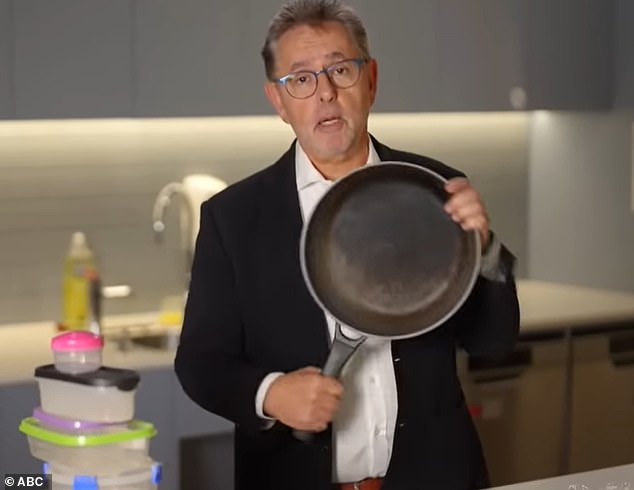
Renowned health expert Dr. Norman Swan has removed all plastic and non-stick items from his kitchen due to increasing concerns regarding the effects of microplastics on health.
Microplastics are minute particles, smaller than a grain of sand, that leak into the bloodstream from food packaging, water sources, and even children’s toys.
From that point, they may build up in the brain, heart, and other essential organs, possibly causing inflammation, infertility, and certain types ofcancer.
Almost all people today have microplastics present in their bodies, with research suggesting the typical individual consumes approximately 50,000 particles annually.
Although research is ongoing, professionals suggest avoiding plastic containers for food, replacing non-stick cooking utensils, and using a bidet instead of toilet paper to slowly lower exposure.
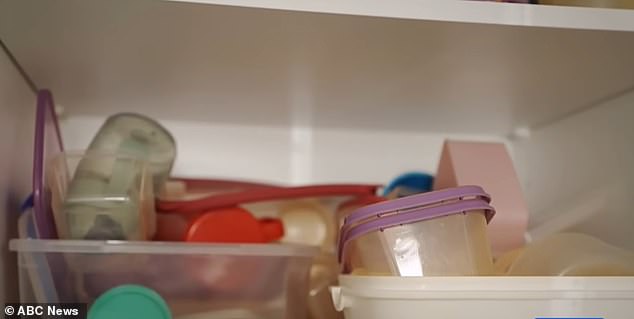
Worried about long-term pollution, Dr. Swan has stopped using common household items such as plastic wrap, containers, cutting boards, and non-stick cookware, cautioning that damaged surfaces may emit dangerous materials into food.
‘Non-stick cookware is no longer in my home – you don’t know what’s flaking off it,’ he said.
Dr. Swan mentioned that he has also ceased using plastic items in the microwave or dishwasher, as there is increasing evidence that heat increases the release of chemicals.
Dr Swan’s overhaul reflects a growing awareness among health professionals about the potential risks of microplastics, which can be absorbed into the bloodstream through breathing, drinking or eating, and pass to organs such as the heart and brain.
Within a suburban Sydney home, the concealed risks of tiny pollutants are coming into focus.
Mum-of-two Eleanor Saxon-Mills said that while she grows her own vegetables and keeps chooks in her backyard in Sydney’s west, she knows she still relies heavily on plastics.
When I scan my home, plastic seems to be present everywhere. I’m unsure how it’s entering my body, let alone how to prevent it.
Although the kitchen is typically considered the primary source of microplastic exposure, an experiment conducted in Ms. Saxon-Mills’ home, led by RMIT microplastics researcher Dr. Scott Wilson, uncovered surprising findings.
Petri dishes positioned throughout her house revealed the greatest levels of microplastics in the bedroom and bathroom, areas where synthetic fibers are most common.
The highest subsequent measurements were recorded in the children’s play zone, which is not unexpected considering the large number of plastic toys present.
Dr. Wilson stated, “We are inhaling it, and it can become lodged in the lungs. Especially with children and infants who crawl on the floor, picking it up and then touching their mouths— they are likely to ingest it more than adults.”
It is believed that approximately 13,000 to 16,000 chemicals or groups of chemicals are present in plastic materials, with the majority of them not having undergone safety testing.

Among the limited number of substances that have, a considerable percentage have been associated with possible risks, including so-called “forever chemicals” like PFOS, PFOA, and PFHxS, which were effectively prohibited in Australia in July of this year.
Other substances include bisphenols and phthalates.
Dr. Wilson mentioned that the evidence regarding the risks associated with microplastics is increasing, although much of it is based on research involving animals.
“From research using surrogate species such as rats and mice, we are observing outcomes like growth and development problems, reproductive effects, and behavioral changes—any of which might also be occurring in humans,” he stated.
In a particular experiment, rats that were exposed to microplastics showed poorer performance in maze tests, acting as though they had early-onset dementia. They had difficulty locating the correct path and appeared to forget their way.
- Is the plasticware in your kitchen secretly harming your health? Dr. Martin Scurr presents essential advice to fight this increasing threat!
- Are microplastics from common kitchen products secretly harming your family’s well-being?
- Do routine activities such as heating food in plastic containers unintentionally increase your exposure to harmful microplastics?
- Could tiny plastic particles be present in your blood, possibly affecting your well-being?
- Is your cooking equipment potentially containing harmful recycled plastics associated with serious health problems?




 jasdooit
Leave a comment