
Did you find it quite unexpected? Are you feeling better now?
When a child spoke with a sad tone, saying, “A friend pushed me at kindergarten,” a calming voice emerged from next to the child. Although a bit awkward, the voice is not fully human-like, but it is enough to console a child who is feeling hurt. The source of this voice is a toy doll created by the Chinese company Haibivi, which features artificial intelligence (AI) technology. It has built-in voice recognition sensors and AI-based emotion detection devices that identify the child’s voice and emotions, providing comfort and guidance.
AI-powered toys have recently become popular in China, spreading quickly. Online shopping platform JD.com stated that sales of AI toys in the first half of this year rose more than three times compared to the previous year. According to the Chinese corporate registration database Qichamao, as of this month, over 1,500 AI toy companies are active in the country.
◇Growing Appeal Across All Age Demographics
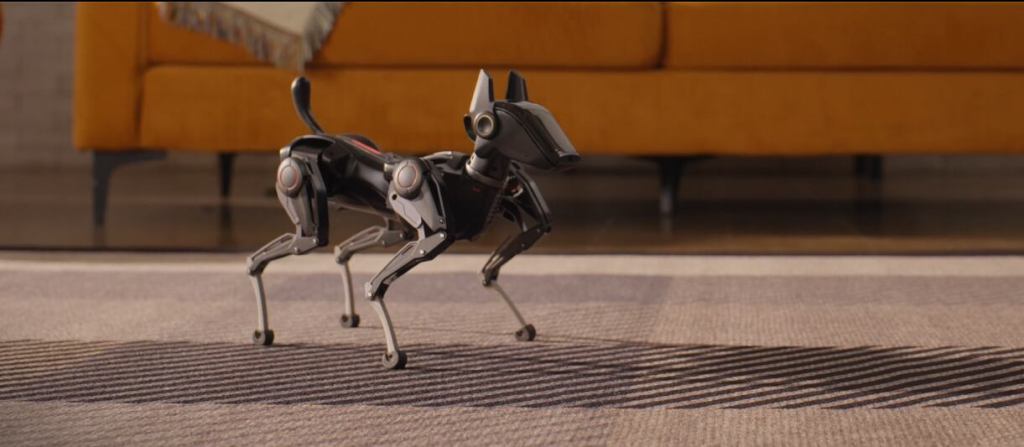
The expansion of AI toys is especially prominent in the preschool segment (ages 3–6). The latest remarkable offering is the intelligent four-legged robot “Sirius” created by Henbot Innovation. Weighing approximately 1 kg, this dog-shaped robot recognizes human voice commands and can carry out tasks such as sitting, jumping, and dancing. At a cost of $1,299, it responds to children’s voices with dances or by kicking a ball.
Haibivi’s “BubblePal” is a compact gadget, about the size of a table tennis ball. When fastened to a child’s beloved doll using a clip, it enables the illusion of talking directly to the doll. Parents can customize the device’s voice to include 39 different characters—from Disney’s Elsa to figures from Chinese animations—through a smartphone application. Retailing at $149, it has sold more than 200,000 units since its launch last summer.
A Chinese startup named FoloToy has created toys in the shapes of bears, rabbits, and cacti that are capable of learning the voices and speech habits of their parents. These toys have sold more than 20,000 units within the first quarter of this year, equaling the total sales from the entire previous year.
AI playthings are becoming increasingly popular with adults as well. The “Fuzai” doll accessory from RoboPoet utilizes AI language models to act as an emotional companion. This has become especially popular among single-living members of Generation Z, according to the People’s Daily, a publication affiliated with the Chinese government. There are also AI toys designed for the elderly, such as a product that captures seniors’ lives and experiences through conversation and produces illustrated memoirs.
The primary factor fueling the current surge in AI toys is technological progress. According to analyses from Chinese media, the achievements of DeepSeek—a powerful AI model that delivers excellent results using cost-effective chips—has significantly sped up the incorporation of AI into toys, especially earlier this year.
◇Anticipated Global Competition
Chinese artificial intelligence toy companies are speeding up their international expansion, moving beyond the domestic market. BubblePal launched its U.S. operation in December of last year and is now extending to Canada, the United Kingdom, and other areas. A Chinese startup named Lopet secured around 10,000 pre-orders within a month for its AI companion robot that was presented at CES this year, with plans to target North America, Europe, Japan, and South Korea. FoloToy is available in ten countries, including the United States, United Kingdom, Canada, Brazil, Germany, and Thailand. “While the children’s AI device market is well-developed in China, it is still in its early stages worldwide,” said Loui Ma, a Chinese technology analyst at MIT Technology Review.
Major global toy companies are also getting ready to enter this market. Mattel, the world’s leading toy manufacturer, intends to incorporate conversational AI into its brands such as Barbie and Hot Wheels in partnership with OpenAI. The LEGO Group is reportedly looking into entering the smart toy sector.
◇Privacy Concerns
Although AI-powered toys are injecting new energy into the toy market, they also introduce possible dangers and ethical questions regarding children. Many AI toys come with microphones and speakers that enable them to hear and reply to human speech. Some models even include cameras, GPS devices, and online access. In the event of a breach, these features might be exploited to unlawfully gather children’s queries or personal data, resulting in breaches of privacy. “Incorporating emerging technologies such as AI into baby products can lead to new privacy challenges,” stated the Electronic Frontier Foundation (EFF) to AP News.




 jasdooit
Leave a comment