
, October 30 — A new municipal plastic recycling facility in Cox’s Bazar was recently officially opened, with the goal of converting single-use plastic waste into useful materials.
The project, launched in Mithaichori of Ramu Upazila, was praised by attendees as a significant step forward for eco-friendly waste disposal in the area.
Mohammad Navid Shafiullah, the Additional Secretary at the Ministry of Environment, Forest and Climate Change, unveiled the facility.
Cox’s Bazar, a top travel spot that also accommodates a significant number of displaced Rohingya people, is experiencing increasing challenges due to plastic waste daily.
Studies show that approximately 34 tons of plastic waste are thrown away throughout the city each day.
A large part of this consists of single-use plastic or polythene, packaging materials, polypropylene, and thin polythene film—items that are especially hard to recycle and typically hold no monetary value.
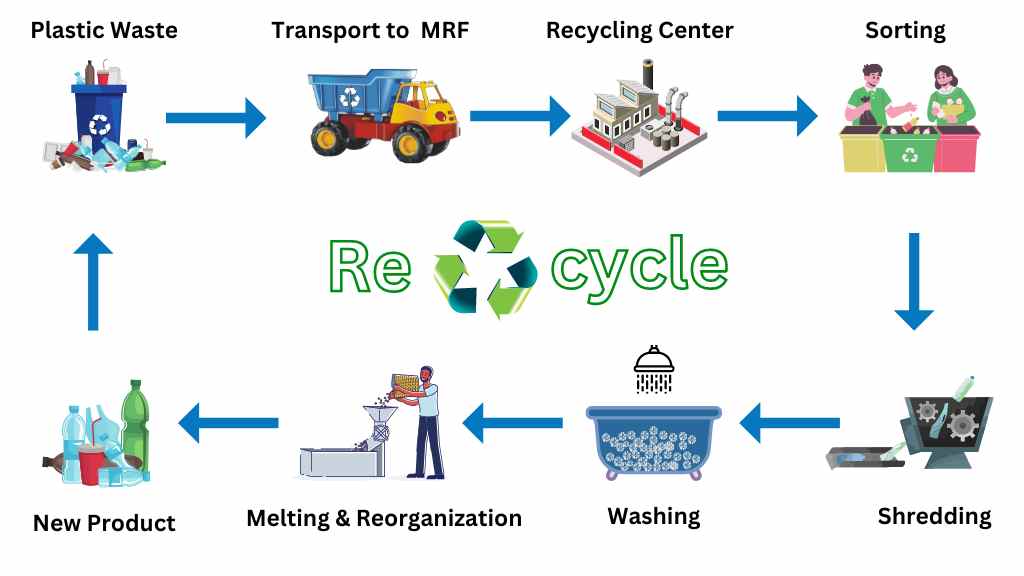
The recycling facility in Cox’s Bazar transforms this waste into recycled plastic lumber, sheets, and granules. These materials are subsequently utilized to create a wide range of products, such as environmentally friendly, long-lasting, and stylish sofas, benches, and robust pillars.
Deputy Secretary Mohammad Navid Shafiullah stated that the project serves as a distinctive model of eco-friendly waste disposal.
He mentioned that, although it has a major role in environmental conservation, it is also generating job opportunities for women and local communities. He showed confidence that such projects will be implemented throughout the country in the coming time.
Maysson Sallam, Technical Advisor – Medical Waste, UNOPS stated that it serves as an example of how public-private partnerships can transform environmental issues into chances for innovation and positive change. She mentioned that UNOPS is dedicated to promoting sustainable waste management practices that empower women and communities, enhance resilience, and bring Bangladesh nearer to a future free from plastic pollution.
A tourist dies from overconsumption of alcohol in Cox’s Bazar, five people are arrested
Md Liakath Ali, head of the Climate Change Programme, Urban Development Programme, and Disaster Risk Management Programme at BRAC, mentioned that through the Plastic-Free Rivers and Seas for South Asia (PLEASE) initiative, BRAC has been actively working to eliminate plastic pollution in Cox’s Bazar.
Spanning 5,280 square feet, the facility can handle as much as 200 kilograms of plastic waste every hour. To maintain eco-friendly, secure, and continuous functioning, it includes an Effluent Treatment Plant (capable of processing 2,000 liters daily), a solar energy system, a fire protection setup, an electrical substation, and round-the-clock CCTV monitoring.
The facility is anticipated to generate job opportunities and support female waste recyclers. It will aid in decreasing plastic pollution in canals, wetlands, and coastal regions, contributing to the preservation and restoration of ecological balance.
Other attendees included Bushra Nishat, an Environmental Specialist from the World Bank; the United Nations Office for Project Services (UNOPS); Nizam Uddin Ahmed, Administrator of Cox’s Bazar Municipality; Ibne Mayaz Pramanik, Executive Engineer of the Department of Public Health Engineering; and Jamir Uddin, Director of the Department of Environment.




 jasdooit
Leave a comment