
The federal government introduced on Thursday the Nigerian Postal Service’s Automated Payment Solution for incoming international shipments.
The advancement is anticipated to remove lengthy lines, enhance clarity, and make customs payments easier for millions of users and companies involved in international trade within Nigeria.
The event, which took place in Abuja, signified a significant step forward in NIPOST’s continuous efforts to transform, guided by the Minister of Communications, Innovation and Digital Economy, Bosun Tijani. He referred to the project as “a demonstration of how a contemporary public service should function, through collaboration with innovators, technology, and the public.”
Led by the ministry’s Permanent Secretary, Rafiu Adeladan, the minister highlighted that the partnership between NIPOST and its private-sector collaborators, Paystack, Sendbox, and Messenger, demonstrates what can be achieved when government bodies adopt digital innovation and prioritize services for the public.
The event of today goes beyond just launching a product. It serves as a declaration of purpose, showcasing how a restructured public service might appear in Nigeria.
This partnership between NIPOST and its private-sector collaborators demonstrates what occurs when governmental bodies cease operating independently and instead engage in collaboration, involving innovators, technology, and citizens as the core of our approach, resulting in a service focused on the needs of the people.
“This is the way a contemporary public service should function: one that views the private sector not as a competitor but as a partner and collaborator in driving national development,” Tijani stated.
For many years, Nigerians have shown dissatisfaction due to delays, concealed fees, and extended lines at post offices while processing imported packages.
Voicing their dissatisfaction on multiple social media sites, Nigerians have filled feeds with grievances regarding delays in mail delivery and complicated customs payment procedures.
Tijani recognized these challenges, pointing out that such inefficiencies extend beyond customer support; they act as obstacles to trade, online commerce, and small enterprises striving to compete on the global stage.
When individuals waste time and resources dealing with ineffective systems, the entire country suffers.
“This debut marks a practical approach and corresponds to President Bola Tinubu’s goals for a digital economy driven by digital public infrastructure,” he further stated.
The minister commended the collaborative environment, emphasizing that Paystack will offer the secure payment system for customs fees; Sendbox will facilitate real-time tracking of packages; and Messenger will manage the final stage of delivery to guarantee quick shipment.
Technology goes beyond efficiency; it’s about respect. By simplifying life for citizens, we rekindle their trust in the government. This is the digital future we are creating.
He remarked, ‘Collectively, they have established a system that minimizes obstacles, fosters confidence, and transforms government into a hub for creativity.’
In her speech, Tola Odeyemi, the Postmaster General of the Federation, referred to the platform as “a new chapter” in NIPOST’s history, combining traditional public service with contemporary technology, fintech, and creativity.
“Today, we are introducing a smooth system for incoming international shipments. Customers can now get instant alerts once customs duties are determined, make safe online payments, and have their packages delivered straight to their homes or offices,” Odeyemi stated in her opening speech.
She mentioned that the system combines Paystack for handling payments, Sendbox for monitoring, and Messenger along with NIPOST’s EMS for secure delivery, forming a clear, full-cycle logistics environment.
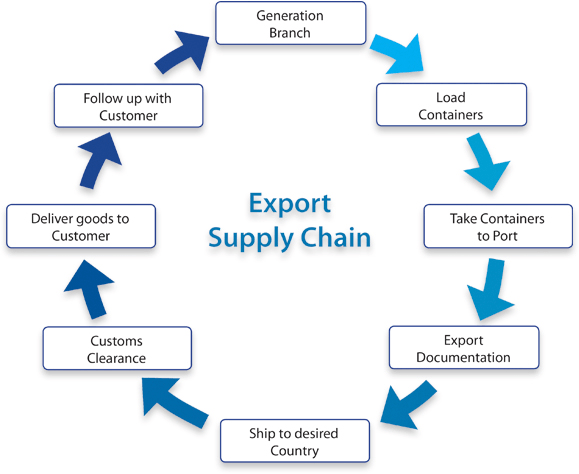
The head of the postal service, responsible for 1,300 offices across the country, mentioned that although the current stage is centered on incoming deliveries, NIPOST intends to expand the service to exports via its upcoming TradePost Initiative, an effort anticipated to enhance Nigeria’s involvement in international e-commerce.
She stated, “This goes beyond convenience; it’s about trust, responsibility, and effectiveness. We are not only changing our systems but also our approach, shifting from being a service provider to a solution provider.”
The head of NIPOST stated that a major advantage of the new system is the immediate transfer of revenue to the government’s funds.
In contrast to the earlier monthly remittance system, the new integration enables the government to track and gather postal and customs revenue in real-time as transactions take place.
Transparency and efficiency are what the government gains from this,” Odeyemi added. “For customers, it translates into speed, ease of use, and trust.
The change is a component of NIPOST’s overall modernization plan that corresponds with the Federal Ministry of Communications’ Digital Economy Blueprint, which highlights digital public infrastructure, fintech incorporation, and collaborations with the private sector.
During a live demonstration, NIPOST’s operations team illustrated how the automated system can reduce parcel delivery time by up to five days, thanks to early digital customs alerts and streamlined payment processes.
In the past, customers needed to go to post offices to find out about their customs charges before making payments and picking up packages. Today, they will get immediate electronic notification and payment links through SMS, email, or WhatsApp, long before their items are delivered.
Authorities stated that NIPOST functions as a clearing agent, managing customs and supply chain procedures smoothly while imposing a small processing charge.
In his message of goodwill, the Chief Executive Officer and co-founder of Paystack, Shola Akinlade, referred to the initiative as a “moment of pride,” highlighting that government departments can operate with the efficiency and clarity of a startup when there is effective cooperation.
I admit, I initially believed this project would take two years because it was NIPOST.
“But the team took us by surprise. This has been one of the most seamless and thrilling projects we’ve ever undertaken. It shows that true collaboration is possible in Nigeria,” Akinlade said.
CEO and Co-founder of Sendbox, Olusegun Afolahan, expressed comparable views, commending NIPOST’s clear vision and willingness to embrace new ideas.
“As a Nigerian first, I never thought this day would arrive. The NIPOST team has demonstrated that the public sector can communicate in the language of technology. This collaboration is just the start of what’s achievable,” he stated.
Co-founder of Messenger, Essien Etuk, also praised the partnership, noting that it introduced much-needed “order to the final stage” of Nigeria’s logistics system.
“for the first time, we are witnessing advancements that will result in more satisfied clients, quicker shipments, and increased income for both NIPOST and the larger digital market,” he stated.
NIPOST, founded in 1987, has endured prolonged public scrutiny due to its inefficiency, red tape, and slow service. However, with the current leadership, the organization has initiated several changes designed to position it as a significant participant in Nigeria’s digital economy.
The introduction of the Automated Payment Solution comes in line with the government’s wider Renewed Hope Digital Economy Agenda, which focuses on digital public infrastructure and collaborations with the private sector to upgrade public services, increase transparency, and boost national competitiveness.
Provided by SyndiGate Media Inc. (Syndigate.info).



 jasdooit
Leave a comment