
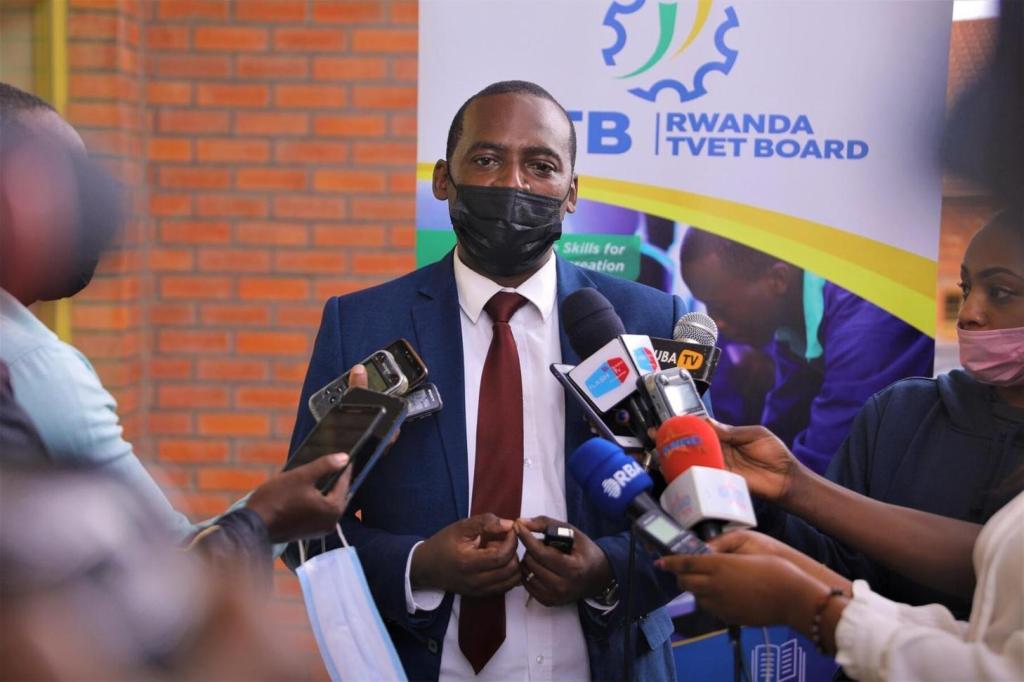
The Rwandan government has suggested the creation of an Agricultural TVET Centre of Excellence that will be set up within the next four years. ALSO READ: Modern technologies will transform agriculture, Kagame says The centre, which will be constructed in Busogo Sector, Musanze District, aims to provide young people and farmers with knowledge and skills related to agricultural and livestock value chains. As part of 30 TVET Centres of Excellence planned across the country, three agricultural TVET centres are expected to be completed at a cost of €30 million (approximately Rwf47 billion), funded by Luxembourg. ALSO READ: Govt urged to leverage agric technologies to feed growing population Paul Umukunzi, the Director General of the Rwanda TVET Board, provided details about the upcoming centre in an exclusive interview with The New Times. Here are the excerpts: How will the centre differ from other TVET schools? The new centre will admit the top performers from the Ordinary Level (O’Level) of Secondary School. ALSO READ: Will TVET enrollment targets be achieved? These students will graduate from the centre with practical skills and an entrepreneurial mindset aimed at self-employment. In addition, the centre will have production units that operate as industries, allowing students to gain hands-on experience while contributing to real production processes. This will make the centre a combination of a training institution and an agro-industrial hub. It will also be different from other TVET schools due to the high quality of training, modern technology, and extensive industrial exposure given to students. What services and technologies will the centre offer, and who will have access to them? The centre will provide training in four main trades: livestock production, crop production, crop processing, and livestock processing. Each processing unit will function as an industry connected to a production unit, creating a complete value chain within the centre. ALSO READ: Rwanda’s agro-processing value hits Rwf1trn as PM pledges more support The surrounding community, especially farmers, will benefit from access to modern agricultural technologies, including drones for crop monitoring, hydroponic and vertical farming systems, and automated greenhouse systems. These services and technologies will be available to students, staff, and local farmers, promoting a strong connection between education, production, and community development. How will it assist local farmers, including those who are illiterate in rural areas? The centre will work closely with local farmers, providing technical support and practical training to improve their productivity. Farmers will be encouraged and guided to produce raw materials—both crop and livestock products—that will be purchased by the centre’s production units. This partnership will not only increase farmers’ income but also create a sustainable supply chain between the community and the centre’s agro-industrial operations. In addition, the centre will offer short courses to farmers and others wishing to upgrade their agriculture, livestock, and processing skills. Furthermore, individuals already working in the industry without formal certification will be supported through the Recognition of Prior Learning (RPL) system, which certifies experienced individuals who have acquired skills through practice. How will the centre support livestock farmers? Livestock farmers near the centre will receive technical assistance in areas such as animal husbandry, feeding, and disease control. They will supply livestock products—such as milk, meat, and eggs—to the centre’s livestock processing units. ALSO READ: Artificial insemination: Five common factors hindering cattle conception This arrangement will enhance production quality and market access, leading to improved livelihoods for rural livestock farmers. Additionally, the centre will offer short courses to livestock farmers and others interested in improving their livestock management skills. Through the RPL system, the centre will also certify individuals with significant livestock farming experience but without formal qualifications. How will it support those involved in food processing and agro-processing? The centre will serve as a source of skilled labour for the agro-processing industry. By producing well-trained graduates, it will reduce the burden of finding qualified workers in the sector. Moreover, through collaboration and internships, the centre will share best practices and technologies that can enhance efficiency and product quality in the local agro-processing ecosystem. Beyond regular training, the centre will also offer short courses to those in the food and agro-processing industries who wish to upgrade their skills. In addition, through the Recognition of Prior Learning framework, the centre will provide certification opportunities to experienced industry workers who have not yet received formal qualifications. How will it support graduates? Upon graduation, students will be encouraged and supported to establish their own enterprises. A student/graduate funding model is being designed and will be implemented, whereby money accumulated over the three years of practical work in the production units will serve as seed capital for their start-ups. This model ensures that graduates leave the centre not only with skills but also with the financial and practical means to launch self-sustaining agribusiness ventures. The proposed funding model can also be used by graduates who wish to pursue further studies or invest in self-employment opportunities. We understand that three such centres will be established. Where will the other two be located, and will they offer the same services as the one in Musanze? In addition to the main centre in Musanze District, two other centres will be established: One in Kinazi, Ruhango District, focusing on livestock production and livestock processing; and the other in Ngoma District, focusing on crop production and crop processing. While the Musanze centre will offer all four trades, the other two centres will specialise in two trades each, as mentioned above.
Provided by SyndiGate Media Inc. (Syndigate.info).




 jasdooit
Leave a comment