
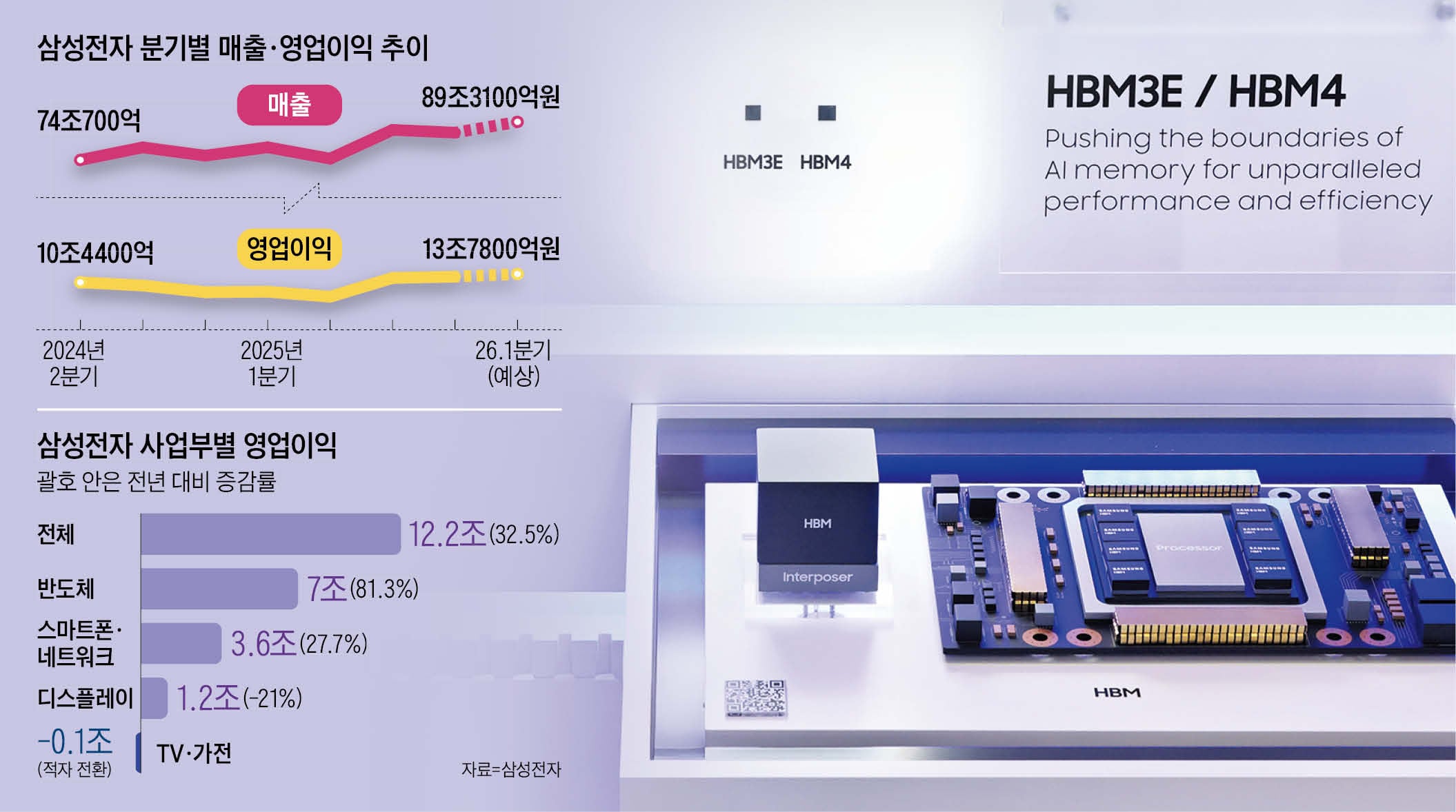
Samsung Electronics has announced its earnings for the third quarter (July–September) by business segment. The previously slow semiconductor division has seen a quick recovery, and the smartphone department also achieved strong performance. Nevertheless, the TV and home appliance divisions, which encountered heightened competition due to the arrival of Chinese firms, did not perform as well. The semiconductor division, which is of primary interest to investors, reported an operating profit of 7 trillion South Korean won, indicating a rapid recovery. In the second quarter, this amount was 400 billion won. Compared to the same period last year (3.86 trillion won), this shows an 81% rise.
Samsung Electronics reported on the 30th that its revenue for the third quarter increased by 8.8% compared to the previous year, reaching 86.0617 trillion won, while operating profit rose by 32.5% to 12.1661 trillion won. This represents the company’s highest quarterly revenue ever.
◇HBM3E Shipments Begin
Samsung Electronics’ success is largely due to its semiconductor operations. In the third quarter, the company’s memory semiconductor segment recorded sales of 26.7 trillion won, a 20% rise compared to the same period in the previous year. This growth was driven by increased sales of HBM (High Bandwidth Memory) used in AI accelerators, along with rising demand and prices for standard DRAM and NAND flash. Semiconductors contributed 57.4% of the total operating profit for the quarter. The semiconductor division’s operating profit of 7 trillion won surpassed analysts’ forecasts of 5 trillion won. Samsung Electronics mentioned, “One-time expenses amounting to approximately 1 trillion won that were incurred in the second quarter have decreased, and positive factors include robust sales of memory semiconductors and higher utilization rates in the foundry business (semiconductor contract manufacturing).”
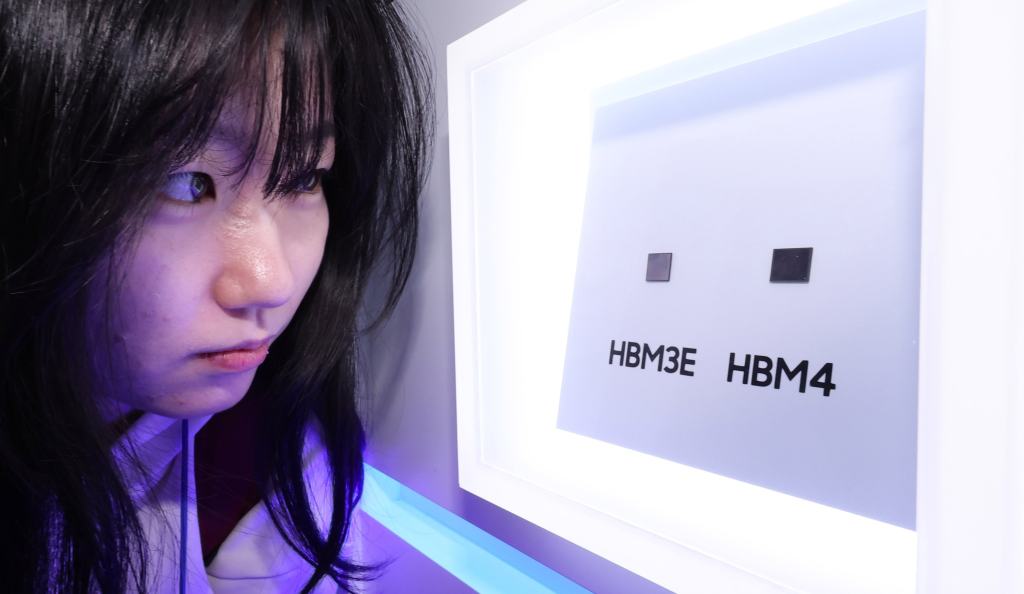
Samsung Electronics specifically stated, “We are currently mass-producing and distributing HBM3E to all clients.” This suggests that HBM3E, which had previously not passed NVIDIA’s quality assessments, has now fulfilled the requirements for supply to NVIDIA. HBM sales in the third quarter rose by 80% compared to the previous quarter. The foundry business, once seen as a ‘weakness,’ is showing signs of recovery. The company has started manufacturing chips using a 2-nanometer (1 nanometer equals one-billionth of a meter) process and has secured an order for Tesla’s autonomous driving AI chips, achieving a record-high level of orders.
The MX division, which handles smartphones and network operations, experienced a 12% rise in revenue and a 27.7% increase in operating profit compared to the previous year. This growth was fueled by the ongoing success of the Galaxy Z Fold7 series, launched in July, along with the strong demand for the flagship Galaxy S25 series. Nevertheless, the home appliance and TV segments moved into operating losses as a result of pressure from Chinese companies’ cost-effective strategies.
◇Fourth-Quarter Earnings Predicted to Increase Due to Super Cycle
With regards to the fourth-quarter projection, Samsung Electronics mentioned, “The supply shortage is anticipated to become more severe in the fourth quarter due to increased server installations of memory chips and the growing share of memory used in consumer devices.” This may result in additional price hikes as stock shortages grow worse.
Samsung Electronics is the leading manufacturer of memory semiconductors globally. With rising demand and limited supply in the near future, Samsung’s large production capacity allows it to generate higher profits compared to its rivals. Park Yu-ak, an analyst at Kiwoom Securities, stated, “The share of operating profit from standard DRAM in Samsung’s DRAM business reaches up to 88%,” and mentioned, “The degree of performance enhancement resulting from the recovery in the semiconductor cycle is greater than that of competitors.” Specifically, as Samsung has started delivering HBM3E and re-established its competitive edge, it is anticipated to enter the HBM4 market sooner and enhance its previously lagging position in the HBM market.
Samsung Electronics invested a record 26.9 trillion won in research and development during the third quarter of this year. On the same day, the company also unveiled its ‘facility investment plan,’ stating that it will allocate 40.9 trillion won for semiconductor facilities and 3.3 trillion won for the display industry this year. Samsung Electronics noted, “We are currently evaluating the potential to boost production due to increased demand for HBM,” and added, “Investments in the foundry business will also grow compared to this year, including final investments for the full-scale operation of the Taylor Fab in the U.S. in 2026 and preparations for new processes.” In the meantime, Samsung Electronics announced a quarterly dividend of 370 won per share, amounting to 2.4533 trillion won.




 jasdooit
Leave a comment