
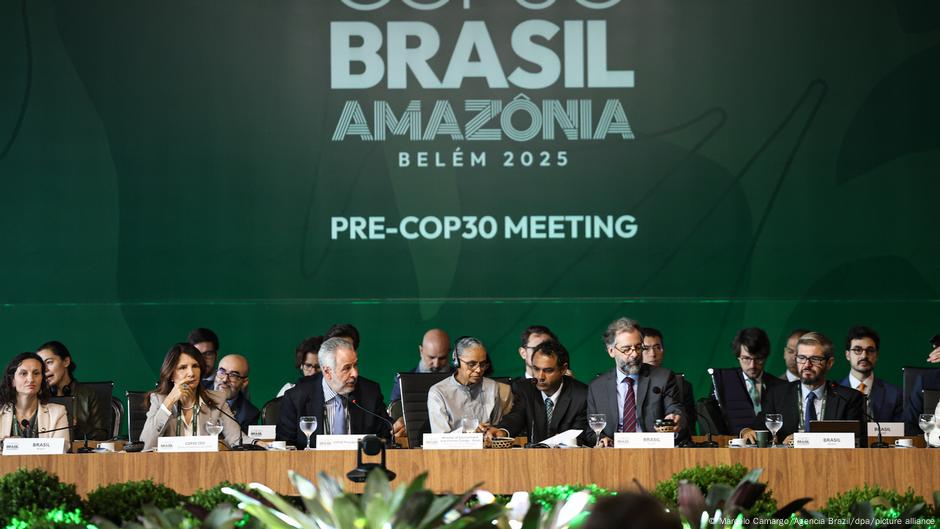
With a large portion of the world’s population demanding strong measures against climate change, a fresh initiative focused on ensuring accurate information seeks to counteract climate skepticism that has hindered significant efforts.
The key UN climate conference taking place in Brazil this year is encountering a flood of false information and misleading content designed to undermine efforts toward a swift shift from fossil fuels.
COP30 occurs during a period when US president Donald Trump, the head of the world’s biggest historical carbon emitter, has initiated an extraordinaryassault on climate and renewable energy programs.
Since taking office in January, Trump has utilized social media to increase the reach oflies about wind energyFor instance, asserting that turbines lead to cancer and harm whales. He has issued executive orders aimed at “unleashing” fossil fuel energy, which he refers to as “affordable and reliable,” while incorrectly stating that “ideologically-motivated” renewable energy leads to job losses and increased energy costs that “harm” consumers.
This false information overlooks the fact that emissions resulting from burning coal, natural gas, and oil are altering the planet’s climate, causing more frequent droughts, floods, and severe storms, anddeadly heat.
It also directly conflicts with the reality that quickly expanding solar and wind energy capacity has supplied the world’s most affordable electricity for a while now. For each dollar invested, clean energy also generates three times more jobs compared to the fossil fuel sector.
Trump repeats traditional climate misinformation
“The administration of Trump is using a familiar strategy of spreading false information, reviving direct denial methods that the fossil fuel sector commonly used in the 1980s and 1990s,” stated Kathy Mulvey, director of the accountability campaign at the Climate & Energy Program of the Union of Concerned Scientists, a science advocacy non-profit based in the United States.
Using deceptive methods similar to those employed by the tobacco industry concerning the health effects of smoking, oil, gas, and coal companies are “creating doubt about climate science and hindering climate, clean energy, and clean transportation policies,” she noted.
Fossil fuel companies have concentrated their efforts on UN climate summits to slow down the shift towards cleaner energy. In the previous year, a study revealed that over 1,770 lobbyists from the fossil fuel industry were allowed into COP29 in Baku, Azerbaijan — surpassing the number of representatives from all but three nations.
In 2023, scientists disclosed that fossil fuel corporations spent as much as $5 million (€4.3 million) with Meta — the parent company of social media sites Facebook, Instagram, and WhatsApp — for advertisements promoting climate misinformation ahead of COP28 in the United Arab Emirates.
Four of the globe’s leading oil and gas companies — Shell, ExxonMobil, BP, and TotalEnergies — represented 98% of the expenditure on such advertisements.
Tackling disinformation through transparency
In light of concerns that the global community has failed to meet the Paris Agreement goal of keeping global temperature rise below 1.5 degrees compared to pre-industrial times, there is a unified effort to counter efforts aimed at creating uncertainty and doubt.delay climate action is emerging.
The Global Initiative for Information Integrity on Climate Change, led by Brazil, will, for the first time in any UN climate summit, be included in the official COP30 agenda. The initiative seeks to support research, investigative journalism, and climate communication campaigns that challenge opposing views and promote accurate information.climate science – and solutions.
“We need to combat organized misinformation efforts that are hindering global advancements in addressing climate change, including complete denial, greenwashing, and the targeting of climate scientists,” stated UN Secretary-General Antonio Guterres in November 2024 during the launch of the initiative at the G20 summit.
“When governments keep increasing the production of fossil fuels, despite publicly pledging to achieve net-zero targets, it is crucial for civil society worldwide to unite in order to guarantee that the public and decision-makers have access to accurate, uniform, dependable, and open information,” stated Ece Elbeyi, a consulting scientist at the Scientific Panel on Information Integrity about Climate Science, a global scientific organization based in Switzerland.
By uniting scholars and media experts, the COP30 information integrity project demonstrates “the kind of public involvement that is essential” to fight against false information, she stated.
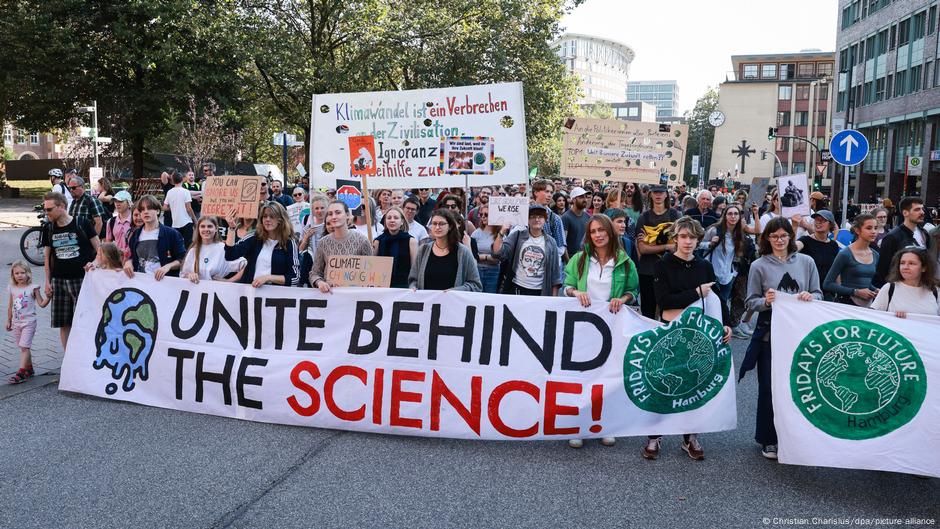
In the meantime, the Climate Action Against Disinformation coalition (CAAD), a worldwide climate monitoring group, is urging media outlets and major technology companies to identify and filter out “harmful false information” regarding climate issues for their audiences. They also want these entities to be open about the origins of any misinformation, ensuring “transparency and accountability,” as highlighted by Philip Newell, co-chair of CAAD’s communications team.
However, climate misinformation, particularly recently coming from the Trump administration regarding the costs and job creation potential of renewable energy, is being echoed in media outlets around the world. “The return of Trump to power in January led to a surge in unchecked climate misinformation within French media,” said Eva Morel, secretary general of the climate NGO QuotaClimat. A report on climate disinformation co-written by QuotaClimat revealed that cases of climate deception in French media increased threefold during the first eight months of 2025.
A “once-in-a-lifetime chance” to combat misinformation about fossil fuels
Transparent and thorough climate science communication is crucial at a time when countries are planning to produce more than double the fossil fuels in 2030 compared to what would be compatible with keeping global warming below 1.5°C. As mentioned in the most recent Production Gap Report, which tracks the “misalignment” betweenscheduled national fossil fuel productionand real global output levels.
If COP30 aims to address this mismatch, it must seize an “unprecedented opportunity” to promote “coordinated global efforts to combat misinformation,” stated Mulvey.
“Revealing the fossil fuel industry’s lies and dishonest methods is among our most effective approaches,” she stated regarding the use of information accuracy to strengthen the drive for a swift energy shift.
Eliesio Marubo, an activist and legal advisor for the Union of Indigenous Peoples of Brazil’s Javari Valley, stated that climate misinformation must be addressed as it is at COP30: “I don’t enjoy the term ‘fake news,’” he mentioned, noting that the phrase “ends up giving credibility to something that isn’t news in the first place. I choose to refer to it as it truly is: a falsehood.”
Edited by: Tamsin Walker
Author: Stuart Braun



 jasdooit
Leave a comment