
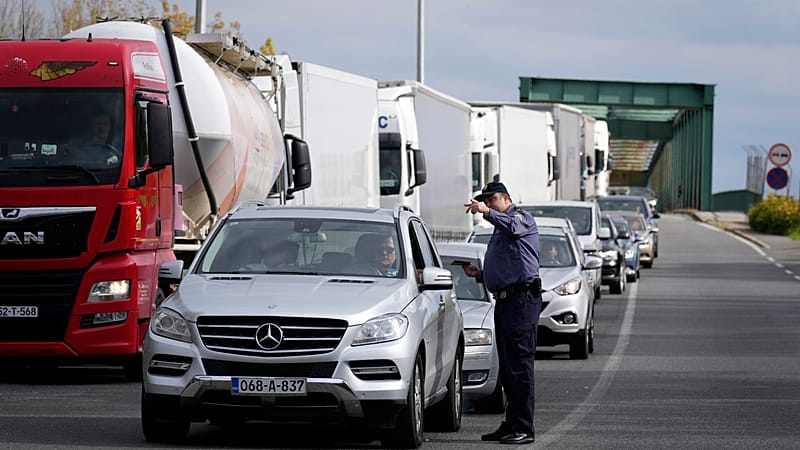
The implementation of the EU’s new Entry/Exit System (EES) for visitors at Dover has been temporarily halted, as reported by port authorities.
The digital border system was scheduled to be implemented at the Dover Port for tourist travelers on Saturday, 1 November.
The plan is currently active for bus passengers, and was launched on 12 October for buses and cargo.
Dover’s procedure for vehicles might take six times as long after EES begins operations
For now, visitors driving through Dover will still not be required to go through EES checks.
“Although the facilities at Port of Dover will be prepared by 1 November, we are following the guidance of the French authorities regarding when we will commence operations,” said Doug Bannister, the port’s chief executive.
The EU’s updated border verification system mandates that non-EU nationals, such as British citizens, provide fingerprints and photographs as part of initiatives aimed at enhancing security within the union.
While the majority of visitors will experienceEESInspections at airports or land borders within the Schengen Area, travelers departing from London’s St Pancras railway station or Eurotunnel’s Folkestone terminal, as well as the Port of Dover, are subject to inspections when leaving the UK.
At present, port authorities require approximately 60 seconds to handle each vehicle at the border.
With the EES implemented for tourist travel, this will require travelers to exit their vehicles and complete registration at specific checkpoints.electronic kiosks.
This might indicate that processing times could take six times longer for vehicles, the Port of Dover has warned before.
The EES is being implemented step by step along EU borders, allowing nations time to ensure the new technology is set up and travelers are ready.
“Following the successful launch for coaches and freight on 12 October, we are continuing to collaborate closely with our French technology partner and border officials to initiate the EES process for car travelers,” Bannister stated regarding Dover.
We have requested a minimum of two weeks’ notice to begin, allowing us time to notify travelers and put up the required signs.
EES introduce a ‘total confusion’
The EES officially launched on 12 Octoberbut was first introduced at just a handful of airports within the EU. The deadline for full implementation is 10 April next year.
The border inspection system has faced ongoing issues and uncertainty regarding its actual implementation.
Tom Jenkins, the chief executive of the European travel association Etoa, expressed his views on theuncertainty prior to the launch.
“We’re receiving absolutely no information. All they [the EC and EU member states] are stating is that it will be implemented starting October 12 – it’s not at all clear who will be responsible for it,” he said.
It’s a total confusion. They can’t implement a partial system, which is what they’re attempting – to begin enrollment, to establish the electronic record even if it isn’t a valid one. Therefore, they will register individuals along with stamping their passport.
A study conducted by Holiday Extras revealed that 82 percent of participants remained uncertain about how the new EES will affect their travels, while 35 percent were not aware that the updated regulations took effect on October 12.
Almost one out of every five vacationers has already altered or canceled their travel arrangements, with numerous people expressing concerns aboutborder delayswhere the EES applies.
“The worry is that when flights arrive at one of these airports simultaneously, it’s already a bottleneck — this will make things even worse,” Julia Lo Bue-Said, chief executive of the Advantage Travel Partnership, said to the BBC.
She mentioned that travelers should allocate three to four hours to pass through the updated security procedures.




 jasdooit
Leave a comment