
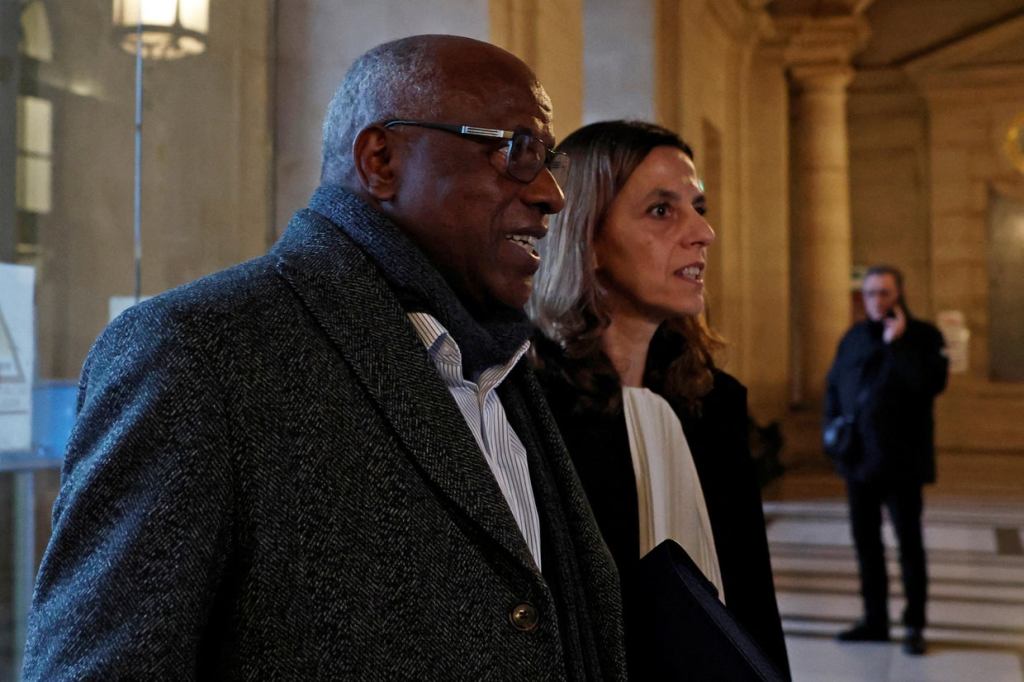
The Paris Court of Appeal recently confirmed the 24-year prison term imposed on Sosthène Munyemana for his involvement in the 1994 Genocide against the Tutsi. The former gynaecologist was convicted of genocide, crimes against humanity, and complicity in genocide. The ruling, announced on October 23, kept the same sentence given by the lower court in 2023. The appeal hearings for Munyemana, which started on September 16, examined the atrocities committed in the former Butare Prefecture during the Genocide. With the appellate court’s decision now final, it is unclear if Munyemana has further options to appeal. ALSO READ: Genocide: French court maintains 24-year sentence for ‘Butcher of Tumba’ Speaking to The New Times, Richard Gisagara, a lawyer based in France who has represented genocide survivors in multiple trials, said that Munyemana’s choices are now limited. “Since this was an appellate decision, he can no longer appeal the case based on the facts,” he stated. However, he mentioned that Munyemana could still file an appeal to the Court of Cassation. ALSO READ: ‘Historic day’ as France upholds Munyemana’s Genocide conviction “The Court of Cassation does not review the facts or evidence but only checks whether the appellate court followed the law and procedural rules. If a legal mistake is found, it may overturn the judgment and send the case back to another appellate court for a new trial,” Gisagara explained. He added that civil parties do not take part in proceedings before the Court of Cassation, as this stage focuses solely on legal and procedural issues. “Therefore, there will be no new witness hearings at this point,” he noted. ALSO READ: ‘Justice came late, but it came’: Genocide survivor who outlived the ‘Butcher of Tumba’ As of now, it is not publicly known if Munyemana has filed a case with the Court of Cassation. According to Gisagara, he had a 10-day period after the appellate court’s decision to do so. “If he did, we would be informed,” he said. Similarly, Alain Gauthier, co-founder and president of the Collectif des Parties Civiles pour le Rwanda (CPCR), mentioned that Munyemana’s 24-year sentence includes a mandatory 12-year minimum term. “He will not be eligible for early release for 12 years. Initially, it was eight years. He has therefore lost four years,” Gauthier explained. Gauthier confirmed that the only remaining option for Munyemana is to appeal to the Court of Cassation. “But that is no longer relevant to us as a civil party. His lawyers would have to base their appeal on procedural issues rather than the merits. In my opinion, there is little hope for him,” he said, adding that “However, I don’t know if he has appealed. For us, that chapter is closed.” Gauthier further stated that, as a civil party, their focus has now shifted to other genocide-related trials set to occur in France in 2026. “The appeal of Claude Muhayimana, sentenced to 14 years in the first instance, will take place in February. The appeal of Eugène Rwamucyo, who received a 27-year sentence, is scheduled for June. Finally, in November, there will be the first-instance trial of Madjaliwa Safari from Nyanza District, who is currently in custody,” Gauthier said. At present, the verdict against Munyemana, one of the genocide convicts tried in France, remains unchanged, with only one legal opportunity left to contest it.
Provided by SyndiGate Media Inc.Syndigate.info).



 jasdooit
Leave a comment