
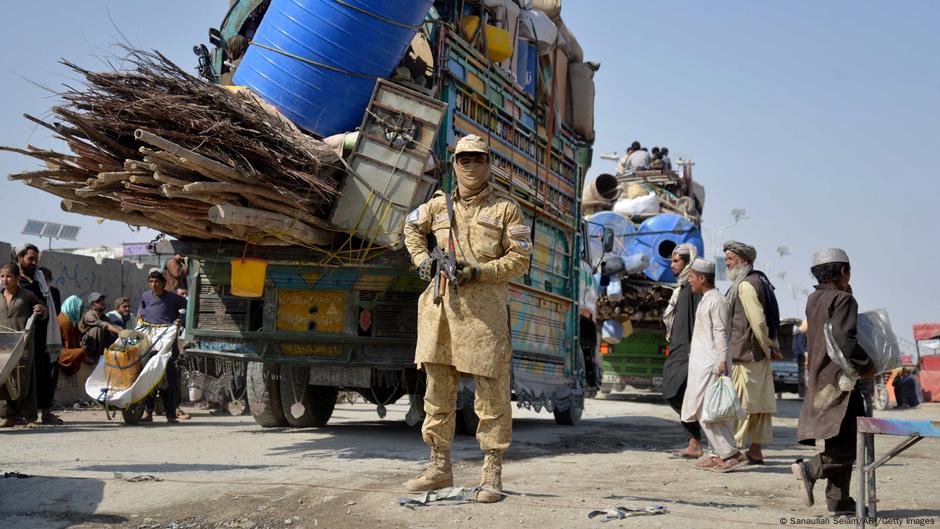
Afghans residing in Pakistan — even those not in border regions — claim the Pakistani government is increasing efforts to make them depart the nation.
In the wake of deadly clashesbetween the Taliban in Afghanistan and Pakistan last month, Pakistani officials have increased theirinitiatives to return Afghan migrants attempts to bring back Afghan migrants programs aimed at repatriating Afghan migrants efforts directed towards sending Afghan migrants back projects focused on the return of Afghan migrants undertakings to repatriate Afghan individuals campaigns to repatriate Afghan nationals actions taken to repatriate Afghan refugees strategies for the return of Afghan migrants movements to send Afghan migrants back to their homeland, including increasing police operations targeting Afghan-owned businesses and leased residences.
The increase is noticeable well beyond the border regions, reaching as far as the capital, Islamabad, and the adjacent city of Rawalpindi. Property owners, worried about legal consequences, have removed Afghan tenants or declined to renew their leases, compelling families to seek alternative housing.
Afghans residing in Pakistan also encountermajor challenges if they try to extend their visasa process that is expensive, unpredictable, and frequently plagued by substantial delays.
“We are in hiding, with our families scattered, unable to remain in one location because of the fear of being arrested and facing police violence. Our businesses have stopped operating, our children have left school, and we don’t have the time to think about what comes next,” said an Afghan individual who preferred to remain anonymous.
This location serves as my residence
Over the past two weeks, multiple Afghans who have established themselves in Pakistan mentioned that law enforcement officers were conducting house searches across various areas in Islamabad and Rawalpindi.
Apart from the raids and continuous administrative obstacles for individuals attempting to remain in Pakistan legally, the Pakistani police have begun issuing statements in mosques, cautioning that anyone who assists Afghan migrants, such as by providing them with shelter or storage space, will be regarded as a criminal by the government.
Many urban Afghans have been shocked by this change in policy, since they have lived and worked in Pakistan for decades.
“I was born in Pakistan and completed my education here; this place is my home. We have built our lives and careers in this country, and I never imagined that the place that has given me everything would one day force me out. It’s truly heartbreaking, and we are shocked that this could happen to us,” 32-year-old engineer Abdullah Khan, told .
Islamabad views Afghans as a potential security threat during the ongoing conflict
The Pakistani administration, nevertheless, maintains thatUnlawful Afghan migrants present a security threat.
For many years, we have accepted Afghans into our nation, but it is now crucial for those living here illegally to leave with honor and consideration,” said Talal Chaudhry, a high-ranking official from the interior ministry. Chaudhry further stated that “some Afghans are connected to militant groups and drug-related offenses, and many are supporting these unlawful activities.
Afghan activist Aziz Gull, in turn, states that migrants are beingemployed as a tool in the disputebetween Islamabad and the Taliban.
Peaceful individuals from Afghanistan in Pakistan have no place to call home,” he stated. “Why would they present a security threat to the country that hosts them?
He further stated that Afghans should not be treated as tools in the political conflicts between the two governments.
No place to go but the parks?
Zahra Mosavi, an Afghan activist currently residing in Pakistan while in hiding and having faced arrest by Pakistani police, stated that Pakistani property owners could now be subject to tax penalties and monetary fines for leasing properties or businesses to Afghans.
“Following this decision, landlords have started mistreating Afghan residents, despite the fact that they have signed one-year leases with several months remaining. Without retrieving the security deposits, they continue to pressure Afghans to vacate the premises daily. Some landlords have even cut off electricity and gas to Afghan homes,” Mosavi stated.
Mosavi also cautioned that certain families are turning to parks for refuge, with their circumstances becoming increasingly desperate as the weather turns colder.
Sardar Akhter, a property owner in one of Rawalpindi’s high-end residential communities, mentioned he was unaware of the government’s stringent regulations regarding hosting Afghan nationals. Meanwhile, he needed to clarify with the police that his tenants had departed and that he had terminated their lease contracts.
“The police searched my home, and I promised them that we would not lease it anymore. Nevertheless, they keep watching our property,” he said.
Many years of welcoming Afghan refugees
Pakistan has provided shelter to multiple waves of refugees from neighboring Afghanistan over many years, including those who escaped the Soviet invasion, which spanned almost a decade beginning in late 1979.
More Afghan migrants left during the civil war in the 1990s, the U.S.-backed invasion in 2001, and the following years of conflict andthe collapse of Kabul by the Taliban in 2021.
In recent years, however, Pakistan is committed to decreasing the population of Afghans residing within its borders..
As per the United Nations High Commissioner for Refugees (UNHCR), more than 1.5 million Afghansleft Pakistan either by their own choice or through forcefrom the start of the campaign in 2023 until mid-October 2025.
The UNHCR also estimates that roughly three million Afghan citizens remain in the country, with around 1.4 million possessing valid paperwork.
“UNHCR values Pakistan’s kindness in providing refuge to refugees for more than 45 years despite its difficulties. Pakistan has a distinguished record of welcoming others, and maintaining this legacy is crucial at this important moment, but we are worried about the tough conditions that Afghans are experiencing in Pakistan,” Qaiser Khan Afridi, the UNHCR representative in Pakistan, stated.
Edited by: Darko Janjevic
Author: Haroon Janjua (based in Islamabad)




 jasdooit
Leave a comment