
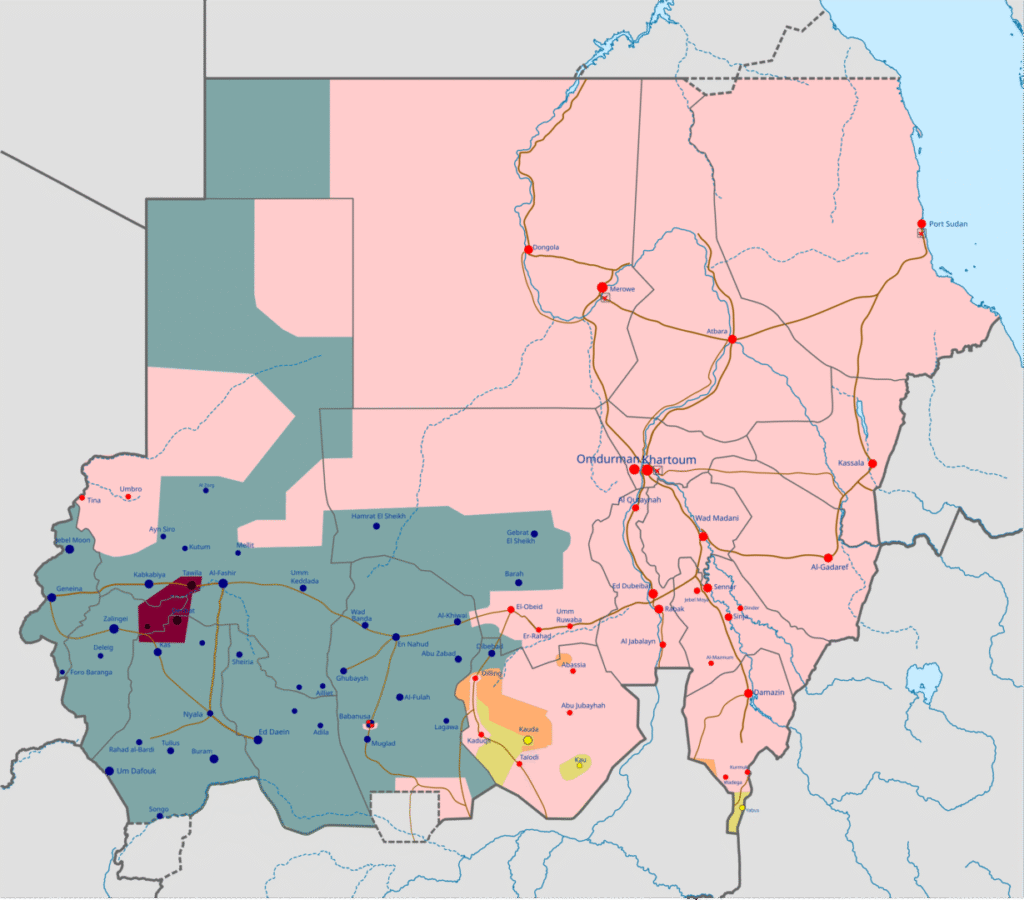
The conflict in Sudan goes beyond mere military confrontation; it is a struggle for truth. The suppression of free expression is a sorrow for the people of Sudan and a danger to democratic values globally. We need to unite to guarantee that the voices of Sudanese reporters remain heard.
As the world observes the UN-announced World Day for the Elimination of Impunity for Crimes against Journalists (IDEI)* today, and the UNESCO Observatory of Killed Journalists 84 reporters have been killed globally this year, with Sudan’s figures being especially alarming.
Prior to the start of the present conflicts, approximately 3,000 reporters were working in Sudan, yet at least 2,000 have since left for nearby nations due to concerns for their safety.
At least 32 journalists have lost their lives since the war began, as reported by the Sudanese Journalists Syndicate. Additionally, seven journalists are known to be in custody—five are detained by the paramilitary Rapid Support Forces (RSF), which controls much of Darfur, and two others are held by the military government’s Security and Intelligence Service. Killings and arrests have been accompanied by organized disinformation efforts and the suppression of information. Mistreatment is no longer restricted to journalists but now extends to anyone suspected of associating with them.
The Sudanese Journalists Syndicate has documented 110 incidents within a single year, and following the start of the conflict in April 2023, journalists and media organizations have faced over 500 violations.
Everything happens without consequences, making journalists and media professionals “easy targets” for both parties involved. The continuous conflict has severely affected the nation’s press and media environment, destroying what remained of its independent media, which had already been weakened by three decades of authoritarian rule. We must support Sudanese journalists and media organizations in their efforts to report the truth, and urge all conflicting parties to ensure the safety and freedom of journalists.
Deadly silence
Sudanese media outlets have fallen into a deadly silence. Over 90% of these organizations have ceased operations, resulting in the Sudanese population being completely cut off from information during a period when access to independent news and data is especially vital. Millions of displaced individuals in conflict zones and marginalized regions, along with Sudanese refugees in nearby countries, depend on Radio Dabanga’s daily shortwave and satellite broadcasts.broadcastsFor trustworthy, unbiased news. In Sudan, internet and mobile phone access is restricted, monitored, unstable, and sporadic, particularly in marginalized regions and communities.
Out of the 22 local radio stations that were active in Sudan, only two continue to function within a restricted capacity, airing one-sided content that favors the agenda of a particular group.
War of misinformation
In addition to the overt violence, a battle of false information is intensifying, worsening the situation. With no trustworthy news sources available, myths and fabricated stories circulate, as each party tries to dominate the story. The people of Sudan, who desperately require truthful information to safeguard themselves and their loved ones, are kept in ignorance.
Article 19 of the Universal Declaration of Human Rightsstates that each person has the rightto search for, obtain, and share information and concepts via any form of media and irrespective of borders.Free and open media are crucial for the right to access information, but each year, Sudan remains at the bottom of the annual Reporters Without Borders list.Press Freedom Index, ranked 149th out of 180 countries surveyed in 2024.
It is essential to put an end to the lack of consequences for crimes committed against journalists, both in Sudan and globally, and to enable independent media to deliver critical information that helps individuals make well-informed choices.
*The UN General Assembly passed a resolution A/RES/68/163 at its 68th session in 2013, in acknowledgment of the wide-ranging effects of impunity, particularly regarding crimes against journalists, it declared November 2 as the ‘World Day for the Elimination of Impunity for Crimes against Journalists(IDEI). The Resolution called on Member States to adopt specific actions against the current culture of impunity. The date was selected to mark the anniversary of the killing of two French journalists in Mali on 2 November 2013.
Kamal Elsadig is an experienced Sudanese journalist, the Editor in Chief of Radio Dabanga, and head of theSudan Media Foruman association of independent Sudanese press and media groups.
#CtrlAltMute #UNESCO #EndImpunity
Copyright 2025 Dabanga. All rights reserved. Distributed by AllAfrica Global Media ().
Tagged: Sudan, Press and Media, Legal and Judicial Affairs, East Africa
Provided by SyndiGate Media Inc. (Syndigate.info).


 jasdooit
Leave a comment