
- MORE: Astronaut who was stuck in space for 286 days dramatically ANNOUNCES RETIREMENT from NASA
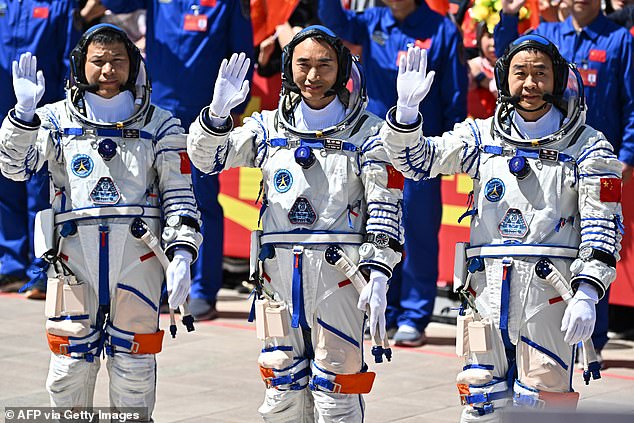
Three astronauts who have been in space for six months are currently stuck in orbit following possible issues with their spacecraft.hurt by hazardous fragments drifting around the planet.
ChinaThe China Manned Spaceflight Agency (CMSA) has stated that the crew from its Shenzhou 20 mission will have to remain aboard the Chinese space station, Tiangong.
The new arrivals had already reached the space laboratory following their launch in a separate rocket on October 31.
Astronauts Chen Dong, Chen Zhongrui, and Wang Jie have been stationed at Tiangong, also known as Heavenly Palace, since April, conducting scientific experiments, performing spacewalks, andliving in zero gravity.
At a time prior to the trio formally transferring the station to the Shenzhou 21 team on November 5, the capsule intended for the astronauts’ return to Earth was hit by anUnknown object in Earth’s orbit.
The impact created a visible imprint on the spacecraft’s exterior, causing the crew to worry that Shenzhou 20 might have suffered internal harm that could threaten their return journey.
The two groups of astronauts must now thoroughly examine the spacecraft to identify any significant issues before trying to use it again. The next set of return data has not been made available yet.
This is the second instance this year where an astronaut team has been stuck in space because of an issue with their spacecraft, occurring only seven months after NASA’sSuni Williams and Butch Wilmorewere saved from the International Space Station.
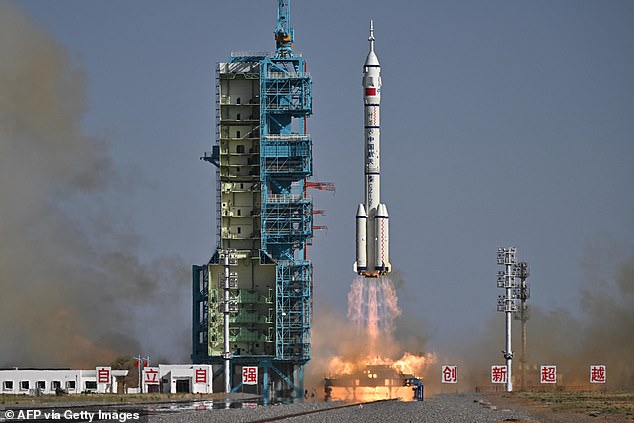
Chinese authorities are uncertain about what impacted the spacecraft, although the damage is thought to have resulted from space debris—essentially discarded material orbiting Earth from past space missions and rocket flights.
This may involve a wide range of items, such as fragments from malfunctioning satellites and lost tools during spacewalks, as well as large sections of abandoned rocket components.
This drifting waste is circulating the globe at astonishing speeds reaching 17,000mph, which is the typical speed for items in low Earth orbit.
This could pose a significant risk for crewed spacecraft, akin to driving through a storm of bullets.
Currently, approximately 19,000 fragments of space waste are being monitored by the US in Earth’s orbit, nottracking the operational satellites.
Nevertheless, scientists from NASA believe there might be more than half a million tiny fragments that are difficult to monitor.
“The evaluation of effects and risk analysis is in progress,” officials from CMSA stated, as reported by CNN.
Nevertheless, the agency did not disclose any information regarding the duration it could take for the teams from Shenzhou 20 and 21 to inspect the vessel and fix any damage that occurred.
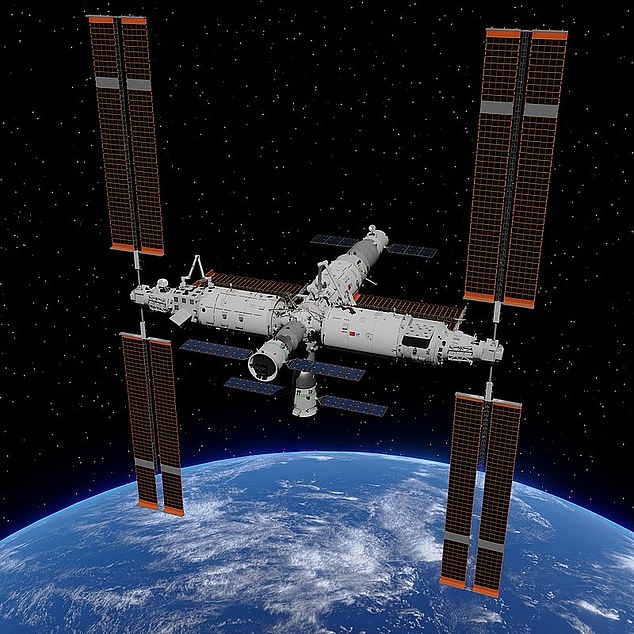
This is not the first instance where space debris has impacted a crewed spacecraft as astronauts circled the Earth.
The Russian Mir space station experienced multiple impacts from small fragments of space debris throughout its operational years in the 1980s and 1990s.
The International Space Station (ISS) has also experienced multiple impacts from space debris, including several instances thatinflicted substantial harm on the US and Russian-backed space station.
In 2021, a fragment of space debris created a hole in one of the station’s robotic arms.
Only a year later, an unidentified object struck a Russian Soyuz spacecraft that was docked, creating a nearly one-inch wide hole in its radiator and resulting in a coolant leak.
Regarding the crew of Shenzhou 20, it remains unclear what the alternative strategy would be if the damage to their spacecraft cannot be fixed.
The Shenzhou 21 mission was also planned to remain aboard the station for six months, reserved solely for Chinese astronauts.
- Are astronauts in danger as space debris and unseen cracks pose a threat to make the ISS the next major disaster in space?
- What potential dangers could small space debris and micrometeoroids pose to the aging International Space Station and its courageous crew?
- What led to Boeing’s malfunctioning Starliner spacecraft being stuck with astronauts on the ISS for several months?
- Is Boeing’s problematic Starliner mission causing astronauts to be dangerously stuck in space for an additional six months?
- Might the extended consequences of space travel be endangering the well-being of our courageous astronauts on the ISS?




 jasdooit
Leave a comment