
The Lee Jae-myung administration announced on the 4th that it plans to allocate a budget surpassing 10 trillion South Korean won for next year, aiming to position the country among the world’s top three AI nations. Jensen Huang, CEO of NVIDIA, has agreed to provide 260,000 GPUs (graphics processing units) to South Korea, creating new opportunities. However, there is a growing trend of AI professionals leaving the country. South Korea’s net inflow of AI talent is -0.36 per 10,000 people, placing it 35th out of 38 OECD (Organisation for Economic Co-operation and Development) countries. Industry experts express concern, saying, “We have cars but no drivers, guns but no bullets.” This newspaper urgently examines Taiwan’s situation, which previously faced brain drain but has recently managed to reverse the trend through strong cooperation between the government, universities, and businesses.
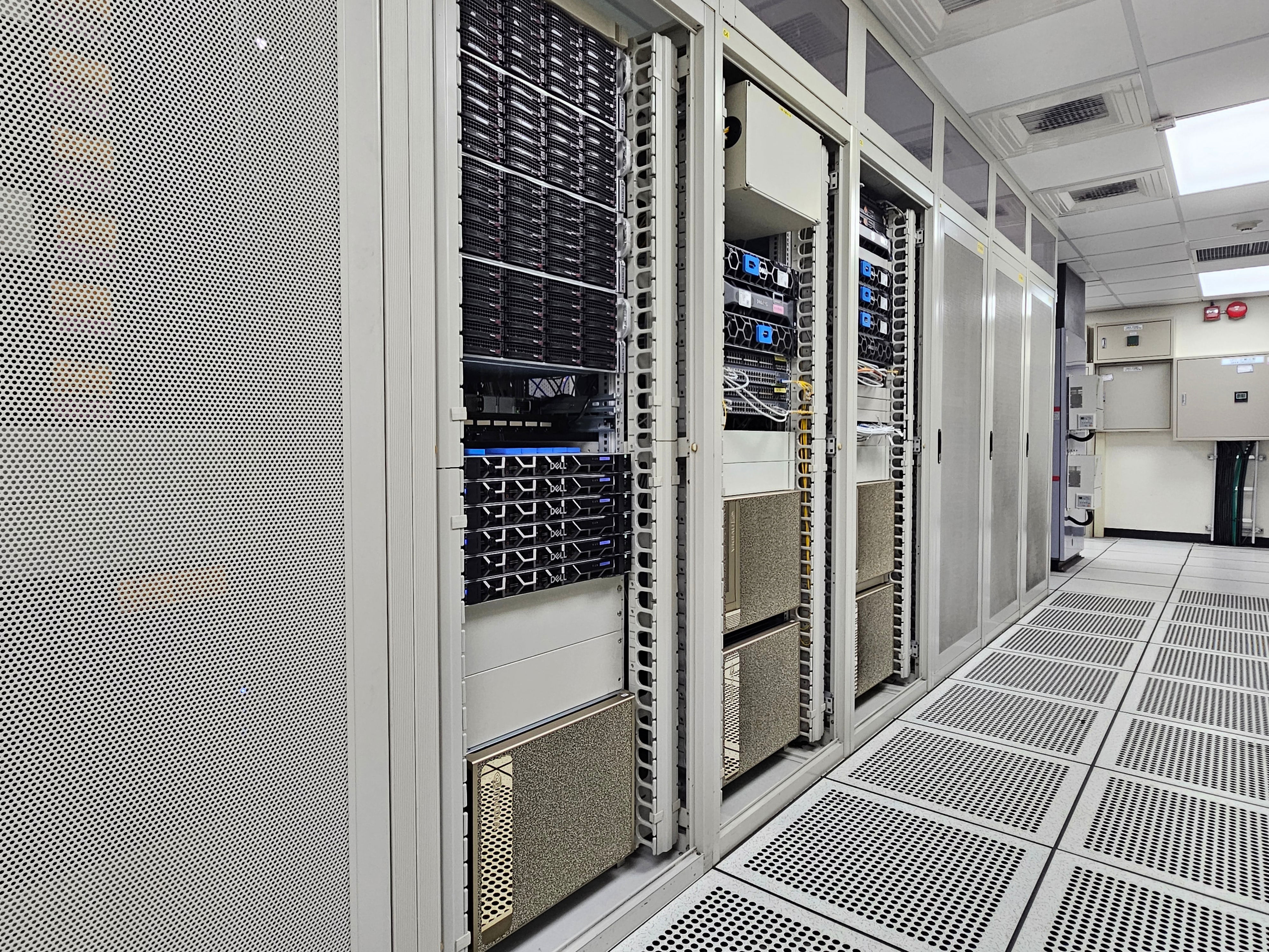
During a recent trip by our reporting team to the Information Technology Service Center at National Yang Ming Chiao Tung University, the outside temperature was above 30 degrees Celsius, yet the server room remained cool enough for wearing short sleeves thanks to a specialized cooling system that manages heat from 160 servers. In contrast, South Korea’s Seoul National University Engineering College has not yet implemented similar infrastructure because of financial limitations.
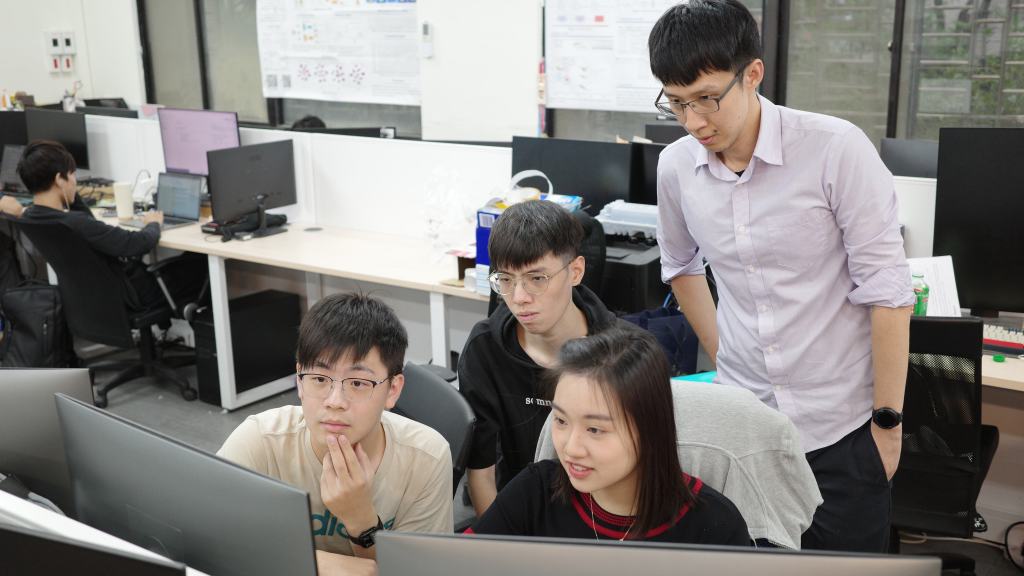
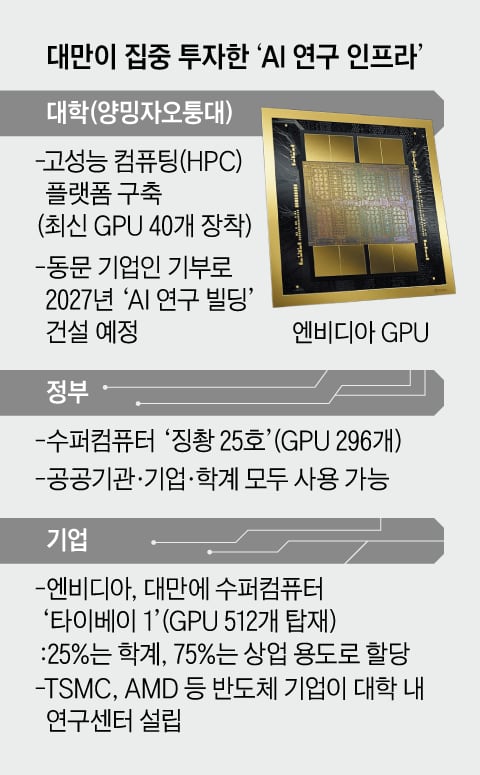
In the middle of the server room was the high-performance computing (HPC) system, a central AI server launched last August at a price of 3 billion South Korean won. Designed for AI research, this system includes 40 GPUs and can execute 1.7 quadrillion operations per second. The HPC has allowed the university to develop large language models (LLMs) on its own. Very few universities in Asia have infrastructure of this size. Research efficiency has greatly increased. Professor She Xipingchun from the Department of Computer Science, who works on AI, stated, “Previously, the GPUs in our lab had limited performance and power, which restricted the choice of research topics. With access to the HPC, we have finally started projects that were delayed for a long time.”

◇With the Expansion of Advanced AI Infrastructure, Talent Is Coming Back: Taiwan’s Turnaround Amid Brain Drain
The AI research facilities at National Yang Ming Chiao Tung University are expected to grow further. Entrepreneurs who are alumni of the semiconductor firm Pyson and the electronics company Wistron have committed donations of 6.3 billion and 4.5 billion Korean won, respectively, to build two AI research centers on the Tainan campus by 2027. A university representative said, “There is a strong tradition of alumni entrepreneurs contributing to the institution. The initiative goes beyond constructing buildings; it aims to develop talent through integrated learning and real-world industry partnerships, with industry professionals and faculty working together on research.”
The Taiwanese administration has also taken proactive steps to enhance AI infrastructure. A notable example is the supercomputer “Jingchuang 25” (Crystal Creation 25), developed by the National High-Performance Computing Center under the National Science Council. Introduced in June of the previous year, Jingchuang 25 features 37 NVIDIA AI servers (H100·H200) and 296 GPUs. Both businesses and academic institutions can access it after passing a public competition. Around the same time, NVIDIA provided Taiwan with another supercomputer, “Taipei 1,” which is also available for use by both academia and industry. Twenty-five percent of its usage is designated for academic purposes, while 75 percent is allocated for commercial applications. During a visit to Taiwan in April, Jensen Huang revealed plans to donate an “AI factory,” a large-scale AI infrastructure facility. Jian Rencong, a renowned professor in the Department of Electrical Engineering at National Yang Ming Chiao Tung University, stated, “The three pillars—universities, government, and industry—are firmly establishing a foundation that enables Taiwanese scientists to undertake long-term AI projects.”
Taiwanese academic circles believe this research infrastructure will significantly help in drawing international talent. Professor She Xipingchun stated, “U.S. universities often provide conditions such as ‘You can exclusively use X number of GPUs if you join our university’ to attract professors. GPUs will become a crucial competitive advantage in attracting researchers.”
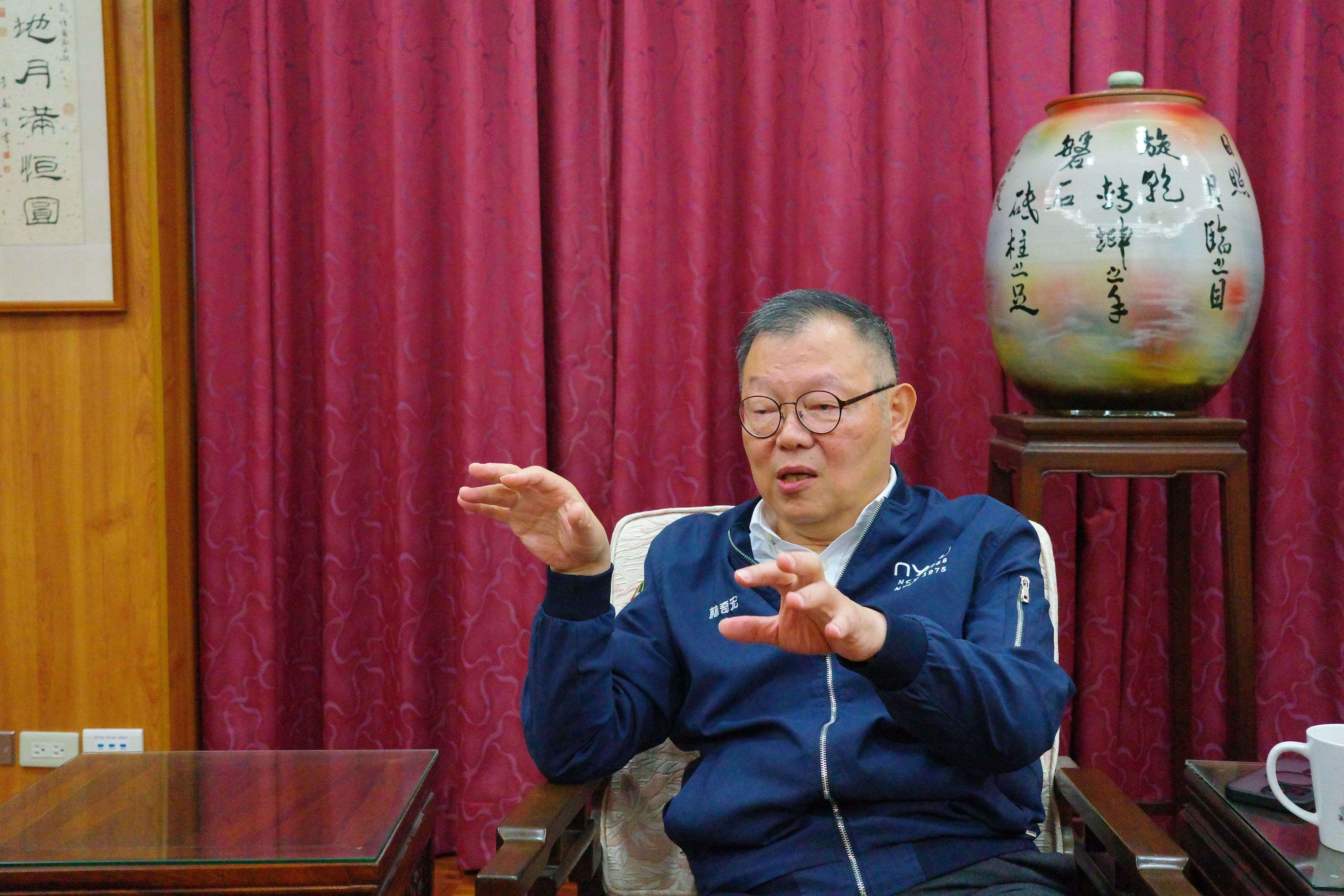
Numerous opportunities for industry-academia collaboration” are also drawing talent to Taiwan. Major semiconductor companies, such as NVIDIA, AMD, TSMC, and MediaTek, have set up research centers on university campuses and are actively engaging in joint research initiatives. President Lin Chih-hung of National Yang Ming Chiao Tung University stated, “Sixty-five percent of CEOs in the Hsinchu Science Park, which is known as the birthplace of Taiwan’s electronics industry, are graduates of this university, highlighting our strong industry-academia partnerships.” Professor Li Qiyu from the Department of Computer Science, who obtained his PhD from UCLA and joined the university, mentioned, “The availability of research collaboration opportunities with top Taiwanese semiconductor companies greatly influenced my decision to come back.” Professor She Xipingchun, who returned to Taiwan six years ago after earning his PhD from Texas A&M University, added, “It is quite common for companies and universities to communicate and collaborate on projects in both directions. These opportunities are very advantageous for researchers.
Universities are making efforts to draw in skilled individuals by establishing conditions that support free inquiry. For example, National Yang Ming Chiao Tung University offers “startup funds” to new researchers upon opening their laboratories, independent of their salaries, and eases their administrative burdens. New faculty members, especially, have experienced notable decreases in both administrative tasks and teaching loads. This enables them to dedicate adequate time to establishing research teams, seeking external research funding, and developing industry or international research collaborations.
Lin Xinyi, 23, a master’s degree candidate in computer science at National Yang Ming Chiao Tung University, stated, “The research infrastructure has significantly improved, and there are numerous opportunities for collaboration between industry and academia, resulting in more chances to find employment at local companies or become university lecturers. This is the reason why more individuals are opting to remain in Taiwan instead of pursuing studies overseas.”




 jasdooit
Leave a comment