
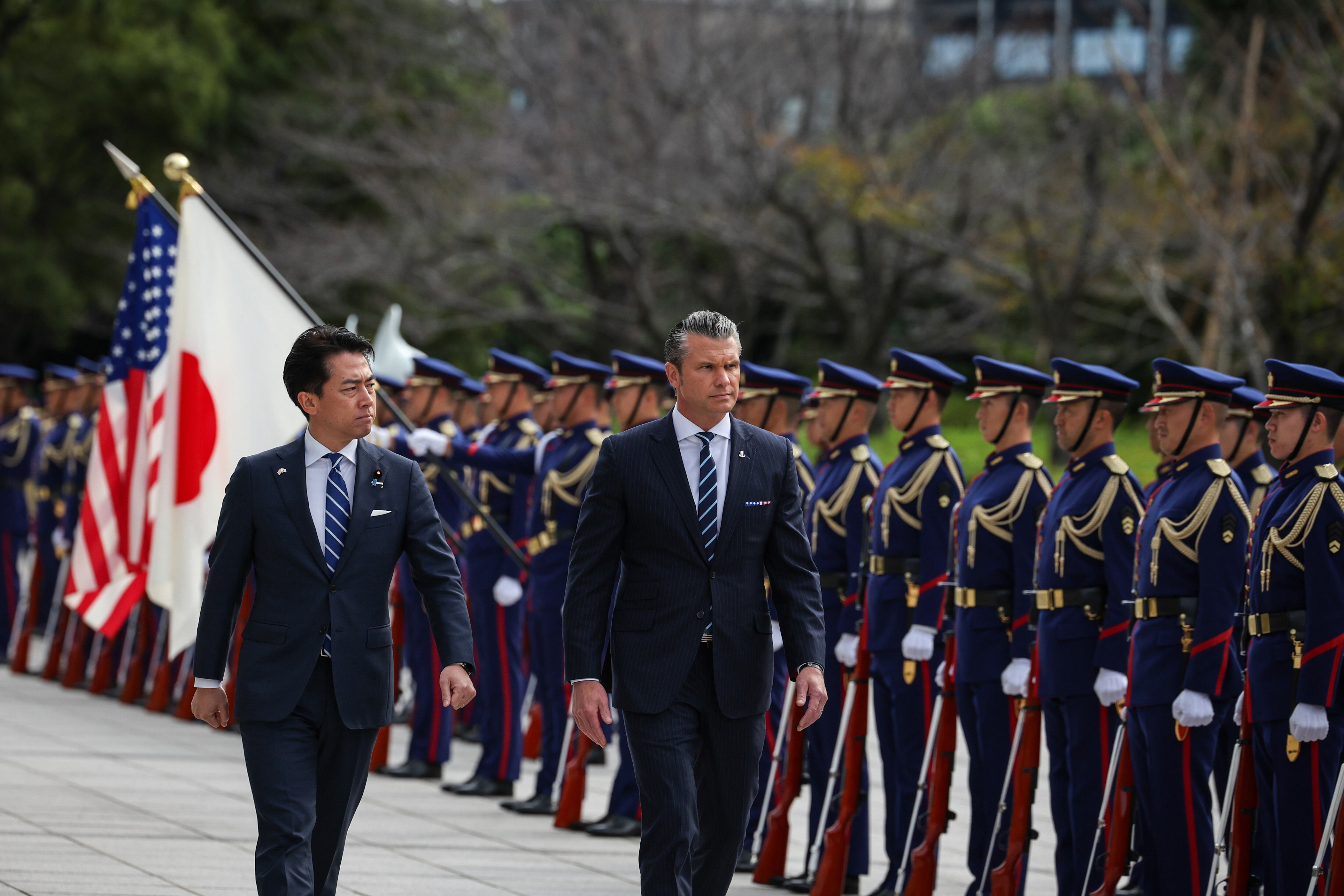
The United States and Japan are proceeding with the collaborative creation of cutting-edge unmanned aerial vehicles (UAVs) that incorporate artificial intelligence (AI) features. These AI-enabled UAVs, set to be produced in large quantities through their partnership, are anticipated to be utilized in military operations alongside other nations aligned with democratic values, acting as a crucial tool to challenge the military coalition formed by China, Russia, and North Korea. The U.S. Department of Defense and Japan’s Ministry of Defense have recently officially unveiled the ‘SAMURAI (Strategic Advancement of Mutual Runtime Assurance Artificial Intelligence)’ joint AI UAV development initiative.
The project’s official name is the ‘Strategic Advancement of Mutual Runtime Assurance Artificial Intelligence’. Taking the first letters of each word forms ‘SAMURAI’, which phonetically matches the term for feudal-era Japanese warriors (samurai, 侍). The project’s name reflects the two nations’ determination to showcase their strong military alliance to the international community.
After the initiation of the ‘SAMURAI’ project, a joint advisory group made up of AI drone experts from the U.S. Air Force, Space Force, and Japan’s Air Self-Defense Force is anticipated to be established soon. The main objective of the SAMURAI initiative is to bring advanced drones that can fly autonomously toward targets and identify them to the market. The strategy involves using these drones for not only surveillance in dangerous zones and standalone missions but also as ‘loyal wingmen’ to assist manned fighter aircraft.
The U.S. Air Force mentioned, “Future fighter aircraft incorporating AI and autonomous flight technologies from the SAMURAI initiative will improve mission safety and compatibility, strengthening the U.S.-Japan alliance.” Military analyst John Jacobs, affiliated with Japan’s defense industry website ‘NSBT Japan’, predicted, “Unmanned aerial vehicles created through the SAMURAI project will act as ‘loyal wingmen’ to boost the air capabilities of the U.S. and Japan by participating in numerous operations, including cooperation with manned aircraft.”
Bilateral technical teams are anticipated to concentrate on bringing the next-generation technology in development, ‘Runtime Assurance (RTA)’, to market. RTA is a feature that continuously tracks the UAV’s condition in real time and automatically transitions to a secure controller rather than the main AI controller when unforeseen risks or failures occur, ensuring seamless operations even in hazardous scenarios. Should the SAMURAI project successfully create AI-driven autonomous drones, they are expected to act as a ‘spearhead’ for the free world against the military coalition comprising North Korea, China, and Russia.
A U.S. military-oriented publication, the ‘Indo-Pacific Defense Forum,’ mentioned in its most recent edition, “Although Japan has started collaborating on next-generation advanced aircraft with the U.K. and Italy, UAVs developed under the SAMURAI initiative are also anticipated to ensure compatibility with the tripartite-produced fighters.” The publication added, “UAVs featuring RTA technology could be utilized across multiple areas, including offering ongoing intelligence about North Korean missile tests or addressing Chinese activities concerning the Senkaku Islands, which are under Japan’s practical jurisdiction.”
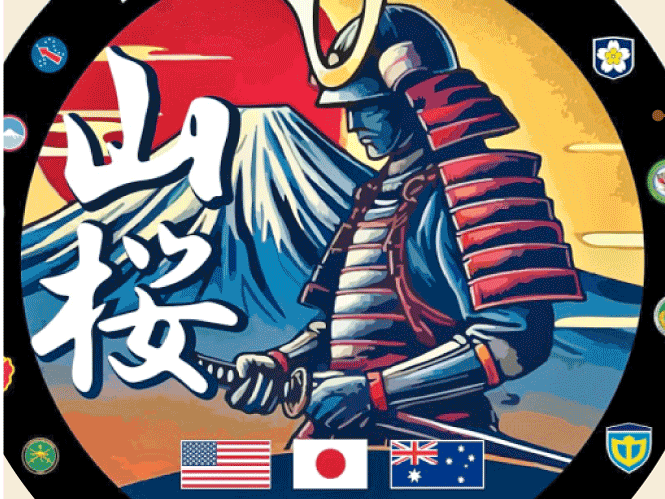
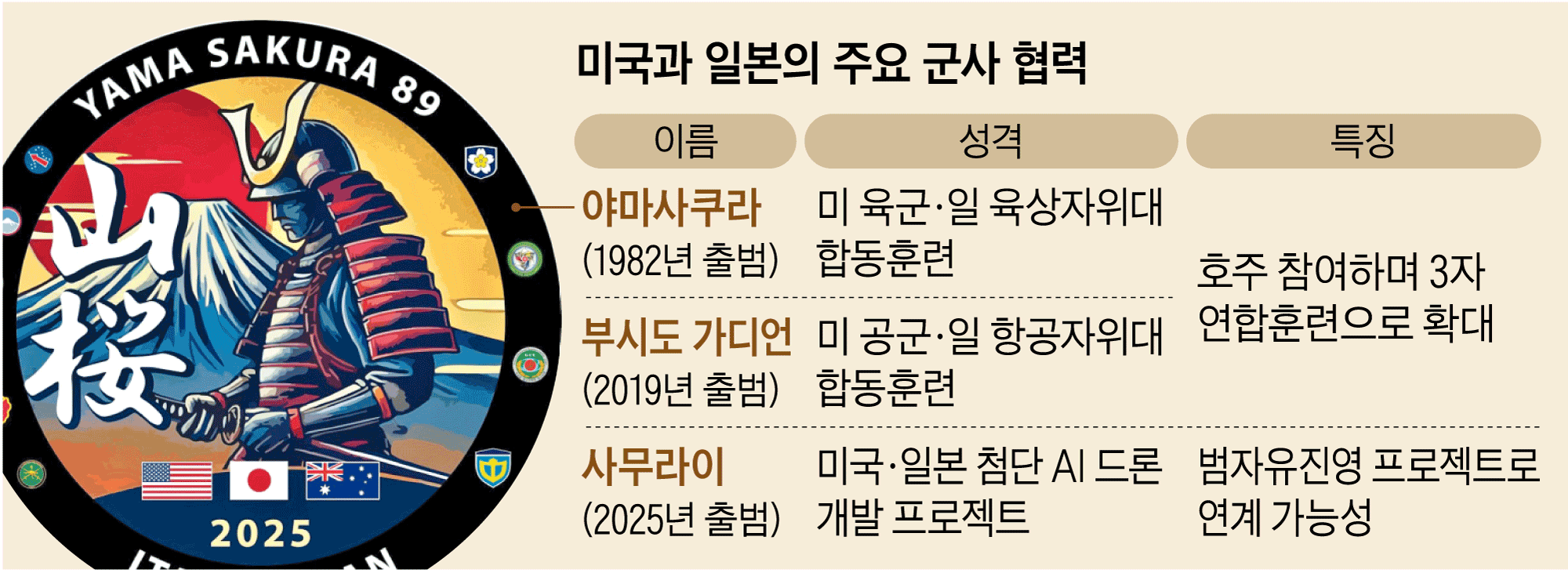
In 2019, a two-yearly joint exercise was initiated by the U.S. Air Force and Japan’s Air Self-Defense Force, called ‘Bushido Guardian,’ which includes ‘Bushido,’ meaning the path of the warrior, associated with the samurai’s ethical code. This year’s Bushido Guardian exercise, which ended last month, took place as a three-way drill involving Australia. Since 1982, the U.S. Army and Japan’s Ground Self-Defense Force have carried out the major annual Yamasakura joint exercise, which, similar to Bushido Guardian, has grown into a U.S.-Japan-Australia tripartite drill. The exercise is named after the wild cherry blossom tree Yamasakura, which flowers in Japan’s mountains and fields.
A new Yamasakura logo is revealed annually, some of which include samurai in armor. According to analysis, these military-themed names and projects are developed by combining the symbolic meaning of samurai in Japan with Western fascination for Japan’s warrior culture.


 jasdooit
Leave a comment