
Sri Lanka, November 7 – The United Nations’ Food and Agriculture Organization (FAO) has assisted seven nations in obtaining $5.8 million in funding from the Kunming Biodiversity Fund (KBF) to incorporate biodiversity into agricultural food systems and promote initiatives aligned with the Kunming-Montreal Global Biodiversity Framework (KMGBF).
The chosen initiatives promote various KMGBF objectives related to sustainable farming, conservation of ecosystems, information management, regulation of invasive species, and the involvement of local communities, including Indigenous Peoples, in biodiversity management for food and agriculture.
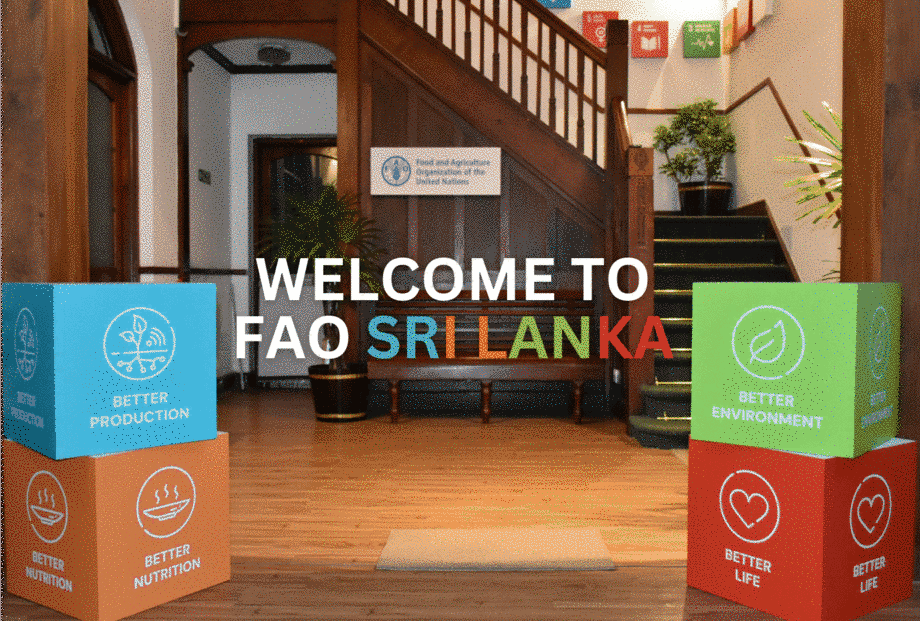
The Director-General of the Food and Agriculture Organization, QU Dongyu, remarked: “The Kunming Biodiversity Fund plays a key role in supporting developing nations to meet global biodiversity targets via sustainable farming within the framework of the Four Betters, and in highlighting the crucial function of agrifood systems in preventing biodiversity decline, encouraging food variety, and offering answers to the climate challenge.”
Introduced by China in 2021 during the initial phase of the UN Biodiversity Conference, which was chaired by China, the KBF assists developing nations in conserving biodiversity and achieving the objectives of the KMGBF, with an emphasis on areas that have high biodiversity but lack sufficient capacity and resources.
The financial support will focus on the following initiatives:
Incorporating biodiversity into agricultural and food systems to carry out National Biodiversity Strategies and Action Plans (NBSAPs)
This initiative seeks to integrate biodiversity into agricultural and food systems by establishing supportive environments that speed up the adoption of NBSAPs in Madagascar, Uganda, and Mexico. It will foster policy coordination, build institutional capabilities, enhance financial incentives for biodiversity-conscious practices, and encourage the exchange of knowledge.
Fostering communities via the management of ecological and species knowledge to realize the KMGBF in the Cook Islands
By enhancing knowledge systems, updating data, and encouraging sustainable approaches, the initiative aims to enable communities to protect, restore, and oversee biodiversity. It will create a national ecosystem classification, update the biodiversity database, and encourage community-driven conservation that incorporates traditional knowledge and agroecology, with an emphasis on women and young people.
Efficient control of non-native invasive species for the advantage of ecosystems in Nepal
By concentrating on stopping the spread and controlling current numbers of invasive alien species, the initiative seeks to minimize their effect on ecosystems and local communities by utilizing community-driven efforts, collaborative methods, and enhanced institutional capabilities.
Measures for the prevention and management of non-native invasive species to improve biosecurity in Sri Lanka
This initiative aims to enhance a country’s ability to prevent and address invasive alien species by upgrading border security, educating frontline personnel, and engaging local communities in eradication activities and public education programs.
Enhancing the resilience of the ecosystem and ensuring sustainable management of Lake Egirdir in Turkey
The initiative aims to increase public understanding and advocate for actions that support biodiversity to safeguard the lake and its surrounding environments. Additionally, it will assist in promoting water-saving farming methods and foster sustainable ways of life within the area.
Agricultural food systems are closely connected to over half of the KMGBF’s objectives. The FAO has a crucial role in their execution by encouraging policy alignment, advocating for effective methods, and expanding innovations to speed up achievements in global biodiversity targets.
The Food and Agriculture Organization is dedicated to changing agricultural food systems into catalysts for sustainable development. This shift is crucial for halting the decline of biodiversity while securing food supply, enhancing nutrition, and supporting resilient lives for everyone.




 jasdooit
Leave a comment