
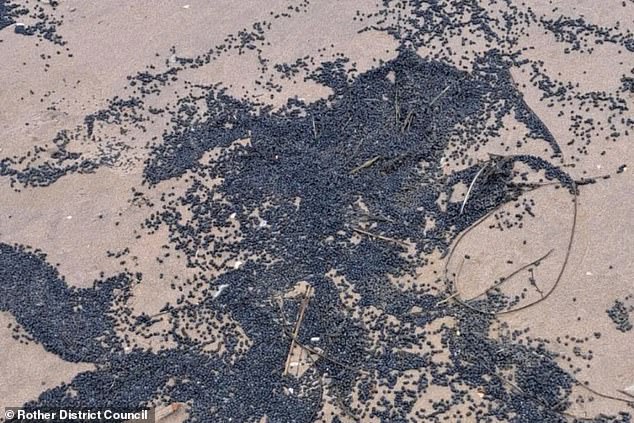
A critical alert has been released for dog owners as thousands of harmful plastic particles appear on UK shorelines.
The pellets, known as microbeads or plastic pellets, have washed up in large quantities on Camber Sands beach in East Sussex.
Scientists worry that the small particles might harm any animals that unintentionally consume them.
The Rother District Council has released a warning, advising dog owners to maintain strict control over their pets when walking on the beach.
Even though the plastics themselves pose no threat, they have the ability to take in harmful pollutants and chemicals while floating in the ocean.
Furthermore, if ingested, the plastic beads might lead to life-threatening obstructions within a dog’s digestive tract.
A representative from the Rother District Council stated: ‘We are not informed of any issues related to public health.’
Nevertheless, considering the possible danger to animals, we strongly recommend that dog owners keep their dogs on leashes and closely monitor them while on the beach to prevent them from potentially ingesting the nurdles.
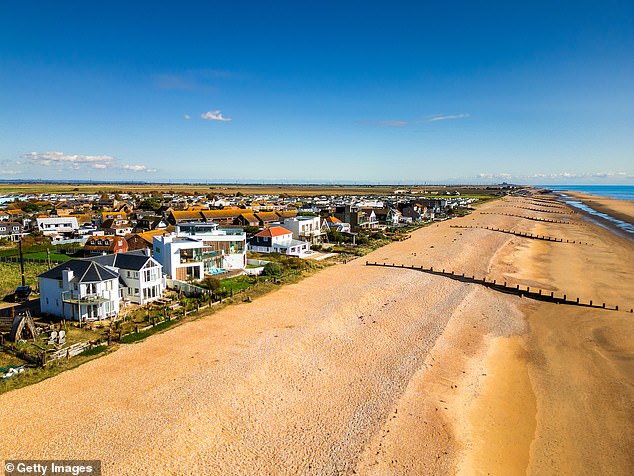
Nurdles and bio-beads have been discovered along the full three-mile stretch of the beach, which spans the boundary with Kent.
Nurdles are small plastic particles, measuring under five millimeters in size, which serve as a fundamental component in the manufacturing of plastics.
Bio-beads, on the other hand, are tiny, pitted plastic fragments utilized as a filtration material in water purification facilities.
The Jurassic Coast team, collaborating with Rother District Council to remove microplastics, described the event as “one of the worst we’ve encountered.”
A representative of the organization stated in a release that the magnitude of the leak was ‘astonishing’.
They stated: ‘Millions of them are spread across the sand and come ashore with each wave. They pose significant danger to animals and are very challenging to eliminate.’
Nurdles and bio-beads pose significant risks to wild birds and fish, as they may confuse the tiny plastic fragments with food.
This makes the animals feel satisfied without offering any nutritional value, ultimately leading them to die from starvation.
Bio-beads are rich in polycyclic aromatic hydrocarbons (PAHs), substances that are recognized for their cancer-causing effects.
These plastic particles also have high concentrations of lead, antimony, and bromine, which can seep into animals’ tissues when consumed.
If ingested, both kinds of pellets may cause serious internal injuries, ulcers, organ damage, or potentially death if the animal does not receive treatment.
It remains uncertain what led to the leak or the source of the plastic.
Nurdles usually find their way into the water system whenThey get misplaced during delivery and transportation.
In the meantime, bio-beads often leave water treatment facilities because of inadequate handling, heavy rainfall, or incorrect disposal methods.
As per the Rother District Council’s data, bio-beads have been discovered in large quantities on Camber Sands in recent years.
A 2021 council report stated that it was “not feasible” to determine the quantity of bio-beads present on Camber Sands beach due to the large number being hidden within the sand.
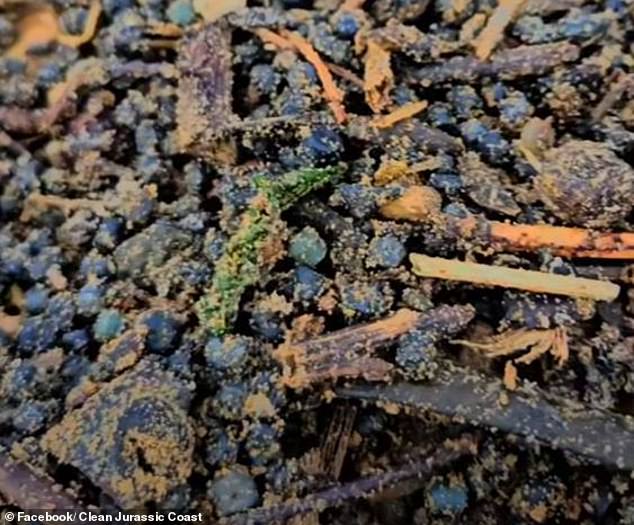
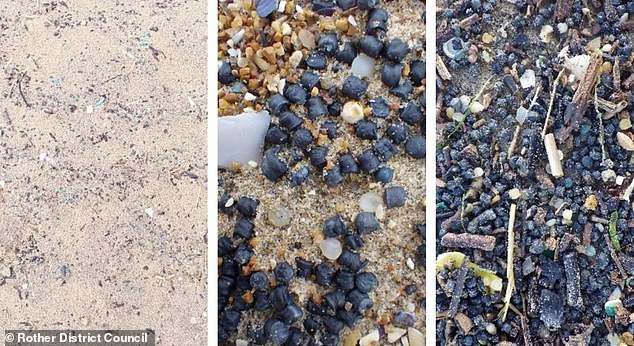
The document highlights that Southern Water manages five water purification facilities in the region that utilize bio-beads.
These plants have previously caused multiple pollution events due to “inadequate maintenance and improper handling.”
During the council’s examination of these locations, they discovered scattered bio-beads in open containers that had been left outdoors, on the ground close to treatment areas, and also outside the main gate entrances.
Nevertheless, there is currently no proof indicating that this leak came from any of Southern Water’s processing facilities in the region.
Ongoing clean-up activities on the beach involve teams who are optimistic that the high spring tide will gather the waste along the shoreline.
The council is also collaborating with Nurdle, a non-profit organization focused on eliminating microplastics from British shorelines.
Nevertheless, as the beads are very tiny and tend to disperse easily, it is improbable that every bit of plastic will be eliminated.
Southern Water has been reached for a response.
- Could your coastal retreat pose an unnoticed health risk because of microplastic pollution?
- Could this devastating ocean disaster result in an ecological crisis as microplastics appear on the Norfolk shoreline?
- Could this dangerous ‘poison parsnip’ pose a threat to our cherished dogs on UK shores, leading to an urgent alert from officials?
- Does the beautiful coastline conceal dangerous health risks as minute plastic particles infiltrate our air, water, and even seafood?
- With the East Coast facing a beach emergency, why are dangerous needles and trash unexpectedly appearing, surprising visitors and worrying officials?




 jasdooit
Leave a comment