
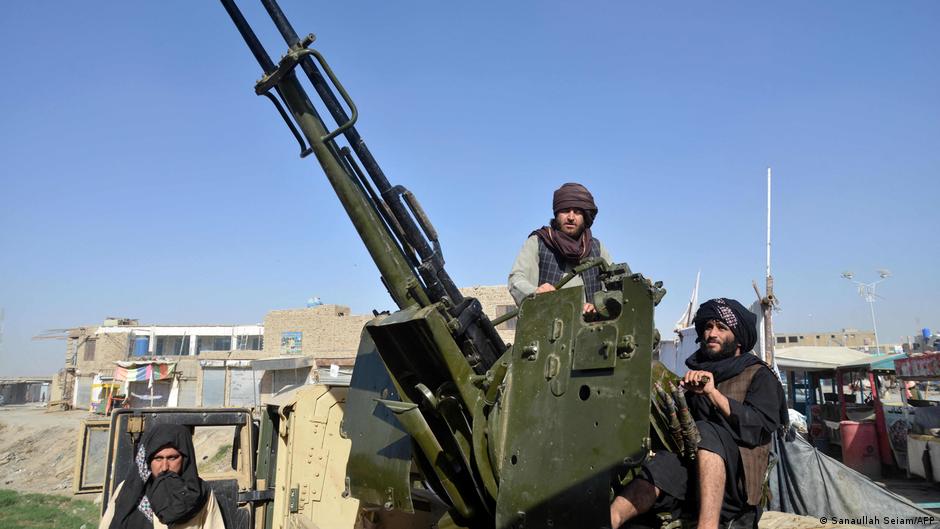
Clashes along the Afghanistan-Pakistan border have led to uncommon displays of public backing in Afghan cities for the Taliban, although experts believe a rise in nationalistic feelings will not result in recognition for the government.
In the most recent conflict between Pakistan and the Afghan government in late November, the Taliban alleged that Pakistan launched an attack on Afghan soil andkilling a minimum of 10 civilians, among them nine minors.
The armed group began to carry out their own attacks along the 2,640-kilometer (1,640-mile) boundary with Pakistan, referred to as the Durand Line.
Pakistan’s armed forces dismissed the Taliban’s assertions of attacking Afghanistan as “unfounded.” Duringprevious bouts of violence, Pakistani officials maintained they weretargeting extremist groups concealed within Afghanistan’s territory.
Nevertheless, the Taliban’s actions attracted large gatherings of supporters in Afghan cities like Khost and Jalalabad, where locals welcomed Taliban fighters with flower garlands. On social media, clips of Taliban members being celebrated as heroes spread widely, depicting the group as protectors of Afghanistan’s territorial sovereignty.
These photographs arrive as the Taliban encounter increasing global condemnation due to a series of strict internal regulations, such as broad limitations on women’s schooling and job opportunities.
A shift in perception?
Nevertheless, the conflicts seemed to alter the domestic discussion about the Taliban. Numerous Afghan social media users commended the group’s robust reaction towards Pakistan, and even some ex-Afghan security officials—previously ardent opponents of the Taliban—expressed understanding for their former enemy.
Khushal Sadat, a former deputy interior minister who spent years battling the Taliban, was among these individuals. He claimed that the Taliban responded much more strongly to Pakistan’s attacks than the previous Western-supported administration ever did.
“At that time, we believed the Taliban were [Pakistan’s] allies; indeed, there were one or two individuals who followed their commands, but not everyone was like that,” he stated.
These comments would have been unimaginable just a few months prior, particularly from someone who was previously recognized for their strong resistance against the group before the US-backed government in Afghanistan fell in 2021.
Taliban’s social media fuel initiative
Bismillah Taban, a security expert and former Afghan government employee, stated that Taliban fighters swiftly sought to take advantage of the border conflicts.
“He stated that supporters of this group attempted to exploit the situation to cover up the Taliban’s actions,” he added, noting that numerous Taliban officials actively spread images of the festivities.
Although there appears to be a surge of public admiration, numerous political analysts, including individuals from the previous Afghan administration, claim that the Taliban cannot achieve genuine recognition by clashing with Pakistan.
Mujib Rahman Rahimi, who held high-ranking government roles in Afghanistan prior to the Taliban’s rise to power, maintains that the group’s struggle against Pakistani military forces does not encompass Afghanistan as a whole.
“The Taliban’s conflicts with Pakistan are not the war of the legitimate government of Afghanistan, nor is it a conflict between the Afghan people and Pakistan,” he stated.
The Taliban are regarded by former officials as Pakistan’s “puppet and proxy group.”
Rahimi and other former officials claim that Pakistan was involved in the formation and backing of the Taliban, suggesting that the current conflicts indicate a deterioration in their connection with the group, not a conflict between countries.
“This is a conflict involving a puppet and proxy group that Pakistan itself established,” he stated.
In the same way, Abbas Basir, the former minister of higher education, claims that the Taliban’s behavior is motivated not by national interest but by their choice to shelter militants who cause unrest on both sides of the border.
More specifically, the Afghan Taliban are being accused of providing refuge to Tehrik-i-Taliban Pakistan (TTP), a militant group that shares ideological ties with the Afghan Taliban and is dedicated to opposing the Pakistani government.
“By offering shelter to the TTP, the Taliban have set the stage for conflict with Pakistan,” Basir stated, noting that regular Afghans also reject the presence of TTP fighters in their nation.
The increase in violent incidents, as per numerous experts, provides minimal chances of triggering political or societal transformation within Afghanistan.
What caused former allies to become adversaries?
Just a few years back, the interactions between the Taliban and Pakistan’s military were not characterized by hostility.
In the days after the Western-backed Afghan government fell in August 2021, General Faiz Hameed, who was then head of Pakistan’s military intelligence, was seen sipping tea at a Kabul hotel while engaging with Taliban leaders. This photo was broadly viewed as proof of Islamabad’s control over the group.
Currently, Pakistan claims that the Taliban are permitting TTP members to plan and organize lethal attacks targeting Pakistani security forces from within Afghanistan. The Taliban reject these accusations, stating that they do not allow any group to utilize Afghan territory to endanger another nation.
The situation escalated in October after Pakistan launched attacks on Kabul, prompting Taliban fighters to assault Pakistani border posts. In response, the Pakistani military used mortar fire and drone strikes, leading to an increasing number of casualties.Both parties subsequently reached an agreement for a truce.on October 19, following discussions in the Qatari capital, Doha. However,they have not managed to find a more lasting resolution, during the continuous peace negotiationsweakened by ongoing outbreaks of aggression.
Edited by: Darko Janjevic
Author: Hussain Sirat




 jasdooit
Leave a comment