
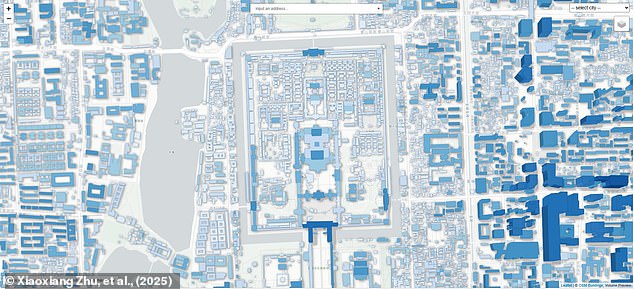
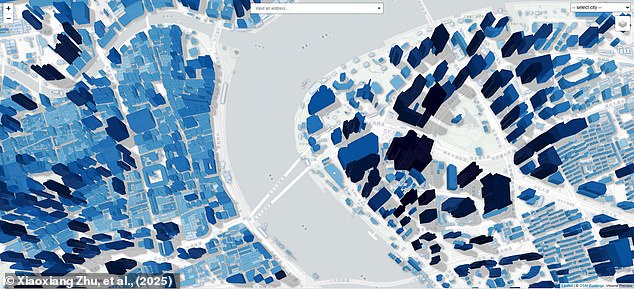
From historic homes in EdinburghFrom the comfort of your home, you can now discover every structure across the globe, including the impressive skyscrapers in Shanghai.
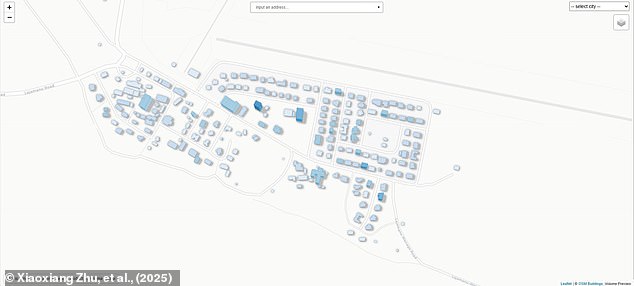
A remarkable new map illustrates the position and dimensions of 2.75 billion structures with extraordinary three-dimensional precision.
Known as the GlobalBuildingAtlas, it includes over a billion additional homes compared to the former largest database.
You can utilize it for your own use by accessing the interactive map provided below.
The World Building Atlas was developed by scholars from the Technical University of Munich (TUM) inGermanyutilizing an extensive collection of satellite information.
The researchers integrated almost 800,000 satellite images taken in 2019 along with anAIa method for estimating the size of absent structures using the heights of surrounding buildings.
Lead author Professor Xiaoxiang Zhu states: “Three-dimensional building data offers a far more precise representation of urbanization and poverty compared to conventional two-dimensional maps.”
Using 3D models, we can observe not just the footprint but also the volume of each structure, providing much more accurate understanding of living situations.
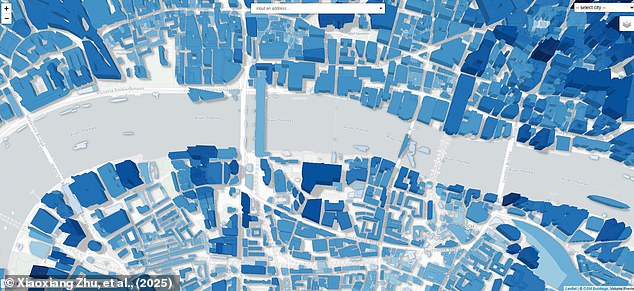
To locate your residence on the map, or to discover any other location around the globe, simply type your query in the ‘input address’ field at the top of the map.
The database will subsequently display a 3D model of any location globally, utilizing information gathered by satellites in orbit.
These three-dimensional models are highly precise in city environments, according to the researchers, with a resolution 30 times more detailed than similar databases.
The scientists mention that their website has attracted more than 280,000 views since it was launched a few days back.
This unforeseen popularity surpasses the site’s original purpose, causing the map to occasionally load slowly.
In addition to being intriguing to examine, this intricate map serves a significant scientific purpose.
Producing detailed maps of the world’s structures has historically been very challenging due to the need for specialized satellites to scan the earth using lasers.
This presents difficulties in scanning the entire world with sufficient accuracy.
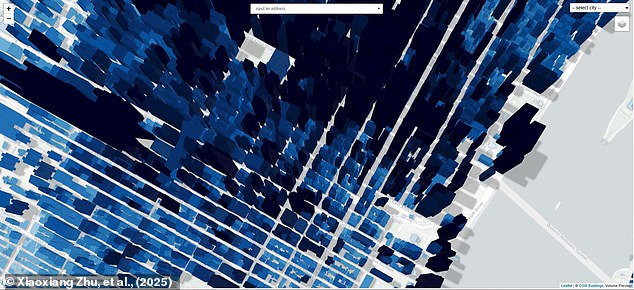
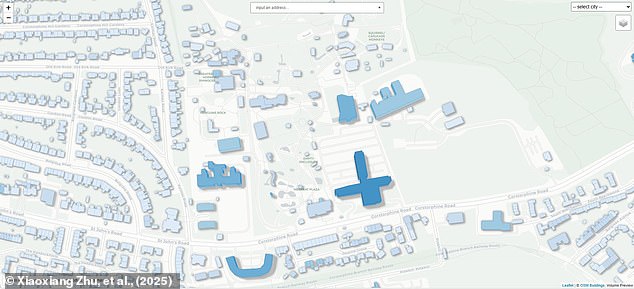
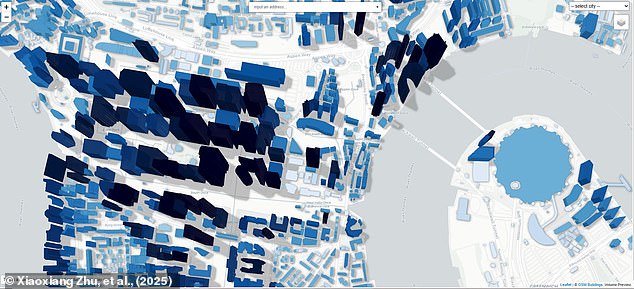
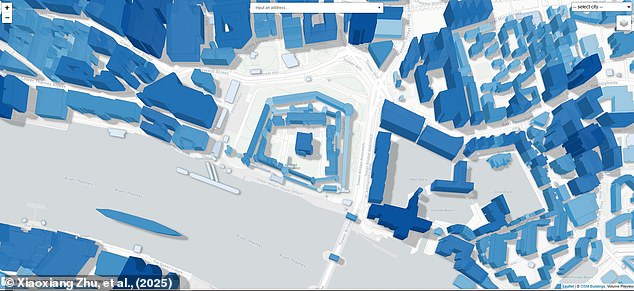
The scientists’ approach involved integrating laser scanning information with machine learning to complete the missing parts of the map.
The outcome is an intricate representation of the globe that can serve to examine progress, get ready for emergencies, and design upcoming urban expansions.
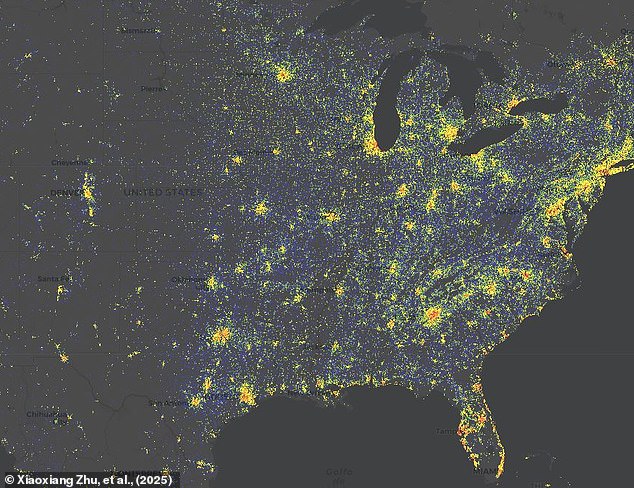
Based on their examination of the data, Asia contains 1.22 billion structures, nearly half of the global total of buildings.
Africa has approximately 540 million structures, surpassing Europe, which has 403 million buildings.
There are 295 million buildings in North America and 264 million in South America, whereas Oceania contains just 14 million.
Based on that information, the scientists have developed a novel method for assessing social and economic progress: total construction volume per person.
The core concept is that the greater the amount of space available per individual, the more affluent a nation is likely to be.
For instance, Finland leads in Europe with more than 3,900 cubic meters of construction space per individual andoften is listed as the happiest country in Europe.
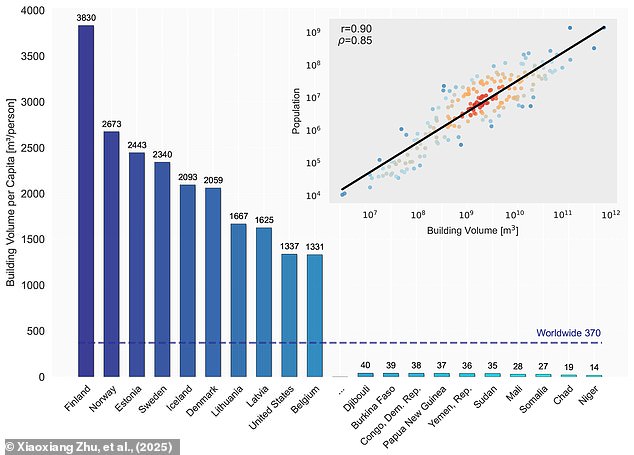
Greece, in contrast, which has experienced prolonged economic stagnation, has a building volume per person that is six times lower.
In the future, the scientists aim for this information to assist in organizing more residential areas or public amenities in regions that require them the most.
At the same time, the model could also be highly beneficial for disaster prevention by highlighting which regions are most vulnerable.
For instance, the German Aerospace Center is already exploring ways to incorporate the GlobalBuildingAtlas into its global disaster assistance efforts.
- Is the world’s biggest wooden city a preview of the future for eco-friendly city planning?
- Wondering about the massive urban plazas that are recognized as the biggest in the world?
- Is this stunning AI-created map the perfect resource for digital nomads looking for their ideal remote work locations around the globe?
- Is it worthwhile for adventurous travelers to reside in one of the narrowest structures on the planet?
- What innovative characteristics does the latest AI technology uncover regarding 40 million UK rooftops that could astonish you?



 jasdooit
Leave a comment