
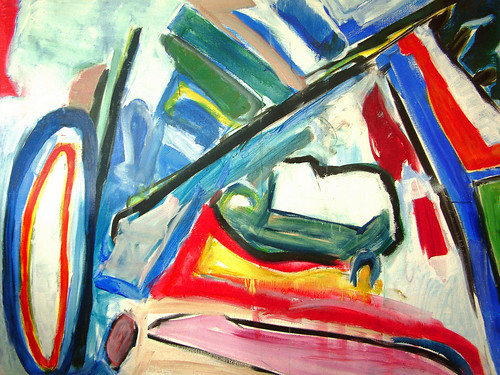
Artexhibition “Between Signals” encourages and prompts viewers to be attentive, to engage their senses, and to share the experience with themselves and the surrounding environment.
It launched on November 20 at the Nairobi Contemporary Art Institute (NCAI) and continues until December 31.
The exhibition is the result of a partnership between NCAI and Munyu Space, showcasing pieces from 17 artists utilizing various mediums.
Curated by Munyu Space, the event marks a shift away from traditional art viewing and standard methods of presenting art. It connects with the audience through a multi-sensory experience.
The exhibition conveys how we transform the signals detected in our environment through our bodies and how this affects our lifestyles. It also highlights the subtle way our bodies absorb signals and presents the outcomes in the exhibition’s works through research-driven investigations.
The exhibition invites you to listen, using both your external and internal ears, to remain still as you listen, and to discover where this listening leads you. What does this reveal about how you engage with the spaces around you? What limitations and challenges do these spaces and their contents present, and how do they influence your way of living?
SONICINQUIRY
Each of the three gallery spaces features a distinct pattern of sound, presented and experienced in various ways. Gallery one offers a sound that embodies a beautiful hum and a quiet, simmering anger. Antony Musiyo presents Astuta, a lamp created through a collaborative research-based exploration of the intersection and coexistence of traditional and modern technologies in design practice.
The lamp shades are crafted from dyed hyacinth collected from Lake Victoria, while the legs are made from aluminium sand-cast 3D molds that were designed based on a fictional character named Astuta. The practical lamps produce a soft yellow light, emphasizing the blend of green and brown hues on the lamp shades and the subtle shine of their silver legs, creating an elegant allure.
Cynthia Nyakiro and Chela Yego present their research and material experimentation throughKerketai,A Nandi foresight ritual, which includes examining internal organs to predict future events. Anger, carefully analyzed, displayed using materials collected on handmade paper, arranged in a semi-circular fashion encouraging circular movement around them; a beginning to the cyclical aspect of anger that the artist aims to express in the piece.
KabiKimari’s Paths of Desirecarefully examines home as a location you can always come back to, a place that gently greets you.
Gallerytwo presents a persistent sound. Muthoni in Mimi’s artwork encourages the viewer to engage profoundly. The space is filled with poetic pieces from a broader poem, reflections of a life marked by both sorrow and elegance. The poems serve as a lament for this dying world.
Muthoni’s performance during the exhibition opening was eerily beautiful. It began with a gentle melody, a soft hum that eventually led to a confrontation with the audience, highlighting how they superficially care, and offering a critique of capitalism:A physician providing you with pain medication, followed by presenting a invoice.
The Sounds of Nairobi offers a sound walk across the map of Nairobi’s Central Business District, which is laid out as a walking path on the floor, allowing participants to listen to various sounds gathered from Nairobi. These sounds encourage a profound reflection and a shared deep exploration of the city’s struggles, happiness, and essence through its inhabitants. What do these sounds signify? What do they represent to you?
SophiaBauer’s creations are fascinating in their presentation, not as sound but from sound. It stems from an investigation into the act of listening and perceiving audio, and how this can be expressed through textile materials via hand stitching.
Sonicstitchings originate from the recollection of sound. By the moment you complete a stitch, the sound you were listening to during its creation has already been substituted with something else, meaning your stitch is based on how you recalled it.
This is a beautiful tribute to the memory of sound and how it lingers in a stitch moments after it has left our ears. We often think of our memory as a visual experience of what we saw, but what does the same memory sound like?
Gallerythree is a rhythmic beat, its sound resembling a heartbeat. It is the fusion of two projection-mapping installations. Awour Onyango’sLibrary of Silence:Lawinois a deliberate essay exploring silence as both an act of removal and a form of defiance in the histories of Black womanhood.
The installation features pieces from colonial-era documentary footage, aiming to challenge, respond to, and evoke emotions about the treatment of the African woman as an entity that can be redefined by those in power. It highlights how a woman is perceived in terms of value and through the lens of desire and utility, as a tool.
Kimani’sInstallation, Sol Novus, feels like a journey deep within yourself that you almost become stuck in. It examines the threshold area between human awareness, technological enhancement and cosmic perspective.
Kimanidescribes his work as a life-sized collage of papercraft human figures arranged in a collective constellation, with light, sound, and motion meticulously mapped to create an experience of traversing altered states of consciousness.
This was an interesting installation, particularly because it does not necessarily require presence but an awareness of movement on a subconscious level.
HISTORY,MEMORY AND KNOWLEDGE
Kamwangi Njue’s work is showcased as an academic publication:The making of technicalmeaning. Divided into four sections, Njue seeks to showcase his research on generating new imagined objects through language. Kamwangi’s work strives to broaden our understanding of what creation signifies, and how we can create room within these creations to establish meaning and new objects that cater to our personal needs. It represents an invitation to a different form of freedom, one that you bestow upon yourself.
This concept of creating from creation leads me to discuss Adam Yawe’s work,MahindiChoma/Mbembe cia Ngara. Through it, he presents a creation inspired by an existing one: an incense holder shaped like a street-side corn stand.
He explores how we derive meaning from things that already exist in our lives, and how we engage with and collaborate with them to broaden these interactions, and how they benefit us. What can we create from what has already been made, and what does this signify to us? This work encourages an ongoing conversation and curiosity about our everyday activities, which is not only foundational but also culturally important.
TheShrine of the Unspoken:Continuum, by Wakianda, is made up of recycled filament, fabrics, and three-dimensional components. This installation develops from a previous display that examined silence, suffering, and unexpressed experiences endured by women’s bodies, and it investigates how they manage these intense feelings.
JamesKamande’s work Urban Shelters is highly welcoming and quickly captures your attention, perhaps because it seeks to explore the memory of Nairobi through its buildings. Kamande’s work offers an analysis of how Nairobi has been designed and remembered; how it is engaged with through its structures, and how this is changing and developing.
Themultimedia installation Echoes Between Wires by Kevo Stero, located at the end of the room in Gallery Two and facing Gallery Three, demands to be moved through and engaged with. It facilitates conversation and contemplation on an almost unconscious rather than deliberate transmission and recall of knowledge and culture.
It emphasizes the type of treatment that local and Indigenous knowledge receives. It is put aside for a future that remains undefined, failing to acknowledge that it, in itself, should be a means to shape this undefined future.
In Gallerythree, Tizzita Tefera’s the Queen Mother’s Shrine is an olfactory immersive experience: a variety of spices in bowls, flowers, coarse salt, and several other aromatic items placed on a table.
These, along with textile art on Taiwanese silk and Ethiopian shema hung on the wall, form a shrine dedicated to Queen Mother of Idia from Benin and other notable Black figures.
It represents a symbol of divine protection, ancestral guidance, and an ongoing remembrance of the same. Tizzita refers to her work as an invitation into a collective ritual of inquiry, self-reflection, and inner awareness, and it poses the question, “What is best for you, and your community?”
FINALTHOUGHTS
BetweenSignals demonstrates a curatorial and cultural consistency. It conveys a sense of urgency and calm in how we utilize our bodies to interpret the language that the world around us expresses, and how the recognition of both aspects creates a realm to examine what these meanings signify to us, and how they can be broadened to continue benefiting us.
In examining these meanings, we are also encouraged to reflect on our actions. Are we creating the same situations that have made our lives more difficult? In what ways are artists creating opportunities to technically explore potential paths for transformation and change in their surroundings?
The exhibition showcases artists as creators, researchers, advocates, and intermediaries between us and our lifestyles. It offers a reflective experience worth visiting before it concludes on December 31.
Provided by SyndiGate Media Inc.Syndigate.info).

 jasdooit
Leave a comment