
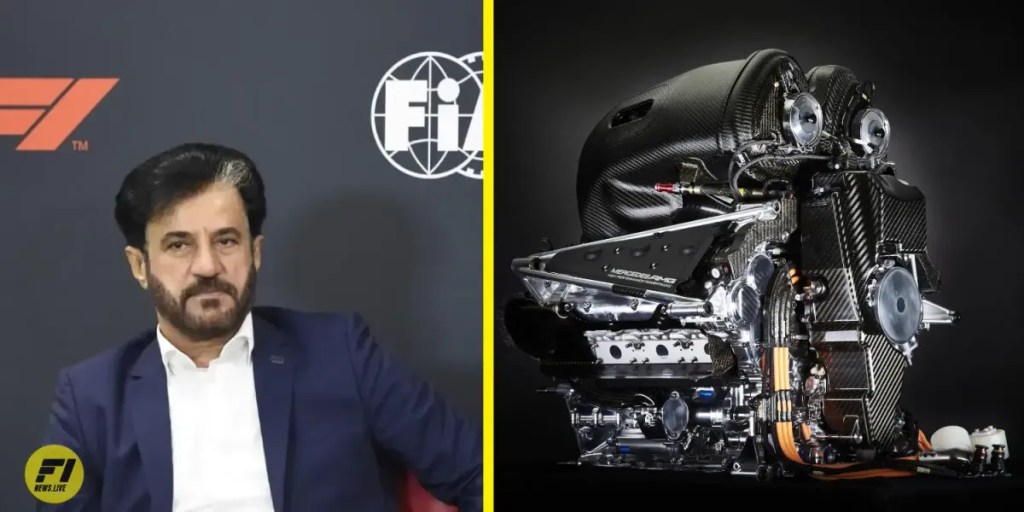
The FIA’s claim that Formula One has drawn lessons from its history is facing scrutiny well before any wheels are spun under the 2026 rules.
This recent attempt to eliminate another engine loophole is more than just a technical adjustment; it serves as a clear warning to manufacturers who are already testing the boundaries of the regulations.
At the core of the matter lies fuel-flow measurement, an area that may appear simple but has long been a source of innovative approaches. As the sport transitions to an energy-based fuel restriction instead of a mass-flow limit, accuracy transforms into an advantage.
Even the slightest difference in the way fuel energy is calculated might result in significant performance variations, particularly in an age where electric systems will have a much more prominent role.
The FIA has now clearly stated that any effort to alter the temperature of the fuel-flow meter is not allowed, whether such interference is direct or indirect. This adjustment in language is important.
It recognizes that contemporary Formula One engineering seldom functions in absolute terms. Components influence each other, heat moves around, and unexpected outcomes can easily be presented as mere chance. The regulatory authority is no longer prepared to accept this reasoning.
What catches attention is the timing. We are still in the early stages of developing the 2026 engines, but the FIA has already begun to intervene and explain their position. This indicates worry—not necessarily that a team has discovered a clear-cut benefit, but that simulations and initial ideas are moving towards areas that make the officials uneasy.
This also reflects a broader truth regarding the 2026 reset. The performance gap is anticipated to be significant, and manufacturers recognize that early advantages could influence multiple seasons. In such a scenario, ambiguous areas turn into strategic opportunities. By addressing them promptly, the FIA aims to ensure that the competitive landscape is determined by technical skill rather than rule manipulation.
There is also a political dimension. As brands such as Audi join in, and established leaders are keen not to be seen on the wrong side of history, the FIA is taking control now instead of waiting for later. This is an effort to prevent rule changes during the cycle that can lead to frustration and speculation.
It is yet to be determined if this method genuinely creates a fair environment. One thing is certain, the 2026 era will be closely monitored, and teams are being explicitly informed that innovation must stay within well-established limits.
In contemporary Formula One, the differences are incredibly small — and the regulations are once more emerging as the most influential factor in performance.
Provided by SyndiGate Media Inc.Syndigate.info).



 jasdooit
Leave a comment