
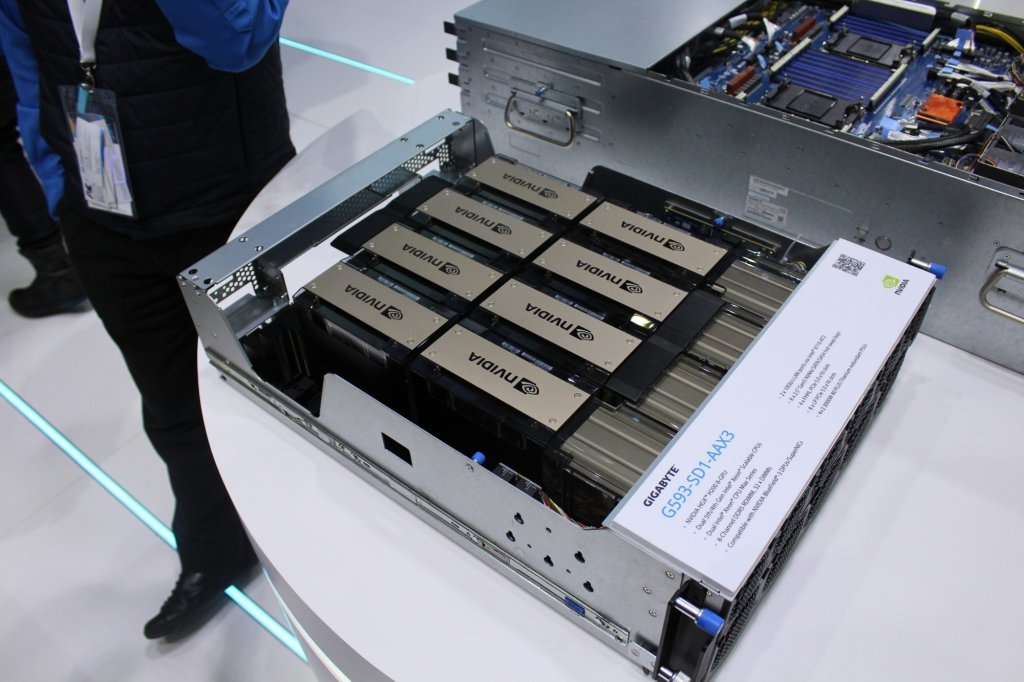
The American semiconductor company intends to meet initial orders using current inventory, with expected deliveries ranging from 40,000 to 80,000 H200 chips.
Nvidiahas informed Chinese clients that it plans to begin shipping its H200artificial intelligencefries to China before theLunar New Yeara vacation in mid-February, as reported by three individuals who are aware of the situation.
A US semiconductor company intends to fulfill initial orders using current inventory, with expected shipments ranging from 5,000 to 10,000 chip modules — roughly 40,000 to 80,000 H200 AI chips, according to the first and second sources.
Nvidia has also informed Chinese clients about its intention to expand manufacturing capabilities for the chips, with requests for this additional capacity expected to begin in the second quarter of 2026, according to the third source.
Are you curious about the most significant issues and developments happening globally? Find the answers withSCMP Knowledge, our latest platform offering carefully selected content including explainers, FAQs, analyses, and infographics, presented by our acclaimed team.
Considerable ambiguity persists, with Beijing still not having authorized any H200 acquisitions, and the schedule potentially changing based on governmental choices, according to the sources.
The entire strategy depends on government permission, the third source stated, noting that nothing is confirmed until the official approval is given.
The sources refused to be named because the conversations are confidential.
In a statement provided to Reuters, Nvidia stated: “We consistently oversee our supply chain. The licensed sales of the H200 to approved customers in China will not affect our capacity to supply customers in the”United States.”
China’s Ministry of Information Technology and Industrydid not promptly reply to a request for statement.
The scheduled shipments would signify the initial delivery of H200 chips to China following the US PresidentDonald Trumpmentioned earlier this month thatWashington would permit these transactionswith a 25% charge
Reuters reported last week that the Trump administration had initiated areview of license applications by different agenciesfor H200 chip sales to China, fulfilling his promise to permit the transactions.
The action marks a significant change in policy by the Biden administration, which previously prohibited the sale of advanced AI chips to China, citing issues of national security.
The H200, a component of Nvidia’s earlier Hopper series, continues to be extensively utilized in AI, even though it has been replaced by the company’s more recent models.Blackwell graphics processing units (GPUs).
Nvidia has concentrated its manufacturing efforts on the Blackwell series and the upcoming Rubin line, leading to a limited availability of H200.
Trump’s move occurs as China strives to enhance its local capabilitiessemiconductorindustry. Chinese chip manufacturers still have not reached the level of the H200, causing worries that permitting imports may hinder local development.
Chinese authorities convened urgent meetings last week to address the issue, considering whether to permit exports, as reported by Reuters. One suggestion involves requiring every H200 acquisition to be accompanied by a specific proportion of local chips, according to the report.
For Chinese tech giants likeAlibaba Group Holding and ByteDance, which have shown interest in purchasing H200 chips, the possible shipments would grant access to processors approximately six times more powerful than theH20, a reduced-performance GPU that Nvidia developed for China. Alibaba holds the South China Morning Post.
More Articles from SCMP
China’s significant trade surplus might lead to protective measures in 2026, according to a report.
More than 99% of Hong Kong residents have weak resistance to the ‘super flu’: scientists report
China proposes a law on Antarctic activities and the environment to safeguard national interests
This piece was first published in the South China Morning Post (www.scmp.com), a top news outlet covering China and Asia.
Copyright (c) 2025. South China Morning Post Publishers Ltd. All rights reserved.
 jasdooit
Leave a comment