

Germany invested €24 billion in military purchases in 2025, prioritizing European vendors but depending on American systems when local expertise is insufficient in its effort to upgrade — and do so rapidly.
The force’s 2025 procurement balance sheetsuggests that modernization has advanced even with significant demand, mainly because of streamlined processes and many Bundestag decisions.
Funded mainly via the special fund, the German Armed Forces carried out 149 acquisition projects. Many new systems have already been delivered or are currently being deployed.
A key emphasis was placed on the military, including additional shipments of the Puma infantry combat vehicle, produced by the German defense firms KNDS Deutschland and Rheinmetall Landsysteme.
However, not every weapon system for the Bundeswehr is produced in Germany. Most procurement contracts will be given to European manufacturers, with approximately 8% to be acquired from the United States, according to Euronews.reported in September.
Where Germany’s strengths face their boundaries
The weapon systems produced outside of Germany include theF35 fighter jets, the P-8A Poseidonmaritime surveillance aircraft for the navy and theTomahawk cruise missiles from the US.
However, acquisitions are also taking place in Europe, for instance, the replacement of the Bundeswehr’s P8 pistol with the Czech CZ P13.
Apart from German air defence systems like the IRIS-T, the German Army has acquired theArrow-3 missile defence system, which was created through collaboration between the US and Israel.
These systems hold significant importance for the German Armed Forces, such as the F35 fighter jet, which cannot be manufactured outside the United States because of the highly advanced and secret technologies involved.
Furthermore, specialized manufacturing plants, legal export restrictions like the International Traffic in Arms Regulations (ITAR), and strategic considerations hinder the production of the fighter jet overseas.
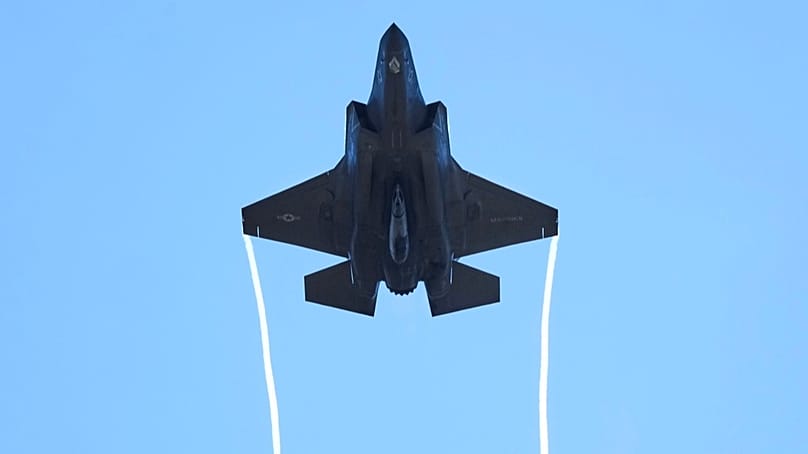
It has already been discussed whether European aircraft, such as the SwedishGripen, could serve as a replacement for the F-35.
But even this is not as straightforward as it seems: according to reports, the F-35A — the model that the German Armed Forces will also acquire — is approved to transport the US B61-12 nuclear bomb.
This implies that the jet can transport both standard and nuclear weapons, and is considered a possible replacement for older nuclear-armed aircraft like the Tornado within NATO’s nuclear sharing initiative.
Another possibility was the Franco-German-Spanish Future Combat Air System (FCAS), aimed at redefining the “air combat of the future” while ensuring autonomy from non-European allies.
Nevertheless, the initiative is still facing challenges: while the three nations continue to show political support for it, persistent industrial disputes, especially between Airbus and Dassault Aviation regarding leadership positions and task distribution in the Next Generation Fighter, are causing delays.
The goal of FCAS is not just one fighter plane, but a connected “system of systems” that includes a manned fighter jet, unmanned escort drones, and a digital combat cloud.
The initial test flight of the new aircraft is anticipated no earlier than 2030, with full functionality expected to be achieved by 2040. Nevertheless, it remains uncertain if the timeline and budget constraints will be fulfilled.
Political balancing act
Even though around 80% of defense equipment is purchased within Germany, achieving full autonomy remains difficult from a political perspective.
At a NATO gathering early in December, US Deputy Secretary of State Christopher Landau expressed criticism towards European nations for prioritizing their own defense sector over American vendors.
He urged Europe to transform its defense expenditures into practical capabilities and to avoid excluding any American firms from the market.
The recently published US National Security Strategyalso mentions that “from military partnerships to trade agreements and more, the United States will demand equitable treatment from other nations.”
“We will no longer accept, nor can we afford, free rides, trade deficits, aggressive economic tactics, and other actions that undermine our country’s long-standing goodwill and negatively impact our interests,” the strategy stated.
In an interview with Euronews, Ben Hodges, a retired Lieutenant General from the United States Army, stated that “the source from which Germany acquires its defense equipment should primarily be determined by what provides the Bundeswehr with the greatest capability.”
Nevertheless, he acknowledges that there are systems which Germany is currently unable — or unwilling — to develop.
Security specialist Dr. Christian Mölling also informed the German newspaper Bild that manufacturing solely in Germany is not possible because of time limitations.
If the new handgun for the soldiers had been manufactured in Germany, it would have necessitated new production facilities, government prepayments, and time, as stated by Mölling.
Standardization of European defense capacities
A further factor in European purchasing is the aim of achieving more uniformity and enhanced collaboration between the region’s military forces.
The European Union is encouraging the collective purchase of military equipment in order to unify the very diverse European defense market and minimize overlap. When multiple armed forces utilize similar or interoperable systems, joint operations become significantly more straightforward.
Therefore, initiatives like EDIRPA and theEuropean Defence Industry Programme(EDIP) aim to prompt member states to stop making individual national acquisitions and instead invest in unison.
The goal is a more unified European defense industry and technologically aligned weapon systems.
In the long run, as outlined by the EU strategy, this will not only enhance efficiency and solidarity, but also promote the military unification of Europe and the capacity for joint defense.


 jasdooit
Leave a comment