
The conflict that started with Russia’s invasion of Ukraine in 2022 has now lasted for three years and ten months, with emerging battlefield dynamics specific to contemporary warfare being consistently witnessed—situations that have not been encountered before.
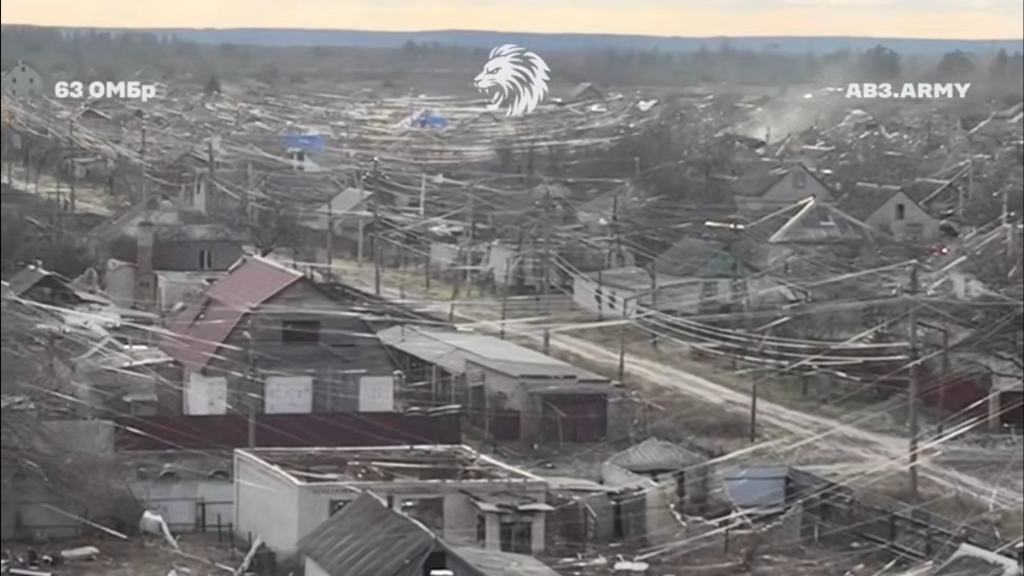
On the 19th, a video shared by Ukrainian troops revealed white lines that looked like spiderwebs covering a whole village along the eastern front in Ukraine. This occurred due to thin optical fiber cables deployed by fiber-optic drones flying above the combat zone, which got tangled. The cables integrated into the drones are glass-based fibers that transmit data using light, used to send control signals and video information. One drone can transport cables stretching for several dozen kilometers.
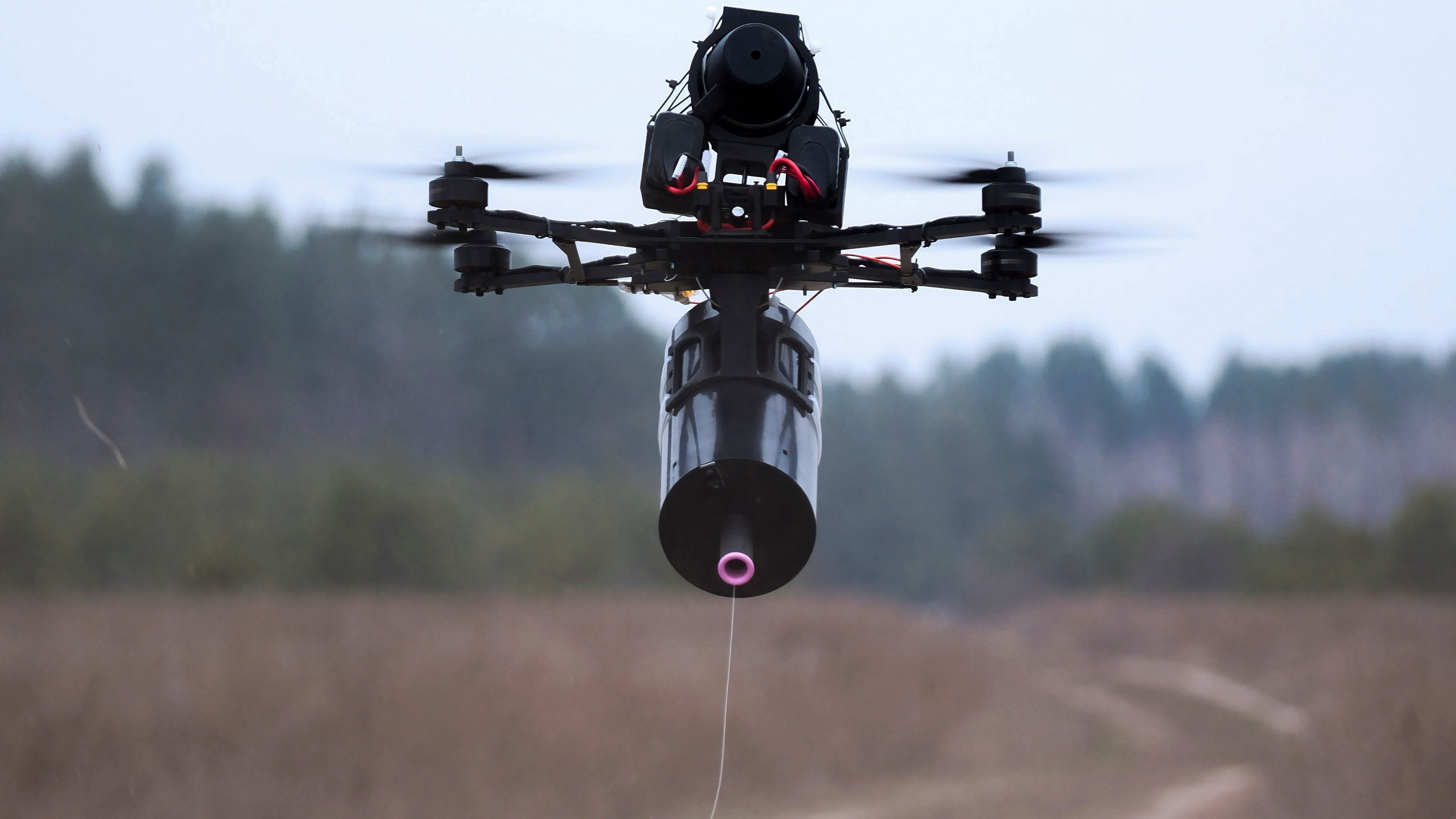
Fiber-optic drones were developed to overcome the limitations of wireless drones that transmit data using radio waves. These wireless drones can be easily disrupted by jamming, radio interference, or signal obstruction since they rely on radio waves for control. In contemporary warfare, where electronic warfare is now common, this represents a significant weakness. Signals are often obstructed when flying through dense vegetation or between trees, and their extensive operating range increases the risk of being detected.
Nevertheless, fiber-optic drones experience minimal interference from jamming because of their physically linked cables, quickly becoming popular for surveillance and offensive purposes in the Ukraine conflict where electronic warfare is frequent. They can move through enemy territory at extremely low altitudes without worrying about signal disruption or being detected. Fiber-optic drones are utilized in various manners, including as suicide drones or for capturing detailed imagery. The Guardian referred to them as “a weapon capable of secretly entering areas once thought secure.”

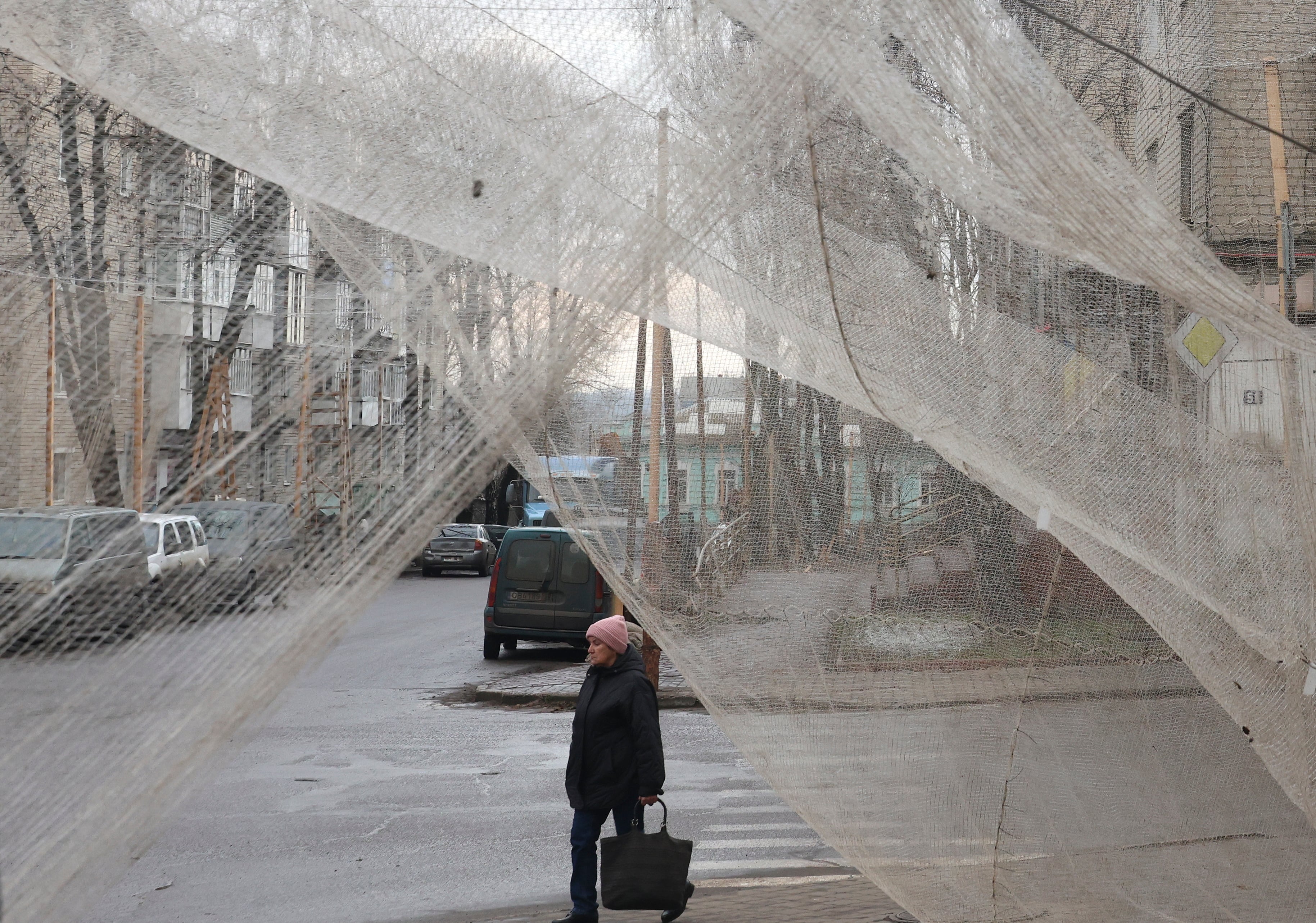
Nevertheless, their operational range is restricted by the length of the cable, and there is a possibility that cables may become entangled with objects while in flight. Because of this, both Russia and Ukraine have been setting up nets across roads to hinder surveillance and attacks conducted by drones utilizing fiber-optic cables. Drones fitted with fiber-optic cables are also roughly 1.2 to 1.4 kilograms heavier compared to wireless drones, which makes them harder to manage. Although standard drones cost hundreds of dollars, incorporating fiber-optic cables increases the price by more than double—a significant disadvantage.



 jasdooit
Leave a comment