
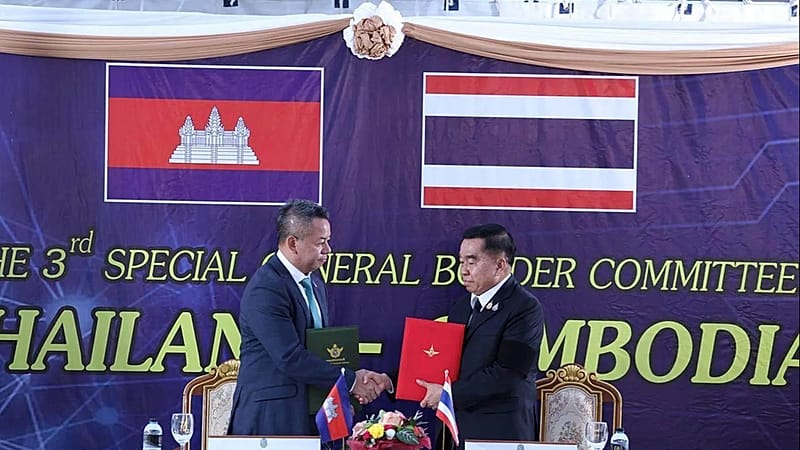
Thailand and Cambodia finalized a truce on Saturday to halt prolonged military clashes along their border due to disputes over land ownership.
The truce, which began at approximately midday local time, stipulates that neither party will make any further military advances and that there will be no breaches of each other’s airspace for military activities.
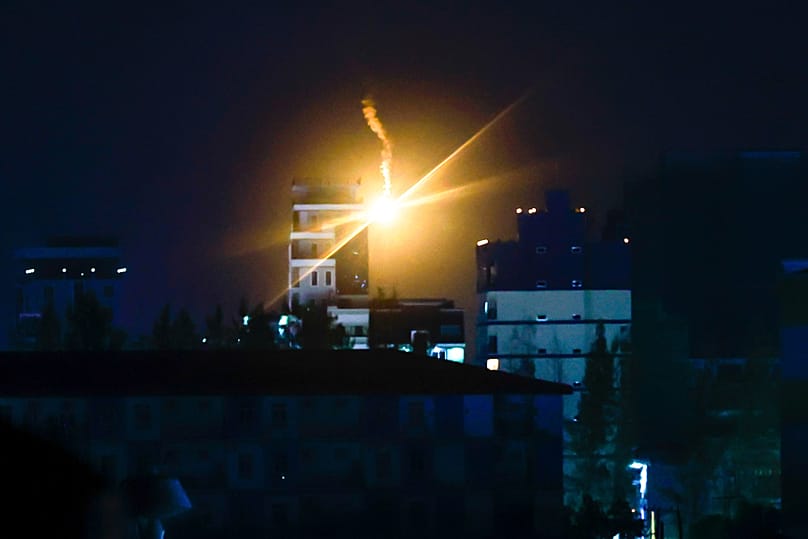
Only Thailand conducted air strikes during the conflict, targeting locations in Cambodia as recently as Saturday morning, according to the Cambodian defense ministry.
The agreement also requires Thailand, once the ceasefire has lasted for 72 hours, to return 18 Cambodian soldiers who have been detained since earlier clashes in July, a request that has been a key concern for Cambodia.
The deal was finalized by the defense ministers of the two nations, Cambodia’s Tea Seiha and Thailand’s Nattaphon Narkphanit, at a border checkpoint following discussions held by military representatives who convened for three days as part of the existing General Border Committee.
It states that both parties are dedicated to a prior ceasefire that concluded five days of conflict in July along with subsequent agreements, and outlines commitments to 16 measures aimed at reducing tensions.
The initial July ceasefire was facilitated by Malaysia and enforced through pressure from US President Donald Trump, who warned of withholding trade benefits unless Thailand and Cambodia complied. It was further detailed in October during a regional conference in Malaysia, which Trump participated in.
Even with those agreements, the two nations remained engaged in a harsh propaganda conflict, and small-scale border clashes persisted, intensifying in early December into extensive and intense combat.
Numerous injuries reported on both sides
As per local authorities, Thailand has suffered the loss of 26 soldiers and one civilian due to direct combat activities since December 7, along with 44 additional civilian fatalities resulting from the broader impact of the conflict.
Cambodia has not released an official number for military losses, but reports indicate that 30 civilians have died and 90 have been injured. Hundreds of thousands of individuals have been moved out of impacted regions on either side of the border.
Both sides accused each other of starting the conflict and asserted they were acting in defense.
The agreement also requires both parties to follow international treaties that prohibit the use of land mines, a significant issue for Thailand. Thai troops stationed along the border have been injured in at least nine incidents this year, according to reports of newly placed Cambodian mines. Cambodia claims these mines are remnants from the long civil war that concluded in the late 1990s.
Another provision states that both parties “commit to avoiding the spread of false information or fabricated news.”
The agreement also mentions that previously set measures for defining the border will be restarted, and both parties have agreed to work together in efforts to combat transnational crimes, which include online fraud carried out by organized crime groups that have defrauded victims globally of billions of dollars annually. Cambodia serves as a hub for such illegal activities.
The current border clash between the two countries stems from enduring territorial disagreements, recent political tensions among ruling families, and economic issues connected to cross-border criminal behavior.




 jasdooit
Leave a comment