
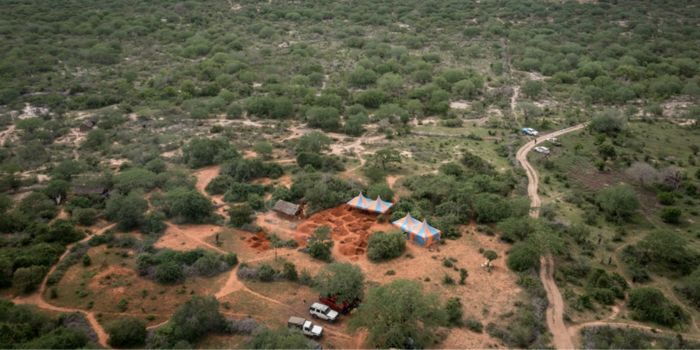
New remains were found in graves in Kwa Binzaro, Kilifi, in August 2025. The finding occurred nearly three years following the Shakahola incident, a disaster in which over 400 bodies were unearthed from Shakahola Forest, causing deep emotional distress among survivors, families, and the country.
At the new burial ground, at least 34 corpses were first removed. Shortly thereafter, high-level security officials traveled to the location in response to the situation and announced that at least 11 individuals had been detained in relation to what is now known as the Kwa Binzaro massacre.
During a review of the burial sites in Kilifi County, Inspector General of Police Douglas Kanja mentioned that 102 human remains, including skulls, had been found. Four out of the 11 individuals currently in police custody were recognized as key suspects, with the Inspector General stating that the Directorate of Criminal Investigations (DCI) is increasing its efforts to determine the cause and reason behind the deaths.
Initial inquiries suggested that most of the victims in the Kwa Binzaro massacre are believed to be outsiders. The tragic event came after the National Police Service (NPS) admitted to deficiencies, recognizing that weaknesses in intelligence, investigations, and collaboration between security agencies played a role in the disaster.
Lessons from Shakahola resurface
Police representative Michael Muchiri stated that, although lessons were learned from the Shakahola incident that shocked the nation, a comparable situation has occurred once more in the same region. The repetition has led to concerning questions regarding readiness and reaction, almost three years after the country pledged never to permit such tragedies again.
Law enforcement officers called on citizens to inform the authorities about missing family members to stop additional individuals from becoming victims of extremist religious groups. Initial inquiries also suggested that some of the victims had previously been saved from Shakahola Forest, which is adjacent to Kwa Binzaro village, but later went missing.
This finding has emerged during the continued legal proceedings against individuals associated with the Shakahola tragedy, in which at least 400 remains were uncovered, including numerous children.
Malindi Court approves the excavation of suspected new mass graves
A court in Malindi approved the DCI’s request to dig up remains thought to be located in shallow graves within the Binzaro section of Makongeni Sub-location, near the town’s edge.
Prosecution lawyer Judy Gachuru told the court that investigators believe several people were killed by starvation and suffocation, indicating a larger trend of radicalization and coordinated criminal behavior.
At least 11 individuals — Jairus Otieno Odere, Lilian Akinyi, Kahonzi Katana Karisa, Loice Zawadi, Safari Kenga Nzai, Karisa Gona Fondo, Gona Charo Kalama, Kahindi Kazungu Garama, Thomas Mukonwe, James Kahindi, and Sharleen Temba Anido — are being probed for suspected participation in organized crime, radicalization, aiding terrorism, and murder.
As per a sworn statement submitted by the DCI, initial inquiries indicate that the victims might have been deprived of food and suffocated due to embracing and advocating radical religious beliefs. The document also mentions that those who were rescued from the location could not explain where certain children were, leading to concerns about improper actions.
The court heard that short interviews with those who were rescued indicated they could not reasonably account for the children’s disappearance. The DCI asked for permission to carry out forensic examinations on the exhumed remains, including autopsies, DNA analysis, and poison testing, to determine the cause and type of death.
The Shakahola tragedy revisited
In the Shakahola massacre case, multiple defendants are still dealing with various charges, such as murder. The Shakahola Forest event was associated with a religious cult headed by Paul Nthenge Mackenzie, the leader of Good News International Ministries, a Christian group with apocalyptic beliefs.
The event gained public awareness in 2022 following reports filed at a local police station regarding mass graves in the region. A worried individual subsequently stated that his wife and daughter, who had traveled from Nairobi to participate in the ministry in Kilifi County, had not come back.
During the police inquiry into the community, they found people who were very thin and unmarked burial sites. Fifteen individuals were saved and later disclosed that they had been told to fast until death to “encounter Jesus.” Even with attempts to save them, four followers passed away before arriving at the hospital because of their severe health status.
In the coming weeks, law enforcement conducted searches across the 800-acre site, finding more unmarked graves and further survivors who were severely malnourished. Several of the initial remains recovered were those of children, with some graves thought to hold entire family groups. Officials also located people who had been buried alive, along with others still concealed in the woods, maintaining their fast.
Later accounts showed that adherents were told to avoid contact with the outside, to erase official papers, and to assemble for fasting. Former Interior Cabinet Secretary Kithure Kindiki claimed that Mackenzie employed criminals to murder followers who tried to escape or who hesitated in their deaths.
Kenya, a nation with strong religious beliefs where approximately 85 percent of people consider themselves Christian, has faced issues with uncontrolled churches and cults preying on vulnerable followers. As 2025 progresses, the findings at Kwa Binzaro highlight lingering problems, serving as a reminder that the impact of Shakahola remains significant.
The case is still under consideration in court, where Mackenzie and over 90 of his associates are being charged with offenses that include murder, participation in organized crime, radicalization, and aiding terrorism.
Provided by SyndiGate Media Inc.Syndigate.info).

 jasdooit
Leave a comment