
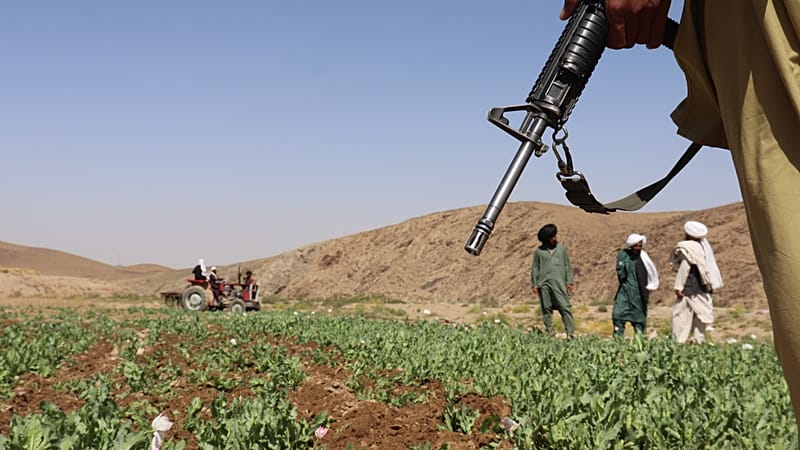
The UN Office on Drugs and Crime reported that Afghanistan’s cultivation of opium poppies decreased to 10,200 hectares this year, marking one of the smallest figures ever recorded in the nation’s history. However, the Taliban’s prohibition has caused significant financial difficulties for farmers in northern regions.
The country-wide prohibition has decreased the area under cultivation from 232,000 hectares in 2022, prior to the Taliban regaining power, yet led to a change in cultivation trends from conventional southern regions to northern provinces that are less directly under Taliban influence, according to UNODC.
In the Badakhshan region near the Tajikistan border, the cultivation of poppies has risen since the Taliban regained control in 2021.
In the regions of Badakhshan, along with nearby areas such as Kunduz and Balkh, “on average, 85% of families stated either no replacement or just a limited substitute for (their poppy) earnings” following the cessation of cultivation, as per a UNODC report published on Monday.
Several farmers shifted to cultivating wheat and other crops, but in 2023, “the typical income per hectare from wheat was only $770 (€654.6), while opium poppy generated approximately $10,000 (€8,500) per hectare,” according to the agency.
“The decline in income extends well beyond individual households, undermining the buying capacity in rural areas, decreasing local economic activity, and heightening the overall susceptibility of communities to poverty and food insecurity,” stated Oliver Stolpe, the UNODC regional representative for Afghanistan, Central Asia, Iran, and Pakistan.
The organization urged initiatives to motivate farmers to grow high-value crops like saffron, nuts such as almonds, pistachios, and walnuts, along with medicinal herbs and fruits like apricots and grapes, which are more suitable for Afghanistan’s dry climate and mountainous landscape.
Opium production decreased by 32% to approximately 296 tonnes this year, according to a UNODC report published in November, compared to 436 tonnes in 2024. The revenue generated by farmers from opium sales dropped by 48%, from $260 million (€221m) in 2024 to $134 million (€114m) in 2025.
Surveys conducted in Badakhshan, Balkh, and Kunduz revealed that 85% of families have struggled to make up for lost earnings, prompting the UNODC to highlight the critical need for economic assistance in these areas.
Nevertheless, adherence to the ban continues to be strong in the areas that were surveyed, with 95% of farmers in Badakhshan and Balkh stating they have ceased cultivating poppies because of legal restrictions.
The cost of dry opium dropped by 27% to $570 (€484) per kilogram in 2025, down from $780 (€663) in 2024, yet it is still five times greater than the average before the ban.
Opium use has declined, but synthetic drugs are on the rise
In April 2022, the Taliban prohibited the growing of opium poppies, along with the manufacturing, selling, and smuggling of all narcotics, one year after regaining control in Kabul. Taliban officials stated they have destroyed over 4,000 hectares of opium poppy this year.
Before the Taliban regained control in 2021, income from poppies had long been seen as one of Afghanistan’s primary economic contributors. Afghanistan’s opium production reached its highest level in 2017, with nearly 9,900 tonnes valued at $1.4 billion (€1.19bn), making up approximately 7% of the nation’s GDP.
“Overcoming the cultivation of illegal crops in Afghanistan necessitates collaborative, sustained investments, including via global partnerships,” Stolpe stated.
It focuses on giving equal importance to supporting Afghan farmers by promoting alternative sources of income, eliminating illegal crops, and fighting drug trafficking, while also lowering demand through improved prevention and rehabilitation efforts.
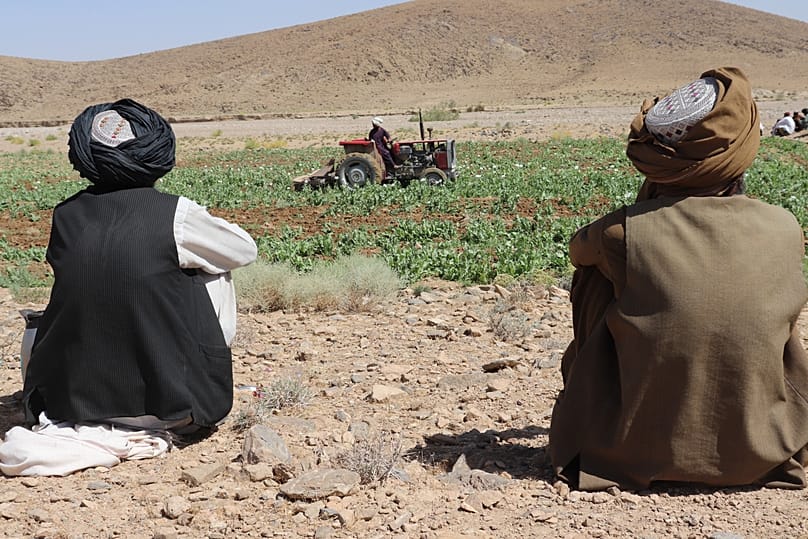
The UNODC reported that deteriorating weather conditions, such as droughts and reduced rainfall, have resulted in over 40% of farmland being left unused.
The return of roughly 4 million Afghans from nearby nations, accounting for about 10% of the nation’s population, has increased rivalry for limited employment opportunities and supplies. These elements, along with cuts in humanitarian assistance, might make growing opium poppies more appealing.
The manufacture and distribution of synthetic drugs, particularly methamphetamine, has kept rising since the prohibition. Seizures in and near Afghanistan increased by approximately 50% by the end of 2024 compared to the third quarter of 2023.
“With the decrease in agricultural opiate production, synthetic drugs have emerged as the new business strategy for organized crime groups, thanks to easier manufacturing processes, higher challenges in detection, and better resistance to climate changes,” stated the UNODC.
The agency stated that anti-drug efforts need to expand past opium to include synthetic substances in surveillance, enforcement, and research, along with measures aimed at reducing drug demand.
“The drug issue in Afghanistan extends beyond its borders. The factors of supply, demand, and trafficking include both Afghan and global participants,” stated Georgette Gagnon, the deputy special representative of the secretary-general for Afghanistan and head of the UN political mission in the country.
“Overcoming this issue demands cooperation from major stakeholders,” Gagnon concluded.


 jasdooit
Leave a comment