
By Victor Okoye
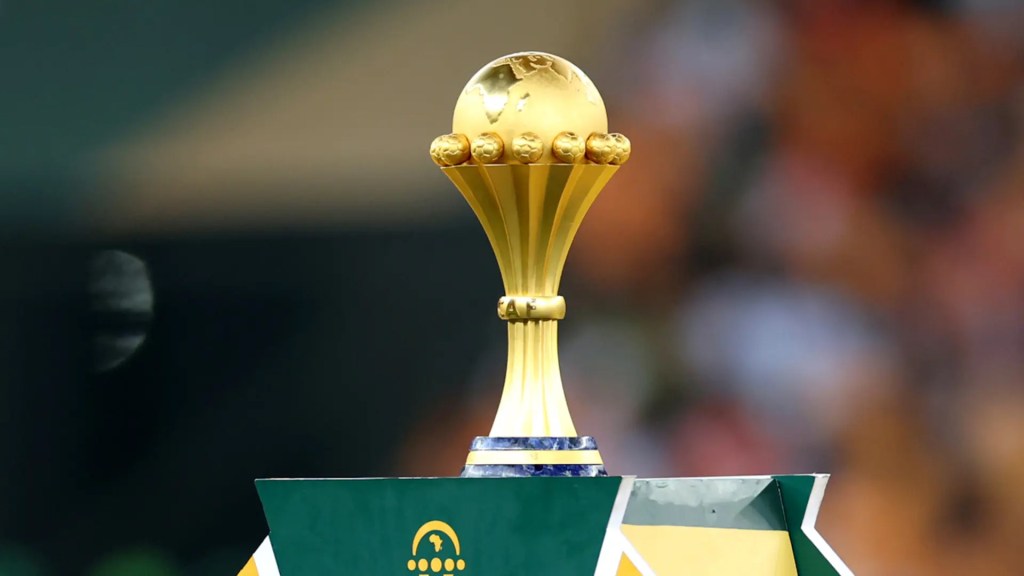
The group stage of the CAF Africa Cup of Nations (AFCON) Morocco 2025 has highlighted the ongoing equilibrium in African football between established excellence and rising aspirations.
Six groups and 24 matches saw accomplished African Footballers of the Year and emerging stars influence outcomes, enhance play, and spark discussion about the continent’s next top individual talent.
Scoring 87 goals prior to the knockout stages, reigning champions once more provided crucial performances, while younger athletes made their mark with confidence and poise.
In the group stage, Sadio Mané, who was named African Footballer of the Year in 2019 and 2022, combined strong leadership with remarkable effectiveness for Senegal.
Mané’s goal, along with two goals from Nicolas Jackson, enabled the Teranga Lions to finish first in Group D and highlighted his significant impact on the grandest stage.
Algeria’s strong performance was driven by Riyad Mahrez, the 2016 African Footballer of the Year, who took control of the group stage with confidence.
Mahrez netted three goals, featuring a double against Sudan and a crucial goal against Burkina Faso, helping the Desert Foxes easily secure first position in Group E.
Egypt depended significantly on Mohamed Salah, who was named African Footballer of the Year in 2017 and 2018, to guide them through challenging group matches.
Salah scored twice, delivering a thrilling last-minute winner against Zimbabwe and then finding the net for the crucial goal against South Africa, which helped them claim first place in Group B.
Despite Gabon’s early elimination, Pierre-Emerick Aubameyang, the African Footballer of the Year in 2015, demonstrated that his sharp instincts were still effective with a goal during the group stage.
Morocco’s hosts welcomed back Achraf Hakimi, the 2025 African Footballer of the Year, who made a comeback from injury during the third matchday.
Hakimi’s inclusion provided a sense of security in defense and an aggressive edge in attack as the Atlas Lions managed a challenging group stage.
Nigeria’s struggle was fueled by Ademola Lookman, the 2024 African Footballer of the Year, whose impact was evident throughout the group stage.
Lookman scored two goals and provided two assists, featuring notably in a game against Tunisia where he was named Man of the Match.
The Super Eagles found motivation in Victor Osimhen, who was named African Footballer of the Year in 2023.
Osimhen’s goal against Tunisia highlighted his status as a key player in critical moments.
The offensive energy of Côte d’Ivoire was driven by Amad Diallo, who found the net twice in the group phase.
Diallo’s speed, insight, and calm were emphasized by a match-winning goal against Mozambique that was vital for Ivory Coast’s advancement.
Cameroon discovered inspiration and scoring opportunities via Bryan Mbeumo, whose agility and precision disrupted defenses throughout the group stage.
Nigeria’s central midfield equilibrium was subtly influenced by Raphael Onyedika, who controlled the pace and facilitated seamless offensive movements.
With the arrival of the knockout phase of AFCON 2025, the group stage has created an engaging story of both consistency and transformation.
Previous winners of the African Footballer of the Year award — Mané, Mahrez, Salah, Aubameyang, and Hakimi — keep influencing games with confidence and poise.
At the same time, rising stars like Diallo, Mbeumo, and Onyedika have shown they are prepared to take center stage on the continent.
The elimination stage will determine if experience or fresh energy takes the lead — and could eventually indicate Africa’s next Player of the Year.
(NANFeatures)
Provided by SyndiGate Media Inc.Syndigate.info).


 jasdooit
Leave a comment