
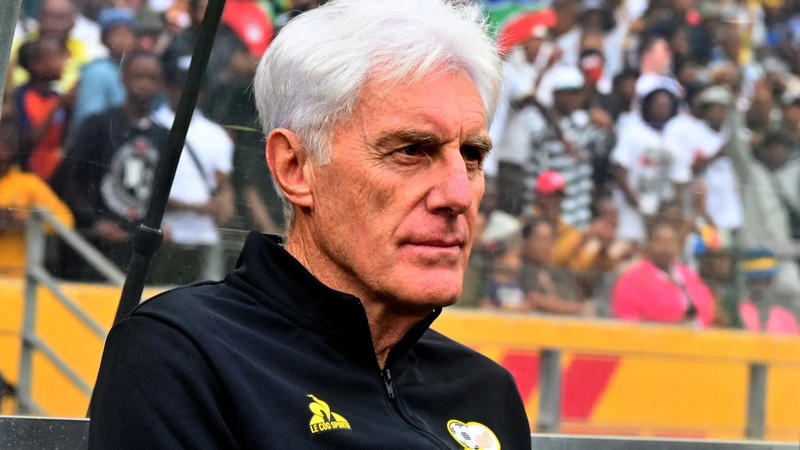
Hugo Broos has never avoided challenging situations in football. Indeed, his professional journey has frequently been defined by them.
However, as Bafana Bafana get ready to play against Cameroon in the round of 16 of the Africa Cup of Nations, the Belgian coach is facing what might be the most challenging test of his time in South Africa — both tactically, emotionally, and politically.
Cameroon are more than just a rival. They represent Broos’ history.
He won the AFCON title in 2017 alongside the Indomitable Lions, overcoming odds with a squad largely dismissed before the competition.
That victory stands as one of the most impressive narratives in modern AFCON history.
Currently, eight years on, Broos is positioned across the field, assigned with the goal of ensuring Cameroon’s defeat to help Bafana achieve their objectives.
The underlying emotions cannot be ignored, but feelings alone will not determine the outcome. Results, choices, and determination will.
Broos finds himself under observation at this point. Although Bafana managed to qualify from the group stage, their performances have not met the level that many expect this team to achieve.
There have been glimpses — instances of order, control, and strength — but not yet the smoothness or confidence that characterized South Africa’s most successful periods under Broos in recent years.
The main criticism has focused on the team’s selection and in-game decisions, especially after losing to Egypt in the group stage.
That outcome revived ongoing discussions regarding equilibrium, practicality, and whether Broos has placed excessive emphasis on loyalty towards specific players, sacrificing performance and progress.
However, context is important. Bafana’s qualification was achieved not through dominance but through control—minimizing losses, handling key moments, and securing results. In tournament football, this strategy is not always a disadvantage.
However, it turns into a danger when profit margins shrink and the competition becomes more intense.
Cameroon will scrutinize every aspect of this Bafana team. Their strength, speed during transitions, and experience in tournaments remain consistent, no matter their performance.
They form a group at ease in disorder — precisely the sort of rival that reveals doubt or indecision.
This is where Broos’ expertise should come into play.
He is familiar with Cameroon’s mindset. He grasps how they handle stress, how they develop during competitions, and how swiftly they capitalize on moments of inattention.
Several trainers in this tournament are more equipped to predict what comes next.
But that benefit only applies if Broos relies on his intuition — and adjusts.
This game requires clear thinking. Choosing the right approach should value precision, not emotions. The middle of the field needs to take charge, not just get by.
On defense, Bafana cannot tolerate the periods of inactivity that occurred during their group matches. Cameroon will not remain idle.
Broos frequently discusses “process” and “belief,” and for good reason. However, knockout football speeds up time. There’s no space for philosophical patience when the pressure is so intense.
Strangely, Bafana could gain an advantage by stepping into this game as the underdogs.
If not, concerns regarding selection, drive, and limits will continue to increase.
For Hugo Broos, this is not just a round-of-16 match. It is a crucial moment — one that could influence how his entire Bafana legacy is viewed.
Provided by SyndiGate Media Inc.Syndigate.info).



 jasdooit
Leave a comment