
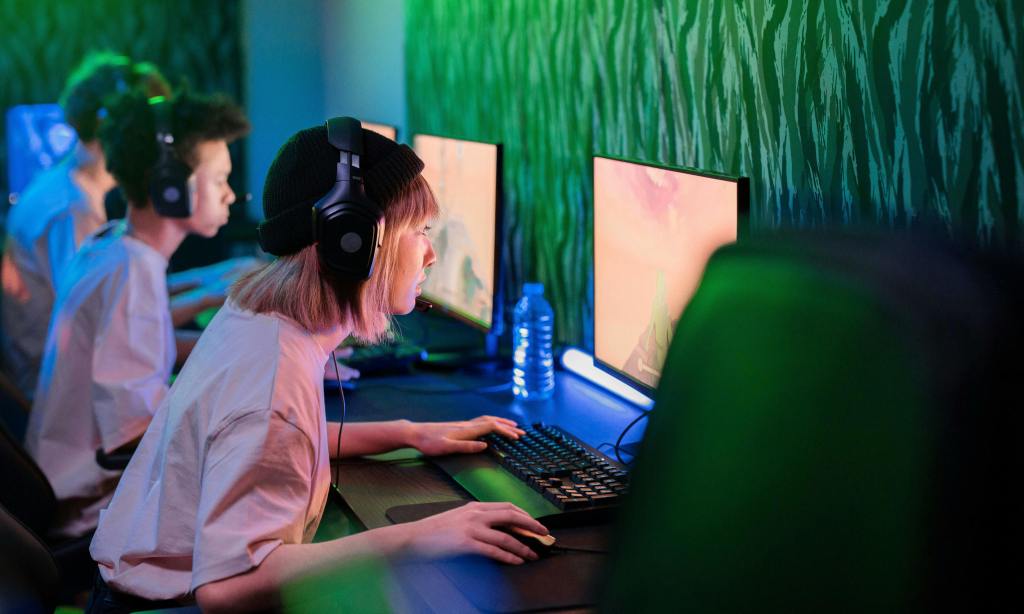
Son Si Woo, who was previously reprimanded by his mother due to his video game obsession, now makes hundreds of thousands of dollars as a professional gamer within South Korea’s rapidly growing esports sector.
Son clearly recalled the time his mother disconnected his computer mid-interview for a professional gaming position. “She mentioned that when I played video games, my character deteriorated, and I became addicted,” the 27-year-old shared.The Guardian.
The pivotal moment occurred when Son won an amateur competition, securing a prize of 2 million won (approximately US$1,400), which he presented to his parents. “After that, they started believing in me,” he mentioned.
Almost ten years later, Son, also referred to as Lehends, has emerged as a winner in multiple League of Legends (LoL) competitions. He is now part of Nongshim RedForce, a competitive gaming team backed by one of South Korea’s leading food companies.
The achievements of Lehends highlight a broader pattern in South Korea, where the gaming industry has experienced significant growth. Between 2019 and 2023, the country’s gaming market expanded by 47%, reaching almost 23 trillion won ($15.9 billion). Gaming exports now make up nearly two-thirds of South Korea’s digital content exports, outpacing other well-known cultural industries such as K-pop and cinema.
Within this ecosystem, esports serves as a key driver in both promoting and engaging with games, although its direct economic impact is relatively modest, amounting to approximately 257 billion won in 2023. South Korea has become the world’s fourth-largest gaming market, following the U.S., China, and Japan.
 |
|
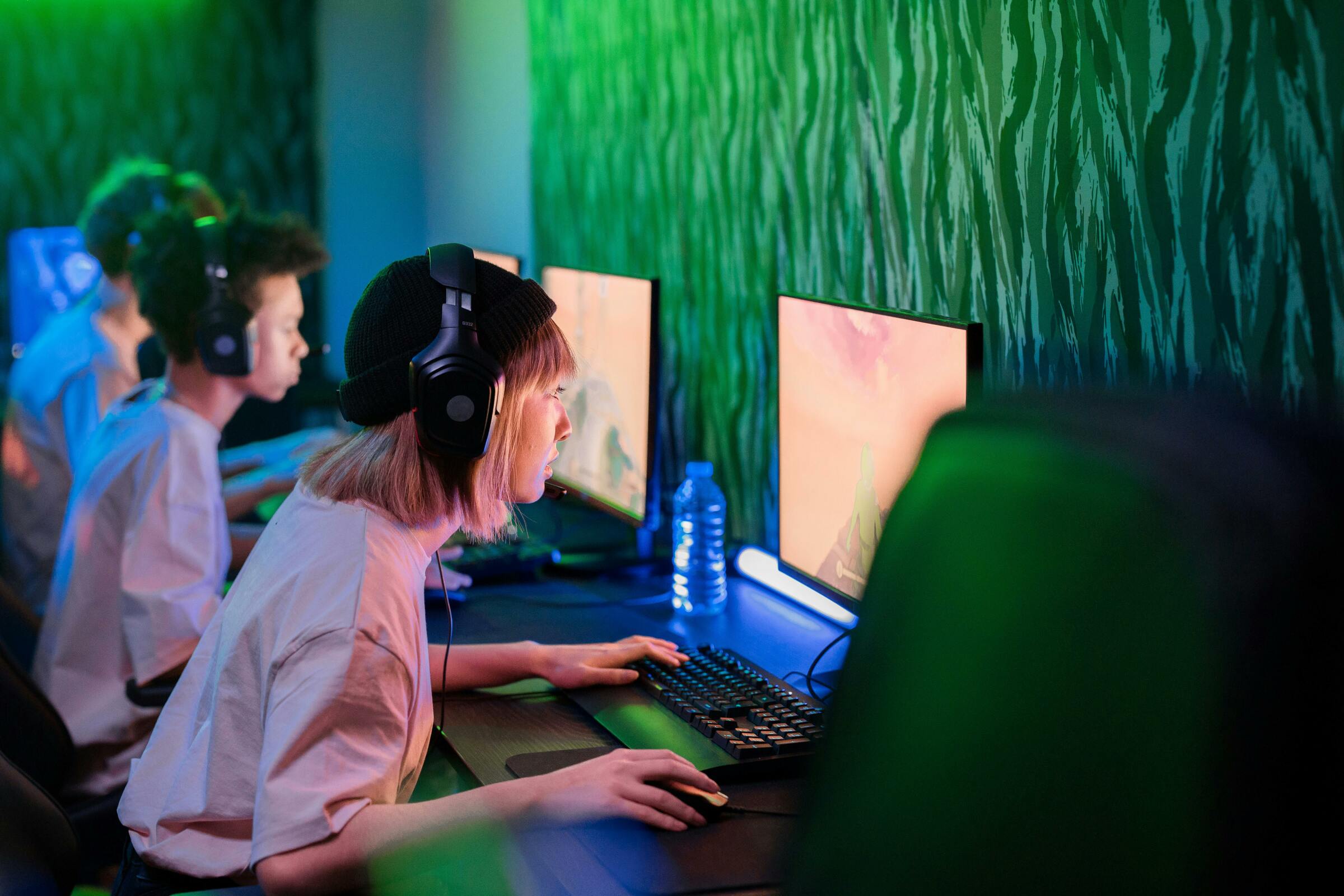
People playing games in an internet café. Image from Pexels |
The stigma lingers
Although there has been this success, the industry continues to deal with a long-standing stigma.connecting games with destructive addictionA recent debate emerged from an AI competition hosted by Seongnam, a city located in southern Gyeonggi Province and known for housing Korea’s IT and gaming center, Pangyo Techno Valley, with the objective of addressing different types of addictions, including “internet gaming,” as reported.The Korea Herald.
The initiative faced immediate criticism from the gaming community, as 13 organizations representing gamers, e-sports athletes, and academics criticized the categorization of gaming as an addiction.
Lee Cheol-woo, leader of the Korean Game User Association, stated that gaming is legally considered part of the “culture and arts” field, and a 2024 survey revealed it as the country’s favorite pastime. “Policies that treat gaming as an issue related to addiction contradict this societal shift,” he mentioned.
In October, South Korean President Lee Jae-myung participated in a gaming industry event, urging a change in public views and expressing criticism towards the “four major addictions” policy, which had grouped gaming with gambling and drugs.
“It’s time to shift our policy approach,” Lee mentioned at the gathering, as reported byThe Korea TimesThe government’s goal is to position Korea as a top global cultural industry nation, and I think the gaming sector plays a crucial role in this.
The cost of success
In esports training facilities such as the Nongshim Esports Academy located in the Guro District of Seoul, young players concentrate fully on their monitors in total quiet, under the watchful eye of their trainers. The academy also features its own residence and cafeteria, with a dietitian ensuring each meal is carefully managed.
Roh Hyun-jun, 22, chose to take a break from his mechanical engineering courses in order to chase his ambition of becoming a professional LoL player. Yet, pursuing this goal has its price. The academy charges around 500,000 won for 20 hours of training each month, but thisdoes not guarantee success.
Evans, the CEO of Nongshim Esports, statedThe Guardianthat the academy experiences a very high rate of students leaving before completion, with just 1-2% of participants eventually becoming professional athletes or securing related careers. Since 2018, only 42 players have made it to the professional level from the academy. In contrast, top stars can receive salaries in the six-figure U.S. dollar range, along with additional bonuses and profitable endorsement deals.
 |
|
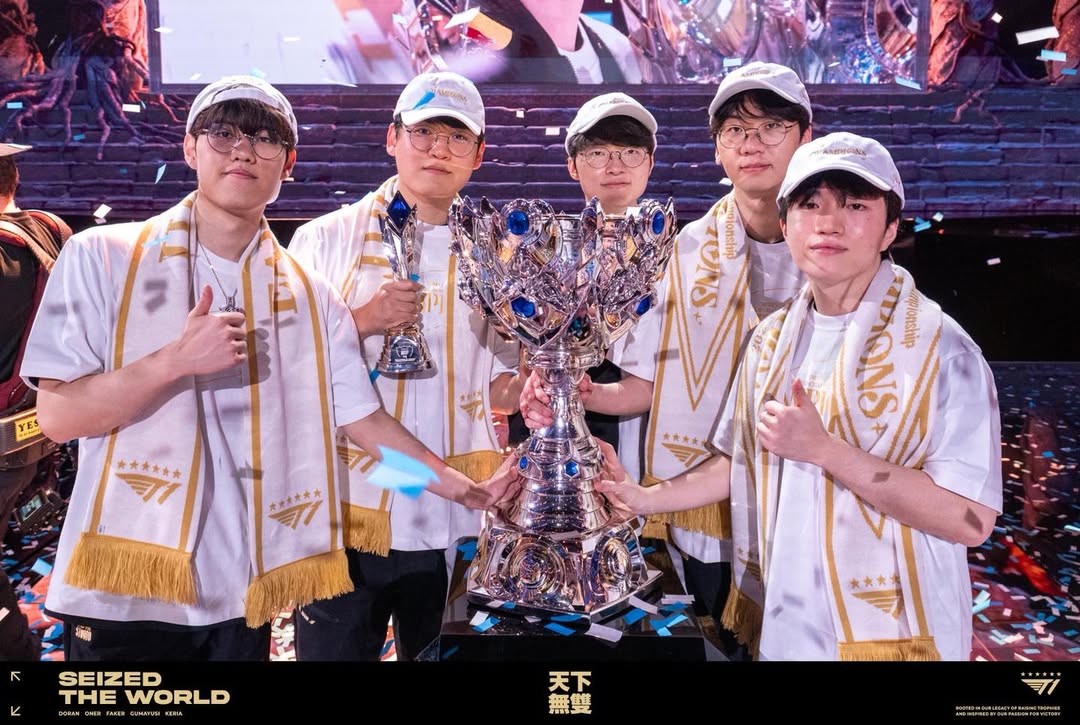
Professional gamer Lee Sang Hyeok, 29, also referred to as “Faker,” (center) along with a team member from T1. Photo provided by T1’s Instagram |
One such famous athlete is Lee Sang Hyeok, 29,better known as “Faker,”A mid-lane player for the six-time world champion League of Legends team, T1. Born into a disadvantaged family, Faker left high school at 17 to focus entirely on competitive gaming, signing with SK Telecom T1 (now T1) in 2013. In South Korea, he is considered a “national treasure.”
The K-pop group BTS has played League of Legends with him and even performed together on YouTube, while Kim Hee-chul from Super Junior took a break from his schedule to meet him on a variety show. Faker has also been in an advertisement alongside national football star Son Heung-min.
Now a multi-millionaire and co-owner of T1, Faker channels his estimated $5 million yearly income and tournament earnings into shrewd investments, such as owning Faker Tower, a commercial property in Gangseo, as reported.The Straits Times. He has also donated almost 100 million won to different causes in recent years.
Nevertheless, the fame associated with players such as Faker is uncommon and usually temporary. Aiden Lee, the Secretary-General of the League of Legends Champions Korea, mentioned that South Korean gamers dedicate over 16 hours each day to training. Their professional careers generally conclude before they reach the age of 30, frequently due to compulsory military service for males.
“If you aren’t skilled enough, you need to quit swiftly. It’s a competitive environment,” said Hwang Sung Hoon, 25, a teammate of Lehends.The Guardian.
Aiden also noted that South Korean teams have secured 10 victories out of 15 world championships because of the intense competitive atmosphere.
However, the appeal of a professional gamer profession continues to be significant. According to a recent survey conducted by the education ministry among students, professional gamer was ranked fifth on the list of preferred careers for elementary school boys. For Roh, his resolve stays the same: “I want to make my name the most renowned in the world of professional gaming.”



 jasdooit
Leave a comment