
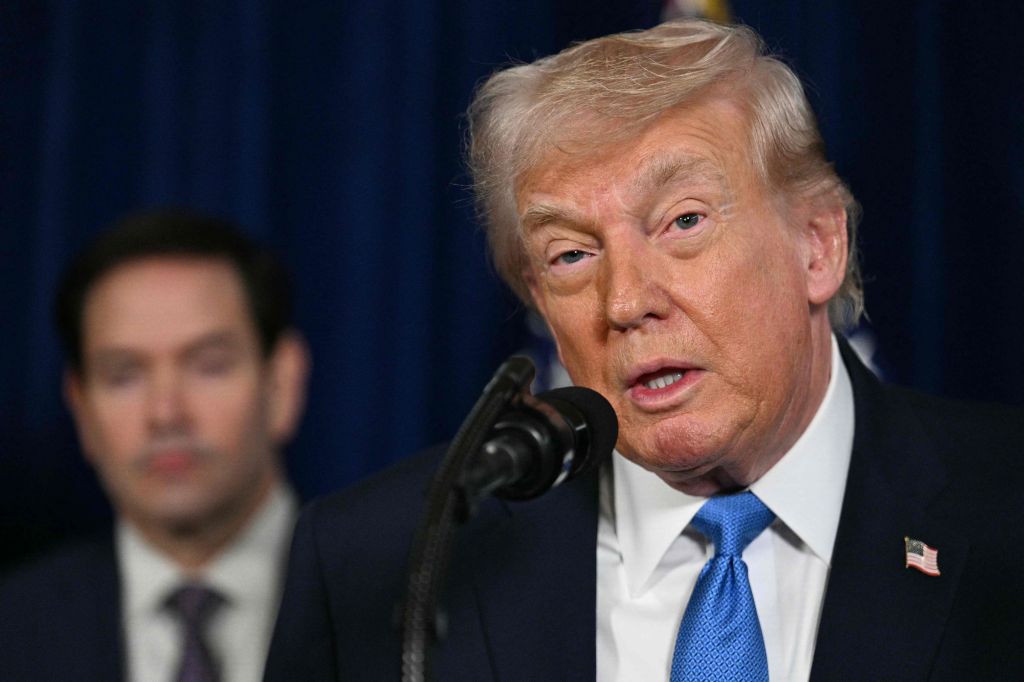
U.S. President Donald Trump conducted an unexpected air attack on Venezuela on the 3rd, detaining and relocating President Nicolás Maduro, leading to analyses that “America First”—a fundamental part of Trump’s political identity—has faced a significant challenge.
As Trump, who rose to power promoting isolationism and resistance to foreign involvement, initiated military actions that do not hesitate to bring about regime change, an uneasy tension is emerging even among the “MAGA (Make America Great Again)” supporters.
In a press conference held right after the operation, Trump stated that the U.S. could “operate in Venezuela until a safe and orderly transition is achieved.” This remark implies the potential for extended involvement rather than a brief military action. It represents a shift from Trump’s earlier stance, which condemned foreign conflicts by referring to the U.S. as the “world’s police.”
Concerning this operation, Trump also brought up the potential for sending in ground forces and the importance of controlling Venezuela’s energy facilities. This is seen as an indication that the extent of U.S. direct engagement might go beyond targeted attacks.
These comments contradict the “avoidance of foreign conflicts” principle that is important to the MAGA movement. Trump’s main supporters have consistently viewed the wars in Iraq and Afghanistan as “unsuccessful engagements that weakened the U.S.,” and Trump has leveraged this viewpoint to gain political advantage.
Steve Bannon, a well-known figure in the MAGA movement and former White House Chief Strategist, commended the U.S. military’s quick action on that day. Nevertheless, he did not publicly endorse Trump’s plans to take control and manage Venezuela. Bannon raised doubts, asking things like “Are we going back to the mistakes of the Iraq War?” and questioned the extent of the involvement and the plan for withdrawal. This is seen as an indication that there are efforts within the MAGA group to clearly separate “short-term attacks” from “regime change or long-term engagement.”
Reports are coming in that the warnings made by conservative commentator Tucker Carlson, a former Fox News host, about “Trump, surrounded by neoconservatives, is preparing for an oil war,” have turned into reality. In a broadcast last month, he said, “As far as I know, there hasn’t been one single instance of regime change in the last 80 years that has helped the U.S. or the world. If there is, let me know,” directly opposing the U.S.’s “regime change wars.”
Last June, in the initial year of Trump’s second term, he conducted an unexpected air strike on Iran’s nuclear sites, prompting strong criticism from the MAGA faction, a key group of supporters, who accused him of “a blatant violation of his promise to end endless foreign conflicts.”
U.S. public sentiment is also showing a cautious reaction to Trump’s decision. A poll by The Economist carried out at the end of last month revealed that 52 percent of participants were against deploying American military forces to remove the Maduro government. Approval stood at just 22 percent.
 jasdooit
Leave a comment