

By Irene Chan & Hans Tse
Although Lo Yuet-ping left Cha Kwo Ling Village two months ago, he sometimes goes back to his former residence.
He longs for the past times there and is pushing the government to protect the deep-rooted culture of the historic squatter community before it faces destruction.
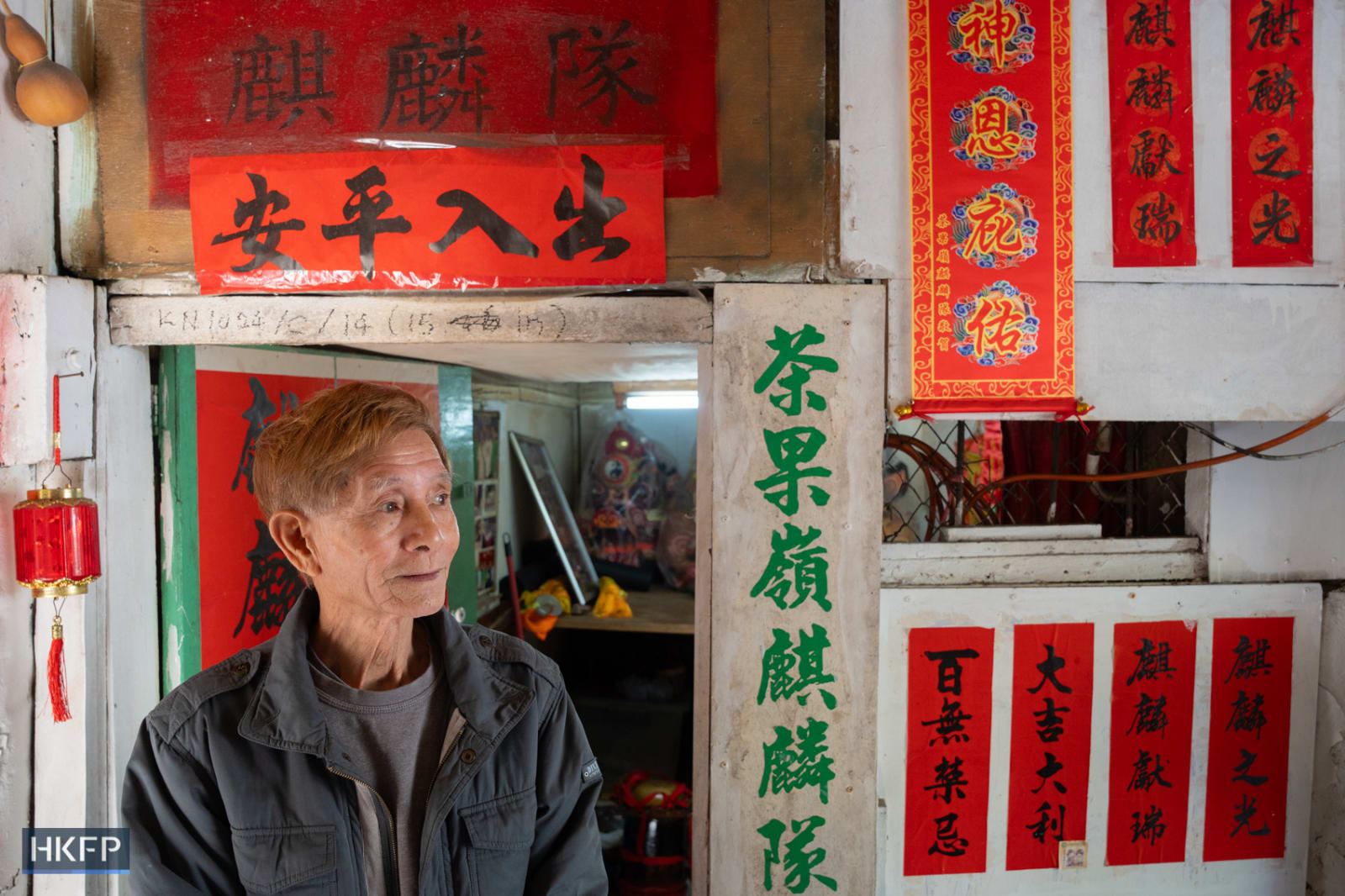
I was born here,” the 73-year-old said to HKFP in Cantonese outside his long-standing former residence in Cha Kwo Ling Village on Wednesday, the final day of 2025. “It was difficult [to depart].
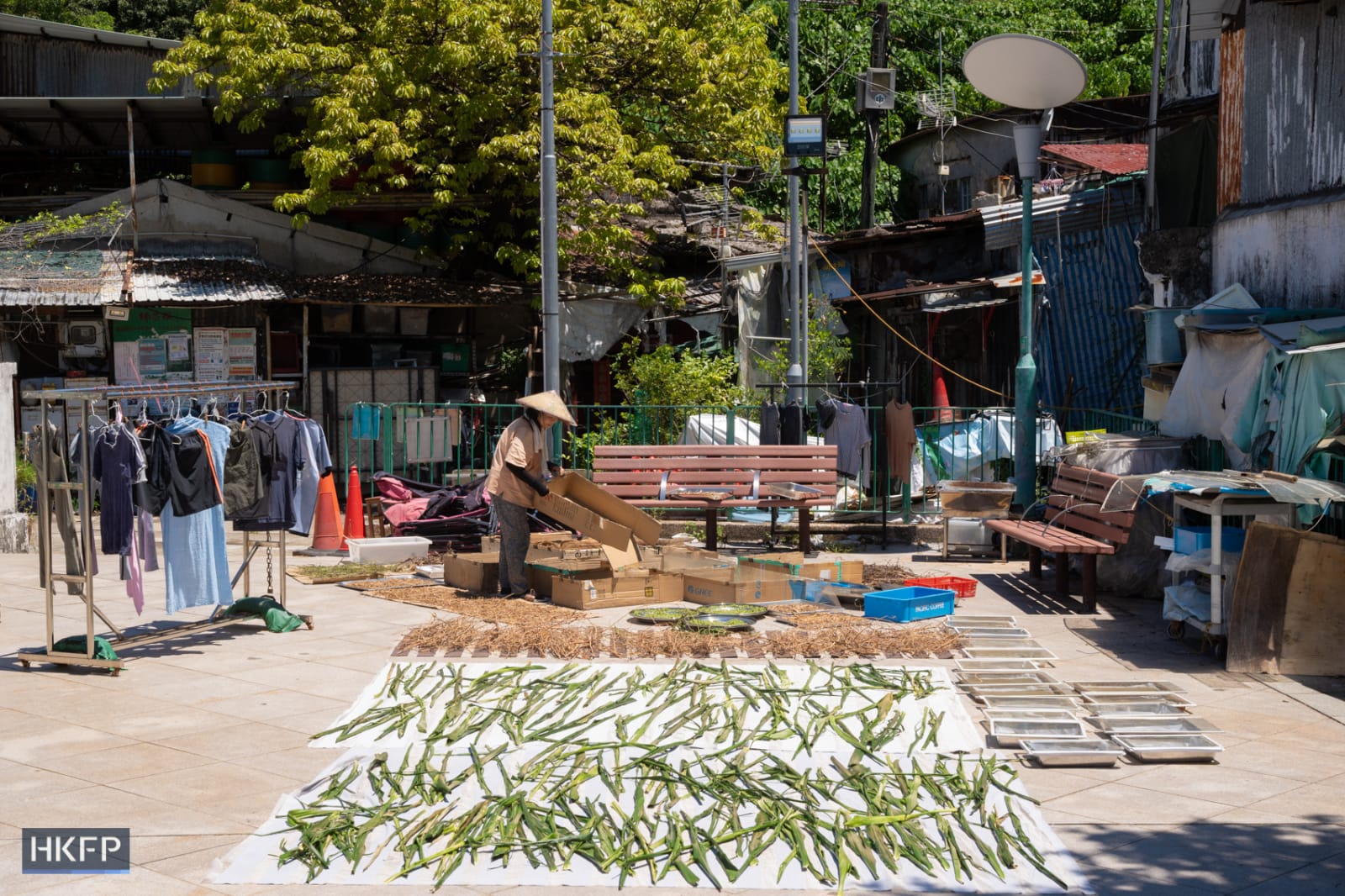
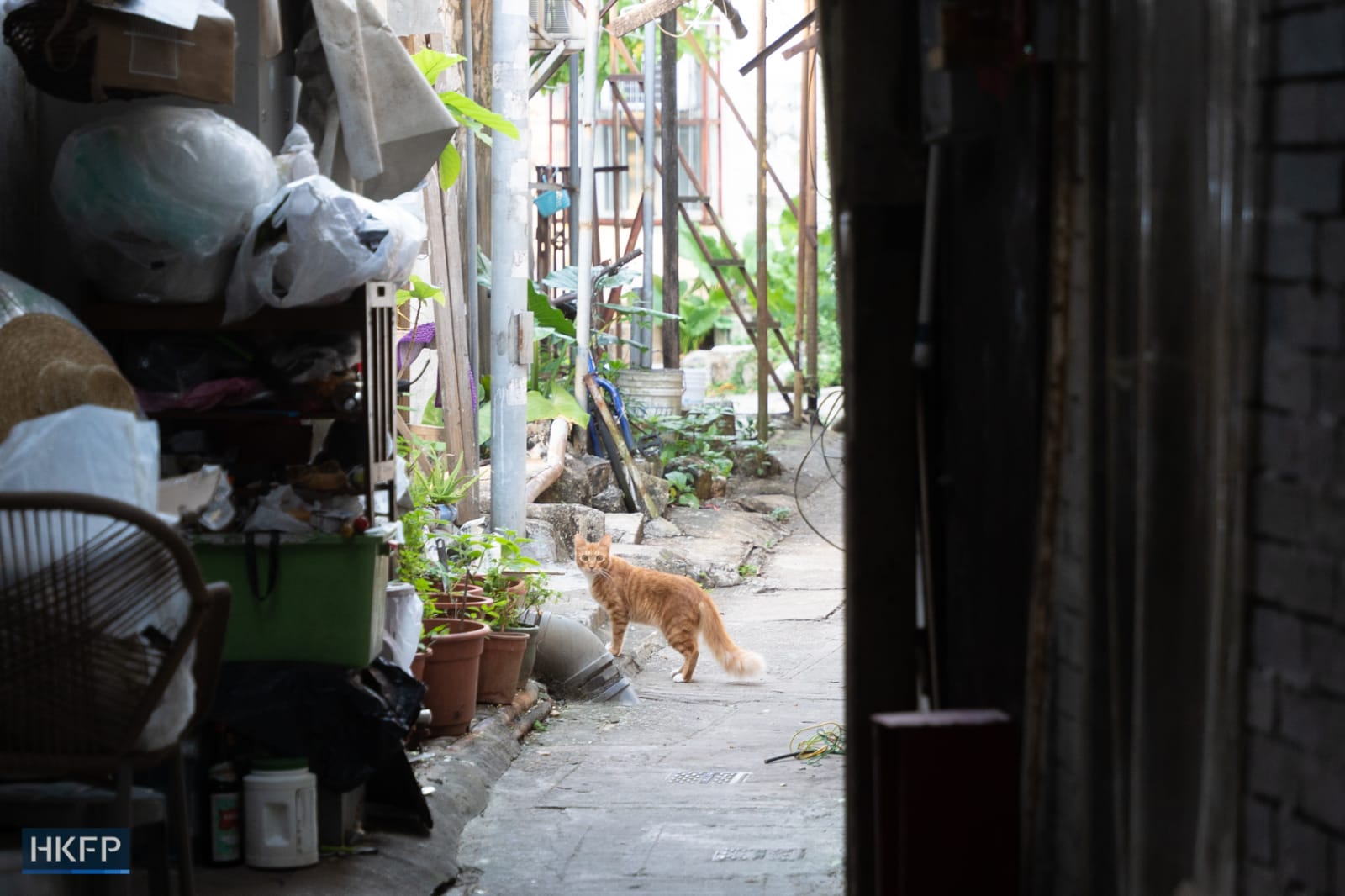
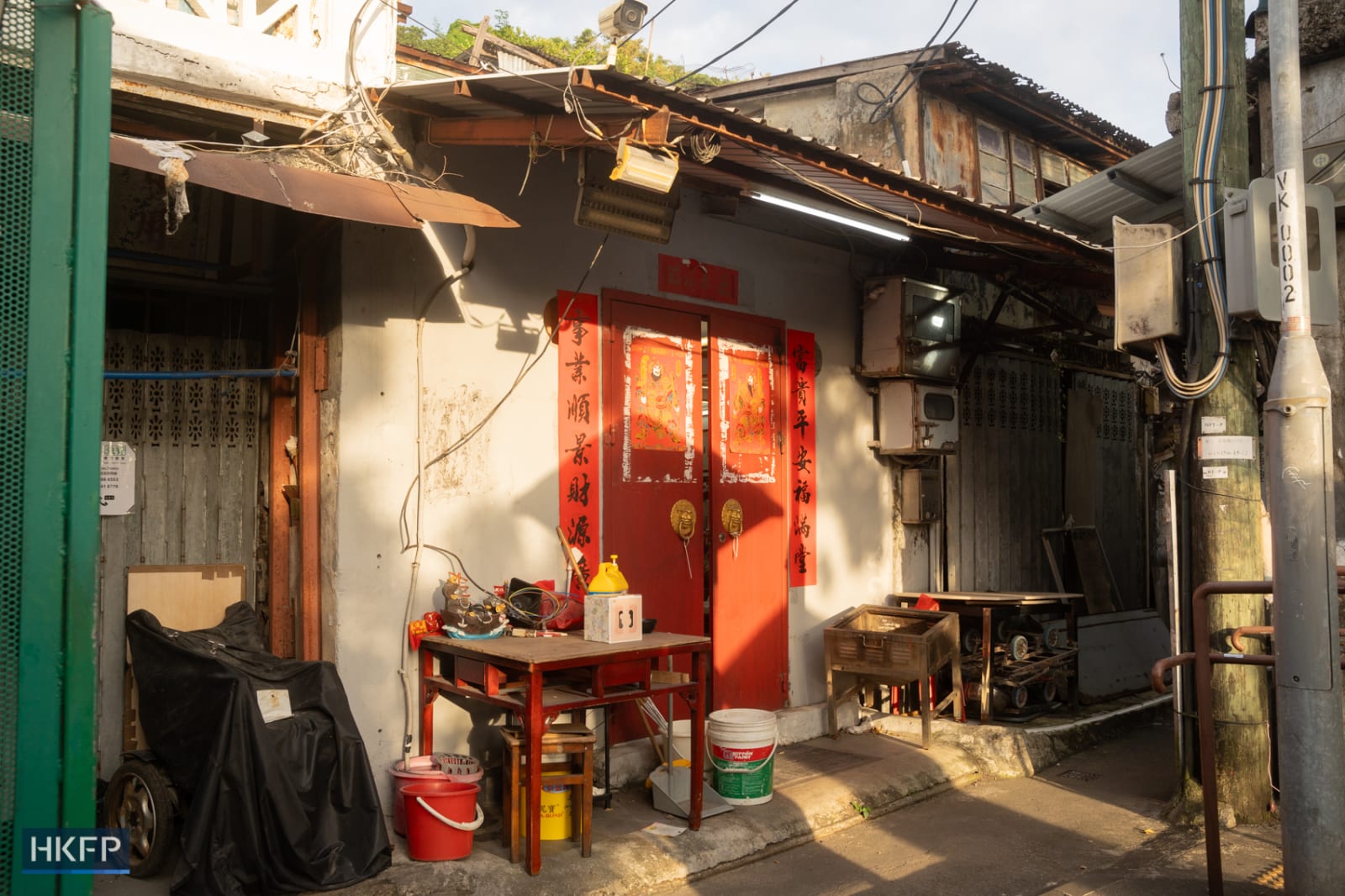
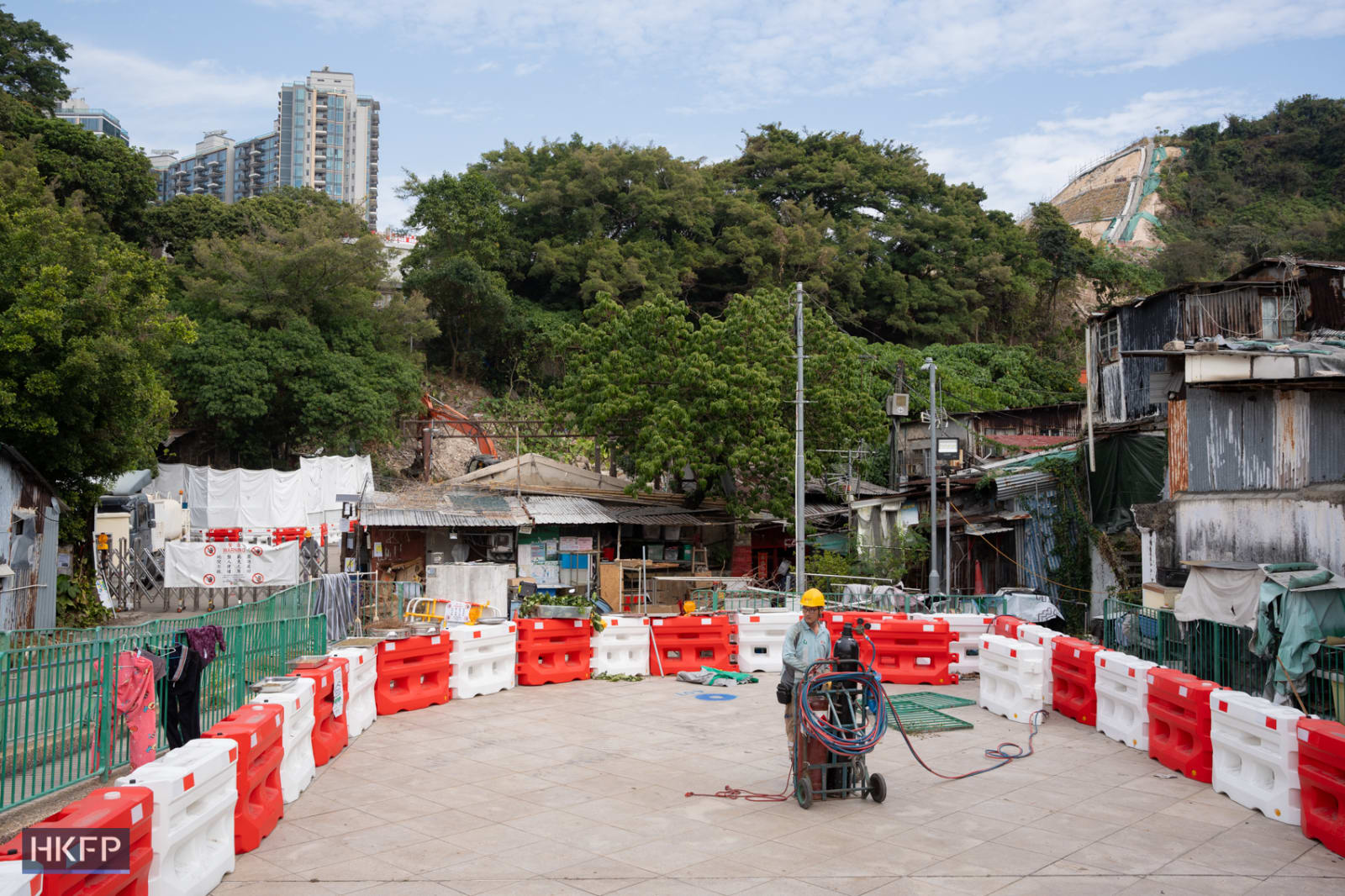
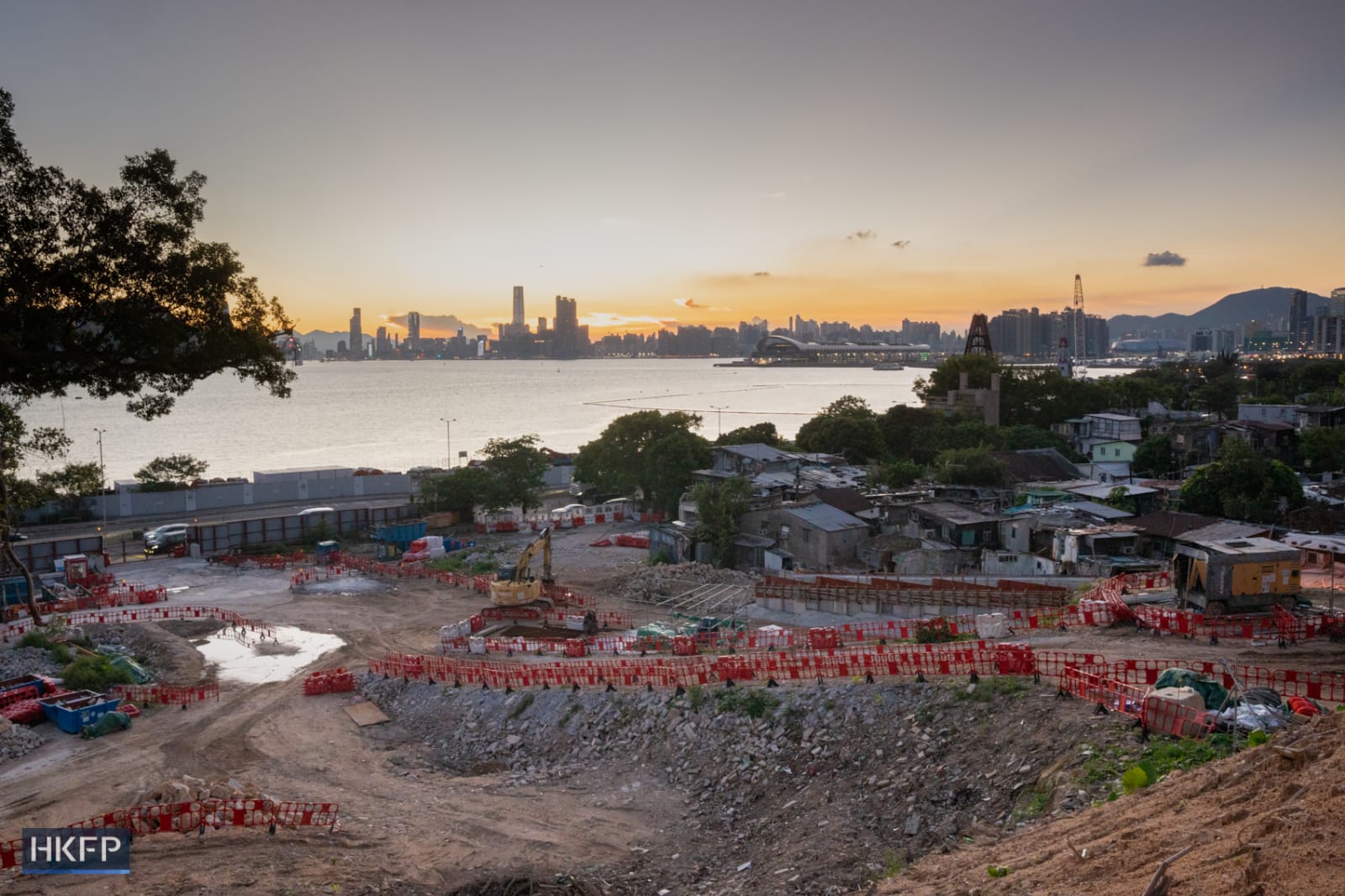
One of the few remaining squatter areas in Hong Kong, Cha Kwo Ling is situated in eastern Kowloon, between Yau Tong and Lam Tin. Surrounded by a mountain and the sea, the village has hundreds of small homes primarily constructed from metal sheets.
For centuries, it has offered residences to families with limited financial resources, transforming into a distinctive area abundant in traditional Hakka and Cantonese culture and history.
The Hong Kong administration declared the removal of Cha Kwo Ling Village in 2019 to facilitate the construction of public housing developments. The initial stage of relocation commenced in 2024, with the second phase beginning in 2025, anda deadline for clearance set for September 12.
When HKFP arrived at the village on Wednesday, over three months after the deadline had passed, numerous doors were shut and properties were locked up.
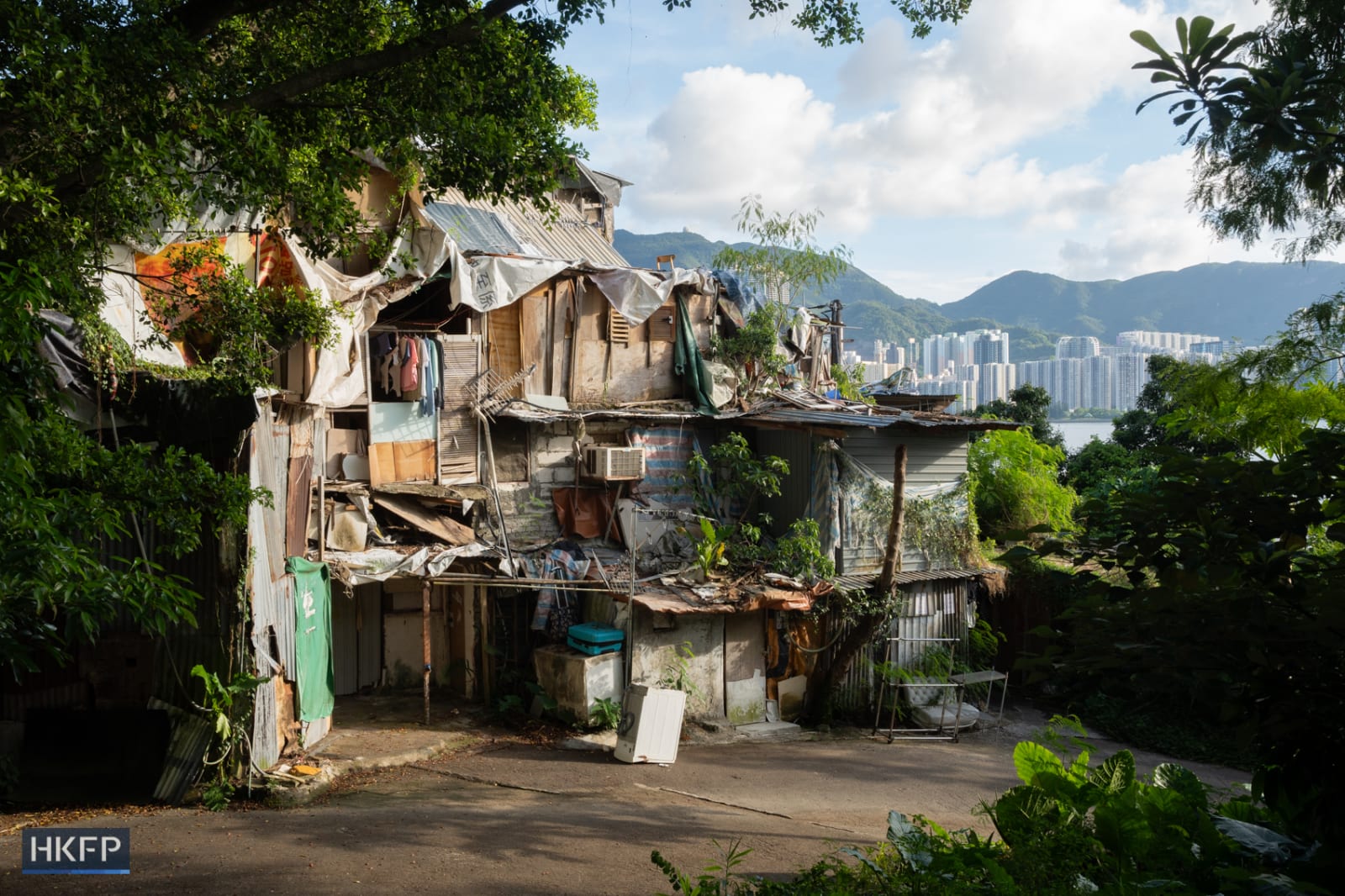
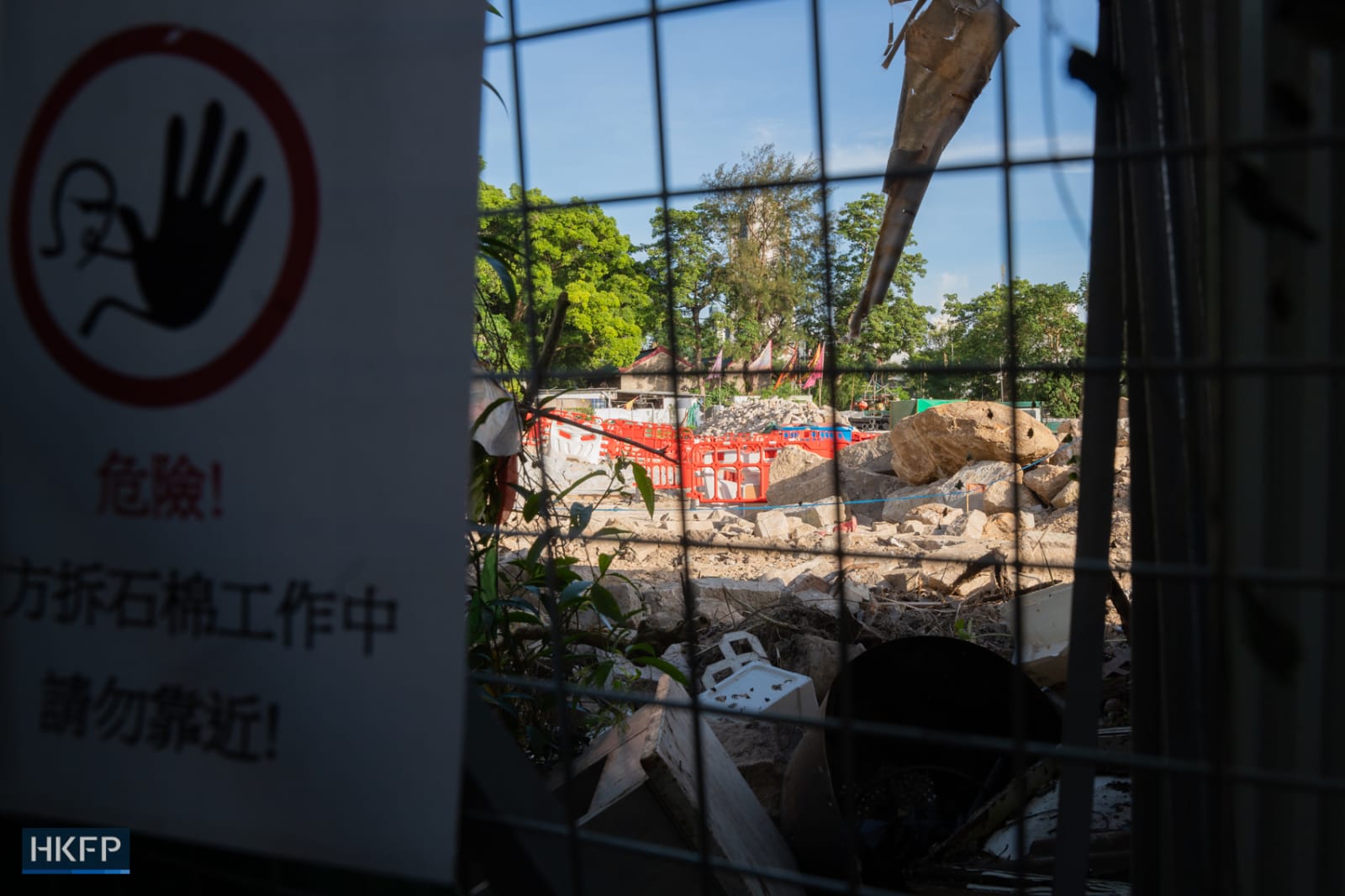
One of the final stores in the village, Tak Kee Store, closed its doors that day. Close by, construction for redevelopment was ongoing, with several buildings already demolished.
Nevertheless, a few residents and companies stayed behind.
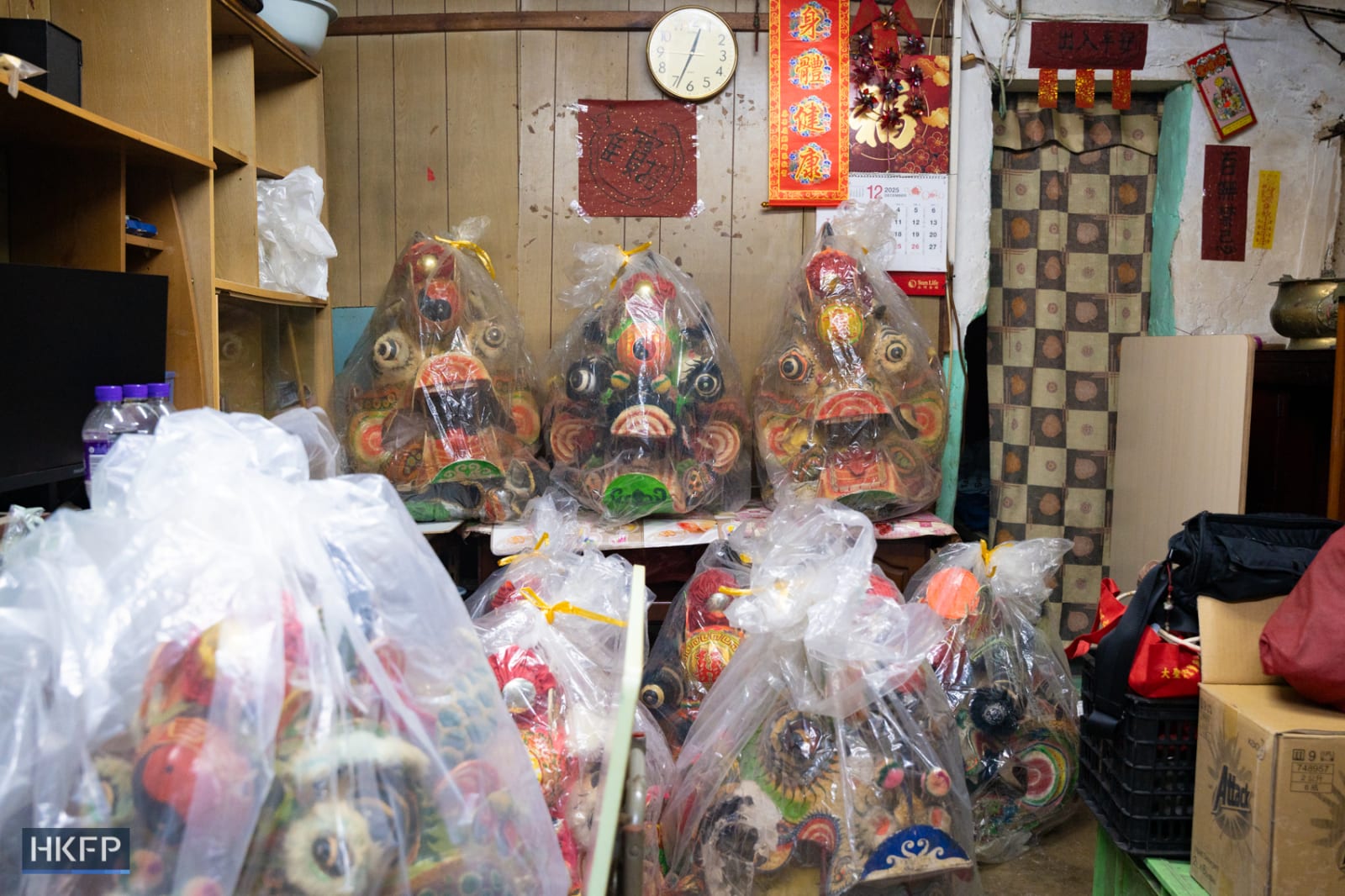
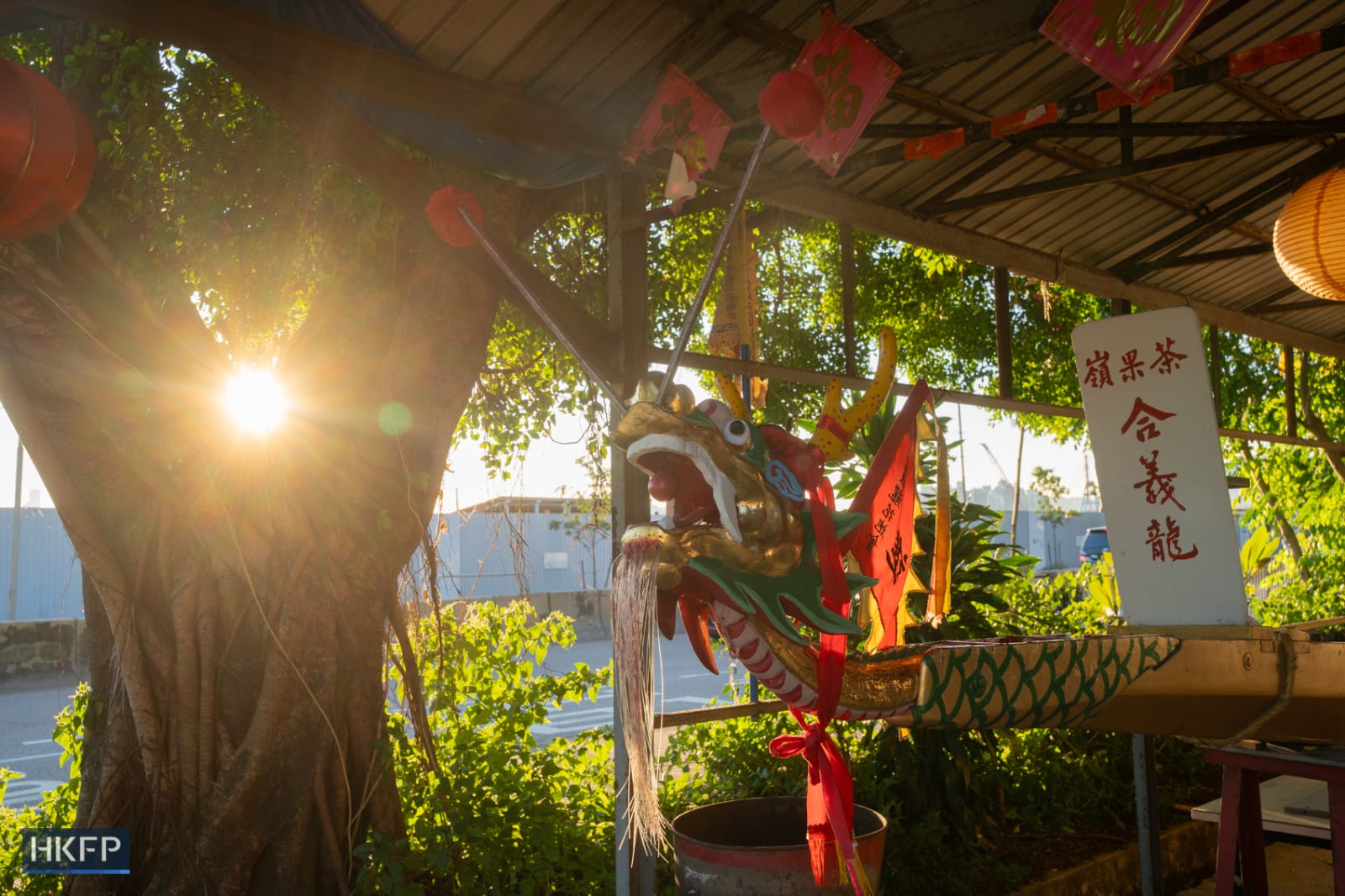
Within a small area hidden deep in the village, approximately half a dozen vibrant kirin heads were placed on wooden boards – their future unclear. These props are crucial for the traditional kirin dance performance and belong to the Cha Kwo Ling Kirin Dance Team, which Lo has led for more than three decades.
‘A blessed creature’
The kirin is a mythical being resembling a chimaera, combining elements of a horse, deer, and dragon. In traditional Hakka culture, the kirin dance is thought to bring prosperity to a group – much like the more commonly known lion dance.
Cha Kwo Ling Village, a place that has mainly been inhabited by Hakka people since the Qing Dynasty, has honored the kirin for many years.
Lo’s parents left mainland China in the 1940s during the turmoil of World War Two and the subsequent civil conflict between the Nationalists and the Communists. They moved to Hong Kong and eventually made their home in Cha Kwo Ling, which was then a busy granite quarry that offered employment to many people.
At its height, the village housed approximately 30,000 people. Similar to Lo’s parents, a large number of them were employed in the stone mine.
Tin Hau, the sea goddess venerated in southern China, has been highly respected in Cha Kwo Ling. The original Tin Hautemplewas built in the village during the first half of the 19th century, under the Qing Dynasty. The existing structure was constructed in 1948.
On Tin Hau’s birthdaycelebrated on the 23rd day of the third lunar month, locals stage Cantonese opera performances and the kirin dance in honor of the goddess, seeking a year filled with peace, well-being, and joy.
It must be the kirin that accompanies Tin Hau, as it is a sacred being,” Lo said. “The good luck wouldn’t arrive if it were a lion – you simply can’t argue against that.
Lo learned the kirin dance during his teenage years following his practice of the lion dance. In the 1990s, he established the kirin dance team along with other villagers from Cha Kwo Ling and took on the role of team leader.
The group had more than 60 members during its height, he mentioned. During that period, they were able to deploy as many as 10 kirins for holiday events.
A kirin performance involves two individuals: one controlling the head and the other the tail. Dancers must also be replaced because of the strenuous nature of the dance.
Nevertheless, as the villagers aged, Lo’s kirin dance group faced a shortage of new members. Currently, he mentioned, less than two dozen individuals are still part of the team.
Uncertain future
Previously a lively neighborhood featuring a school, wet market, church, and temple, Cha Kwo Ling has experienced a decline in population since the quarry shut down in 1990.
Numerous villagers relocated from their modest homes to reside in high-rise apartment buildings. In 2023, prior to the eviction process, the village was home to approximately 1,500 inhabitants and 26 business operators, according to local media outlets.reported, citing government figures.
Lo mentioned that the villagers had struggled for relocation to the same area, but the officials turned down their request. In October, he said goodbye to the house where he had resided for more than 70 years and relocated to a public housing unit in Yau Tong Estate.
Even though he is unable to maintain his previous home, Lo hopes that the tradition of the kirin dance will be properly safeguarded.
“I have been reaching out to the Lands Department, encouraging them to maintain the premises [of the kirin dance team] in the village, but I have not received any response yet,” he stated.
With redevelopment approaching, some kirin heads have been moved to a storage facility in Sai Kung. However, a few remain in Cha Kwo Ling Village.
Lo mentioned that his team might give some faulty kirin heads to museums for preservation, noting that he has been searching for locations to keep these props for upcoming festivities.
Nevertheless, the main question is whether to keep the kirin dance team active, since Lo and his teammates are now located in various parts of the city.

The main issue is whether we keep going or break up,” he stated. “Without a common meeting point, it might be challenging for us to function as a team.
In July 2024, the Antiquities and Monuments Office stated that the Tin Hau Temple and Law Mansion, a historicbuildingbuilt around the year 1900, would remain unaffected by the Cha Kwo Ling development.
The policy research institute Liber Research Communitystatedin an article from 2022, it was suggested that Hong Kong should not solely concentrate on the Tin Hau Temple and Law Mansion, but also appreciate the significance of the whole village, which is home to numerous historic structures and a vibrant cultural heritage.
Lo still hopes that the villagers of Cha Kwo Ling will assemble at the temple on the birthday of Tin Hau in May, but he also recognizes the challenge of bringing people together again in the future.
“I believe the villagers will return [for the celebration] since we still feel connected to this place despite having left,” he said.
But I realize it’s challenging, as we no longer reside as a community.




 jasdooit
Leave a comment