
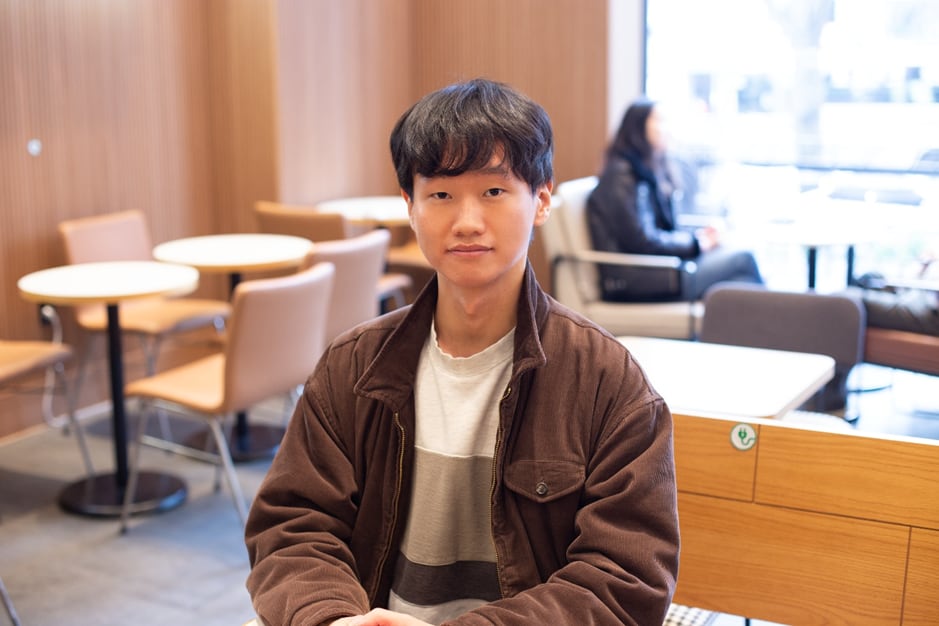
A South Korean scientist who cracked the “Moving Sofa Problem,” a mathematical puzzle that had baffled experts for almost six decades, was recognized as one of the top 10 mathematical breakthroughs of the previous year.
The American scientific publication “Scientific American” featured the work of Dr. Baek Jin-eon, a 31-year-old June E Huh Fellow at the June E Huh Center for Mathematical Challenges, located at the Korea Institute for Advanced Study, in its “Top 10 Math Discoveries of 2025” at the end of last year.
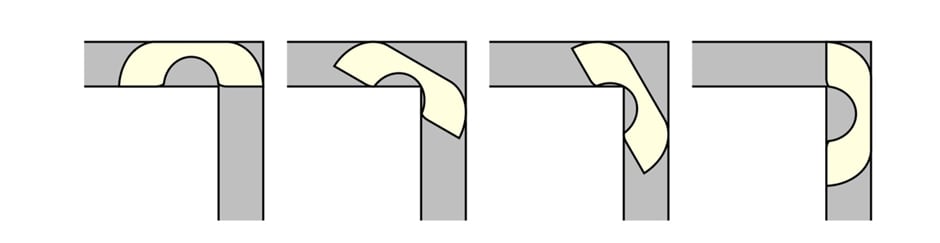
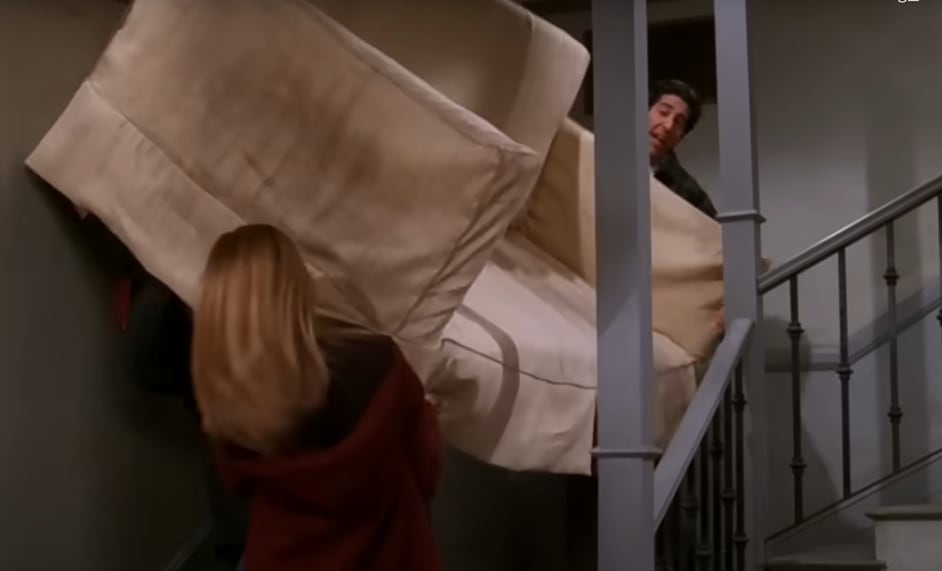
The “Moving Sofa Problem” is a mathematical puzzle introduced by Canadian mathematician Leo Moser in 1966. It focuses on determining the form of a two-dimensional object with the greatest area that can move through an L-shaped hallway with a width of 1, often referred to as the “perfect sofa.” Essentially, it seeks to identify the biggest shape that can maneuver around a right-angled turn in a tight passage.
Although the problem is straightforward to comprehend, discovering the solution has been difficult, continuing to pose a challenge for the mathematical community for roughly 60 years.
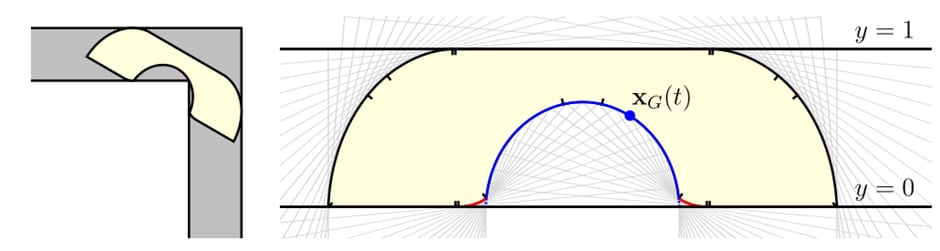
In 1992, mathematician Joseph Gerver introduced a shape formed by intricate curves (a structure consisting of 18 straight lines) as a probable solution, yet no one had confirmed if it was indeed the best possible answer.
The individual who provided the solution is Dr. Baek Jin-eon. In November 2024, during his time as a postdoctoral researcher at Yonsei University, he released a 119-page paper on the preprint platform “arXiv” following a seven-year effort to tackle the problem. His conclusion was that “no sofa exceeding the width of Gerver’s sofa can exist.”
Dr. Baek’s proof is currently being evaluated by peers. It has been sent to the “Annals of Mathematics,” one of the leading academic journals in mathematics, and is waiting for confirmation. The mathematical community thinks there is a strong chance that Dr. Baek’s proof is accurate. Scientific American, when introducing Dr. Baek’s paper in February, stated, “Although his proof has not yet been thoroughly reviewed by peers, the initial responses from Baek Jin-eon and mathematicians who are familiar with the issue have been mostly positive.” It also mentioned, “While many researchers have used large-scale computer simulations to determine the maximum sofa size, it is surprising that Baek Jin-eon’s final solution does not rely on computers at all.”
Dr. Baek was chosen for the “June E Huh Fellow” program in August of last year, designed to assist young mathematicians under 39 for a period of up to 10 years. He is currently recognized for working on optimization issues and exploring complex mathematical problems in combinatorial geometry.




 jasdooit
Leave a comment