
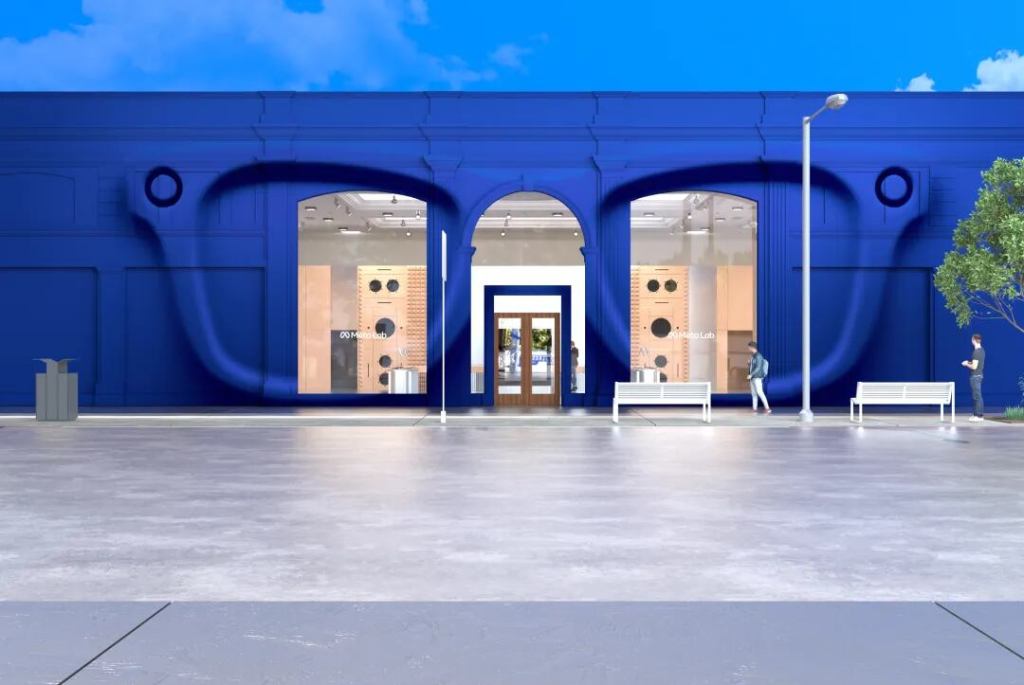
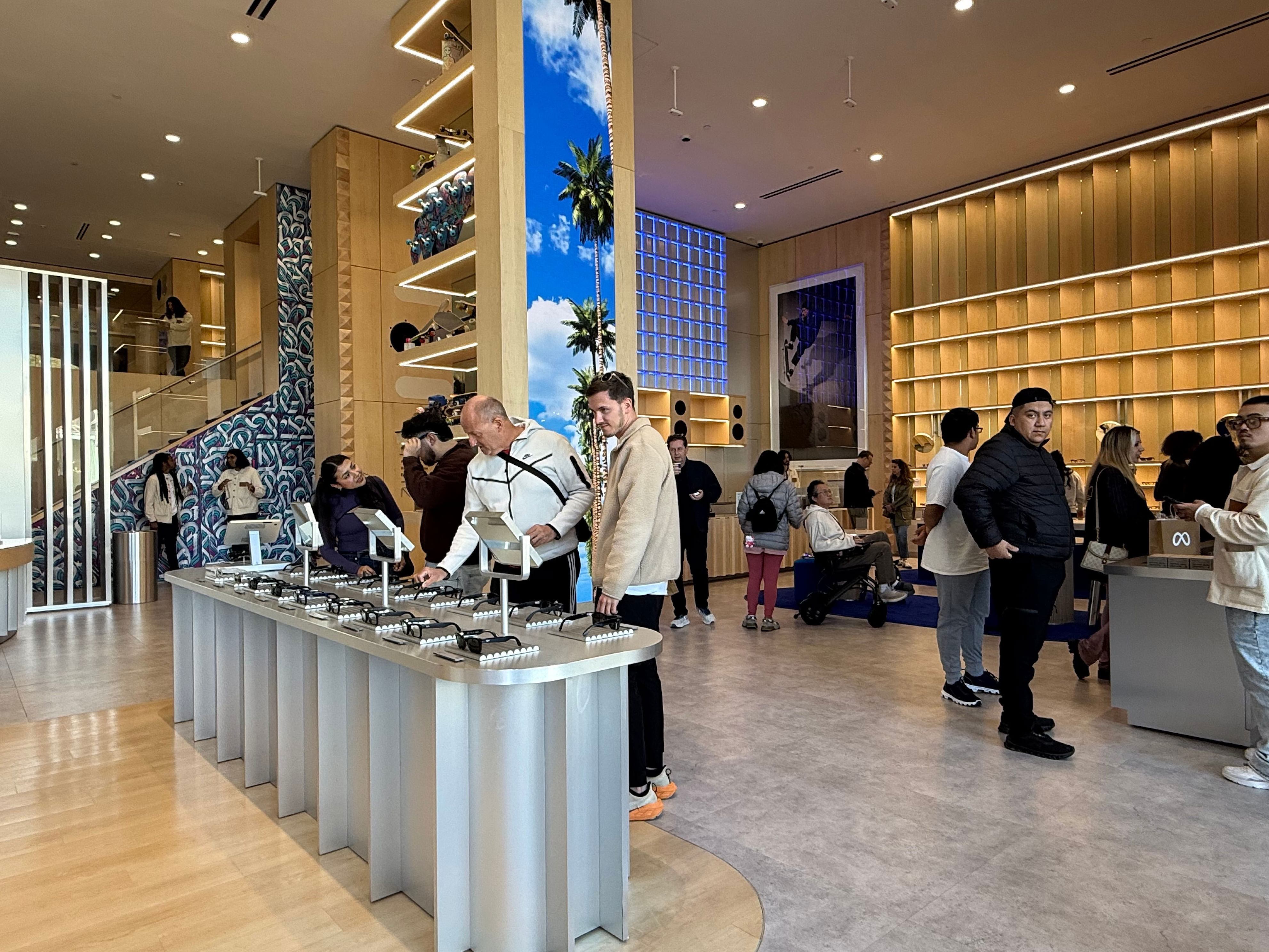
Last month, I explored the streets of West Hollywood in Los Angeles. A “Meta” store, featuring a blue-framed glasses illustration on the exterior wall between well-known fashion retailers, drew attention from many meters away. Inside, more than 50 customers were gathered on the ground floor alone. In mirrors and photo areas spread throughout the area, people were taking pictures while wearing Meta’s AI glasses, the “Meta Ray-Ban Display.” Dozens of smart glasses with various designs and colors were showcased on the counters.
The second level included an interactive area for testing Meta’s products, as well as a café and exhibits showcasing skateboards, representing the essence of Los Angeles. Guests had the opportunity to use Meta’s VR headset and experience riding a skateboard by manipulating it with their hands. The store appeared more like a fashion boutique than a technology retail location. A Meta representative stated, “Each store has its own unique theme based on the region, and we’ve integrated LA’s culture into every part of this one.”
Meta is increasing the number of stores that showcase and sell hardware devices in key U.S. regions, particularly in areas with significant pedestrian movement. It established five new locations during the latter part of the previous year. Previously well-known as a social media (SNS) company through platforms like Instagram and Facebook, Meta has now moved its focus towards creating metaverse and AI technologies, and has recently rebranded itself as a “hardware company” by concentrating on AI-based devices.
◇ Meta Launches 5 New Stores in the Second Half of the Previous Year
Initially, Meta operated just one physical store in Silicon Valley, where its headquarters is situated. Following the launch of the “Meta Ray-Ban Display,” referred to as the “first AI glasses,” in September of the previous year, the company started rapidly growing its retail locations.
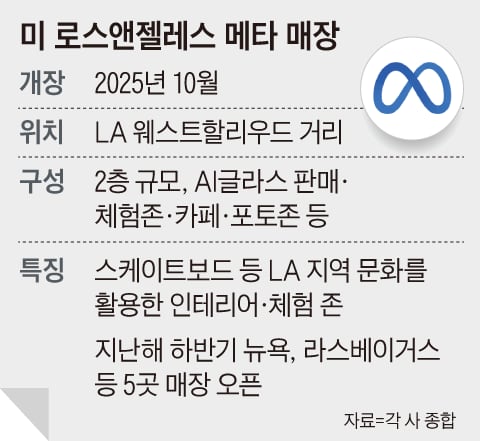
In October last year, a two-story large-scale store opened in Los Angeles, while pop-up stores were introduced in New York, Hawaii, and Las Vegas. The AI smart glasses became popular, with stock selling out several times both online and in physical locations. The tech industry has commended the Meta Ray-Ban Display as “the first product to showcase the potential of glasses as an AI device,” highlighting that although many smart glasses have been launched, none have reached widespread adoption like this one.
To generate consumer interest, every store was created with a distinct regional theme. In New York, Meta worked with artists to showcase installation art and pieces within the store. In Las Vegas, a store was established inside a hotel aimed at tourists.
◇Securing the image of an AI device expert
Meta seeks to establish itself as the top company in the field of AI devices. Although numerous companies have introduced advanced AI models, OpenAI’s ChatGPT continues to be the most well-known among everyday users. Similar to how “AI models” are associated with OpenAI and “smartphones” with Apple, Meta hopes to take control of the “AI devices” market. A Meta employee at the LA store mentioned, “Many customers discovered Meta’s AI devices only after coming to the store. Some were taken aback, saying, ‘I thought this was an Instagram event, but you also sell glasses?’”
The rivalry in the AI device sector is growing, with Meta at the forefront. In addition to Meta, Google, Amazon, and Apple have also stepped into the smart glasses arena. Google introduced “Google Glass” in 2013 but pulled it from the market after two years because of poor reception, and has now restarted its development. OpenAI, seeking to “design an entirely new device,” is working on a new product headed by Jony Ive, the former iPhone designer. Smartphone manufacturers such as Samsung Electronics and Apple are also entering the AI device competition by incorporating AI capabilities into their mobile devices.


 jasdooit
Leave a comment