
Australia’s inflationthe rate has been released below what economists had predicted, increasing hopes that the reserve bank could delay raising interest rates in the coming month.
Government data indicates that inflation decreased to 3.4 percent in November, a decline from 3.8 percent in October. Analysts had predicted a more modest reduction, to 3.6 percent.
In simple terms, costs are still increasing, but at a slower rate than before.
Housing continued to be the primary factor influencingrising prices, with housing expenses increased by 5.2 percent in the last year.
Food prices went up by 3.3 percent, while transportation expenses climbed by 2.7 percent.
Goods inflation remained stable, dropping to 3.3 per cent year-on-year as the increase in electricity costs decreased significantly. Electricity prices increased by 19.7 per cent in November, a decline from the 37.1 per cent rise recorded the previous month.
Service inflation also eased, dropping to 3.6 percent, following a rise in prices due to robust holiday travel demand in October.
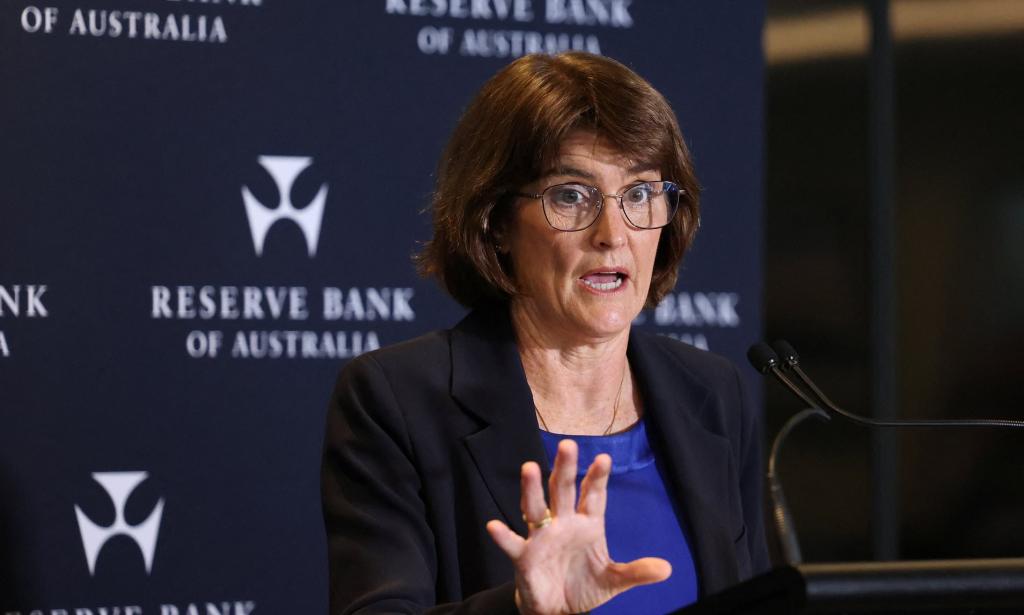
The central bank is scheduled to convene next month to determine the course of action regarding interest rates, as Governor Michele Bullock has indicated she is considering whether to maintain the current rates or increase them.
The Reserve Bank of Australia has indicated that two requirements must be fulfilled to prevent interest rate increases in 2026.
Initially, inflation figures would have to demonstrate that recent increases in prices were caused by short-term elements instead of long-lasting influences like services and housing.
Second, the bank would have to be certain that financial conditions remain stringent enough to drive inflation downward.
Prior to the release of inflation data, the Commonwealth Bank and NAB predicted a 0.25 percentage point increase in the interest rate, whereas ANZ and Westpac anticipated that the cash rate would stay at 3.6 per cent.
VanEck’s deputy head of investments and capital markets, Jamie Hannah, stated that the most recent data might have removed the possibility of an immediate interest rate increase.
“If inflation had kept rising, it might have secured a rate increase next month—the first in over two years,” he stated.
At present, the favorable results from today’s inflation data might be sufficient to prevent further interest rate increases for the time being, but the outlook for 2026 is still highly uncertain.
Some people believe the battle against inflation is not yet finished, with Warren Hogan, chief economic advisor at Judo Bank, stating that interest rates still have to increase.
“Less than a quarter of the CPI basket is below the RBA’s target range,” he said to Sky News.
The truth is that in the last six months, the economy has shown progress and inflation has risen, meaning the present interest rate may no longer be suitable.
I believe they ought to increase rates in February.
Capital Economics continues to maintain its position that the Reserve Bank may increase the cash rate as early as next month.
“It might still be too intense for the RBA’s preference,” remarked Marcel Thieliant, head of Asia-Pacific at Capital Economics.
With minimal extra capacity remaining in the economy and the job market still being competitive, there is a solid argument for the RBA to start adjusting its policy soon.
- Will Australia face additional cash rate reductions in 2025, or will concerns over inflation prevent the RBA from acting?
- Could ongoing inflationary pressures lead the RBA to impose interest rate increases on Australians as early as February?
- Is the RBA’s challenge with rising inflation likely to result in an unusual interest rate reduction this May, affecting your finances and loan expenses?
- Is the Reserve Bank set to lower interest rates in February despite increasing inflationary pressures?
- Is the central bank prepared to reduce interest rates as Australia faces economic challenges, even with unclear inflation results?




 jasdooit
Leave a comment