
The Lebanese military will include in its February report to the government an assessment of the second stage of a program aimed at disarming Hezbollah, according to Information Minister Paul Morcos, following a cabinet meeting that addressed the issue.
Morcos stated that the military will begin developing a strategy for disarming forces north of the Litani River, which will be reviewed by the government in February. He mentioned that the army will also keep advancing with the “containment” of weapons in other areas of Lebanon, indicating that these weapons will not be permitted to be used or relocated.
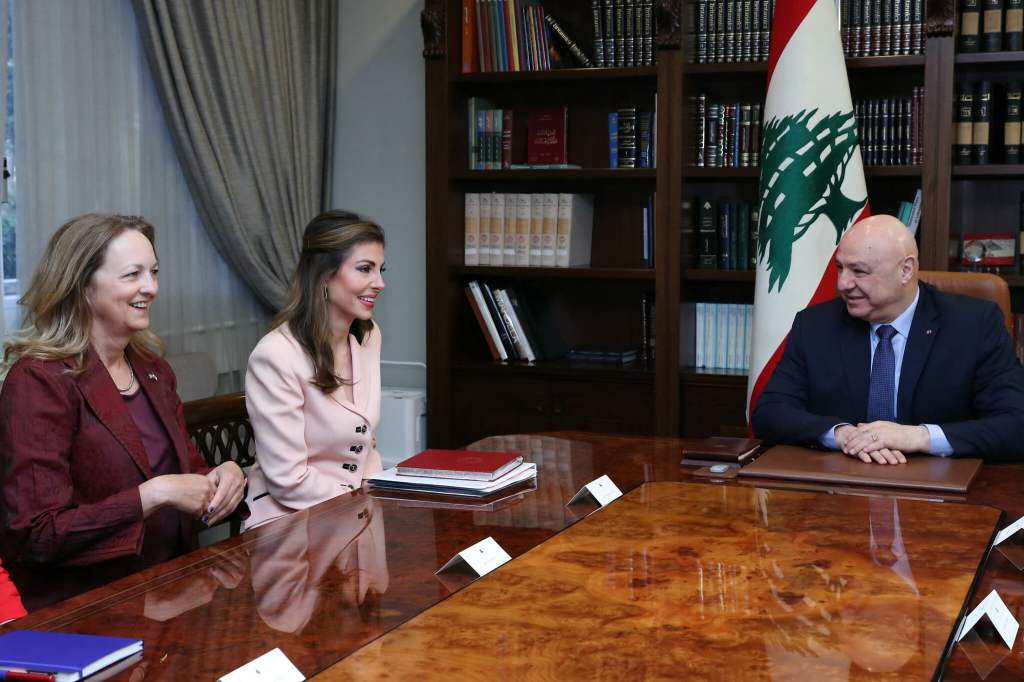
President Joseph Aoun participated in the cabinet meeting held at the Baabda Palace, where Army Commander Rodolphe Haykal provided the government with an update on the advancements in its disarmament strategy.
Prior to the session, the military stated in a release that it had completed the initial stage of their strategy to fully deploy throughout southern Lebanon and disband non-state entities, particularly Hezbollah.
The second phase will take place in southern Lebanon, north of the Litani River, reportedly between the Litani and the Awwali Rivers.
The President of Lebanon, the Prime Minister, and the Speaker of the Parliament all endorsed the army’s declaration, whereas Israel stated that the initiatives are positive but not adequate enough.
The attempt to neutralize Hezbollah follows a Washington-mediated truce that concluded a conflict between the group and Israel in 2024.
The authorities established a deadline of the end of 2025 to remove non-state weapons from the region south of the Litani River. The Lebanese armed forces have been eliminating tunnels, rocket-firing sites, and other facilities since their disarmament plan was approved by the government and became active in September.
Israel continues to attack Lebanon on a daily basis and maintains control over five “strategic” hilltop positions along the border, the only regions south of the Litani River that the military claims it has not yet taken full control of.
Authorities mentioned that the next part of the disarmament initiative will focus on areas in southern Lebanon between the Litani and Awali Rivers, which encompass the Lebanese port city of Sidon, although they have not established a schedule for this stage.
Ongoing discussions have occurred between the Lebanese and Israeli parties in conjunction with the United States, France, and the U.N. peacekeeping troops in southern Lebanon, to keep track of events following the truce.
Lebanon’s financially struggling armed forces have been progressively spreading out over large parts of southern Lebanon, from the Litani River up to the U.N.-established “Blue Line” that marks the border between the small nation and Israel. The armed forces have also been slowly seizing weapons from armed Palestinian groups in refugee camps.
Israel claims that Hezbollah is attempting to restore its damaged military capabilities and has stated that the Lebanese army’s actions are inadequate, fueling concerns of a potential new escalation. Meanwhile, Lebanon mentioned that Israel’s attacks and control over the hilltops are hindrances to their efforts.
Lebanon also expects that disbanding Hezbollah and other non-state organizations will assist in attracting funds required for rebuilding following the 2024 conflict.
Hezbollah claims it has been working alongside the military in the southern region but refuses to address its disarmament in other areas until Israel halts its attacks and leaves Lebanese land.
The most recent conflict between Israel and Hezbollah started the day following the Hamas-led assault on Israel on October 7, 2023, which initiated the war in Gaza. The militant organization Hezbollah, primarily located in southern Lebanon, commenced launching rockets into Israel in solidarity with Hamas and the Palestinians.
Israel carried out air strikes and artillery attacks. The minor conflict turned into a major war in September 2024. Israeli attacks resulted in the death of most of Hezbollah’s top leaders and significantly weakened the organization.
Hezbollah continues to wield political influence, with numerous seats in the parliament that represent the Shiite Muslim population and two ministers in the cabinet.
Provided by SyndiGate Media Inc.Syndigate.info).
 jasdooit
Leave a comment