
With Sudan nearing 1,000 days of civil conflict, the end of December and beginning of January witnessed a severe intensification of hostilities, as drone attacks targeted regions at the heart of the nation’s worsening food shortage.
As the Rapid Support Forces (RSF) move forward in western and southern Sudan, while the Sudanese Armed Forces (SAF) reinforce their hold on the east and the capital, people are facing a significant danger of being caught in the conflict. Thousands have been forced to leave their homes due to the violence, aid delivery is highly restricted, and the majority of civilians are struggling to obtain fundamental, necessary services.
Towards the end of December, the International Rescue Committee (IRC) published its yearly reportEmergency Watchlistreport, detailing the humanitarian emergencies in 20 nations and highlighting those most vulnerable to worsening situations by 2026. For the third consecutive year, Sudan was listed first, with the IRC referring to the country’s situation as the “most significant humanitarian crisis ever documented,” along with the biggest and fastest expanding displacement crisis globally.
“This crisis is completely of human origin,” stated Eatizaz Yousif, the IRC country director for Sudan. “The continuous conflict has destroyed means of living, displaced millions, and prevented life-saving assistance from reaching those in critical need.” According toIRC estimatesApproximately 150,000 Sudanese civilians lost their lives in 2025 — a figure anticipated to increase in the coming year as the conflict escalates and deteriorating emergency services face mounting challenges in addressing the surging demand.
The initial week of 2026 has been highly unstable for the besieged population in Sudan. From January 1 to 3, several drone attacks took place in Dilling, South Kordofan, resulting in many civilian casualties and injuries, as well as creating significant fear among the local people.
On January 3, unmanned aerial vehicles conducted strikes on a marketplace and a medical facility in the Al Zurg and Ghurair villages located in North Darfur, an area referred to by the United Nations (UN) as the “heart of Sudan’s food crisis,” resulting in significant destruction. On the same day, two drone attacks took place in the Kulbus region of West Darfur, forcing more than 600 residents to flee their homes.
According to figuresAccording to the International Organization for Migration (IOM), from December 31 to January 4, more than 1,000 residents were forced to leave their homes and move to South Kordofan due to conflicts. On January 6, intense fighting between opposing groups led to over 2,000 people fleeing North Kordofan within one day.
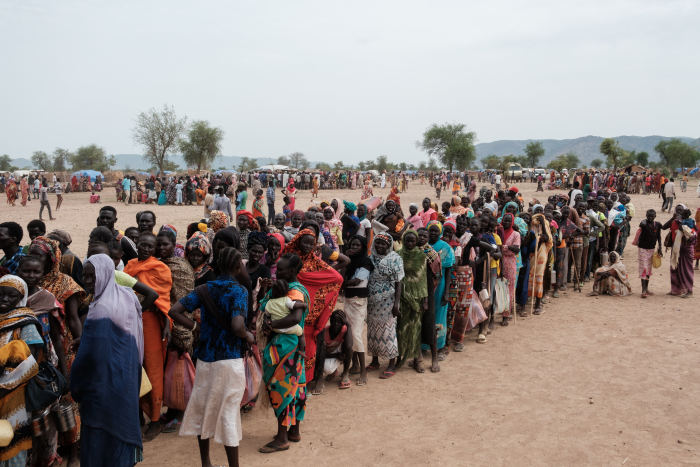
The situation for displaced civilians in North Darfur is extremely critical, with the IRC emphasizing a significant shortage of access to essential services. Around 400,000 families escaping violence from nearby El Fasher have come to Tawila, placing a heavy burden on the area’s already limited humanitarian resources. Many are residing in temporary shelters lacking sufficient food, clean water, and medical care. The IRC has also noted over 170 young children in Tawila who have been separated from their families, pointing to the serious protection challenges faced by those who have been displaced.
The image of these young children arriving by themselves, unaware of where their family members are or what has happened to them, is deeply distressing,” said Arjan Hehenkamp, the IRC’s Darfur crisis lead. “Extremely alarming reports and satellite images indicate that people are unable to escape El Fasher to safer areas such as Tawila, meaning they are stuck, held captive, or facing even worse situations.
On December 29, the United Nations International Children’s Emergency Fund (UNICEF) performed a nutritional evaluation in the Um Baru area of North Darfur—one of the regions hardest hit by conflict and food shortages—and discovered that 53 percent of almost 500 children examined exhibited symptoms of acute malnutrition, with many being under five years old. Eighteen percent of the children tested were diagnosed with severe acute malnutrition, which can be deadly within weeks if not treated.
Once severe acute malnutrition reaches this stage, time is the most crucial element,” stated Catherine Russell, Executive Director of UNICEF. “Children in Um Baru are struggling to survive and require urgent assistance. Each day without secure and unrestricted access heightens the likelihood of children becoming weaker and facing more deaths and suffering from preventable causes.
According to projections from the Integrated Food Security Phase Classification (IPC), approximately 21.2 million people in Sudan—almost half the population—are facing significant food insecurity, with more than 3.7 million children under five, as well as pregnant and nursing women, in immediate need of treatment for severe malnutrition. In addition, famine was officially recognized in El Fasher and Kadugli in November, with humanitarian specialists estimating that it might extend to 20 more areas in Darfur and Kordofan.
In late December, the Food and Agriculture Organization (FAO) unveiled an extensive seed distribution initiative to support winterization efforts and address Sudan’s escalating nutrition and food shortage crisis for the upcoming year. Initiated in Khartoum in November, the campaign is designed to enhance and restore local food production within Sudan. The FAO intends to assist more than 134,000 households, equivalent to 670,000 individuals, across ten states, namely Al Jazirah, Blue Nile, Gedaref, Kassala, Khartoum, Northern State, Red Sea, River Nile, Sennar, and the White Nile states.
Targeted families will be provided with a range of vegetable seeds such as eggplant, green pepper, jute mallow, okra, onion, pumpkin, rocket, snake cucumber, tomato, and zucchini. The initiative seeks to bring back a wider variety of foods, enhance household nutrition, and boost sources of living. This is particularly important for a nation like Sudan, where approximately 80 percent of people depend on farming for sustenance and earnings.
Furthermore, the UN and its collaborators are actively involved on the ground in Khartoum to enhance support systems for at-risk civilians. The United Nations Development Programme (UNDP) is currently working on clearing debris, distributing medicines, establishing temporary job opportunities, and offering psychological and social support.
In late December, the UNDP and the UN Secretary-General’s Peacebuilding Fund (PBF) initiated a campaign namedEnhancing Abilities for Peace and Social Unity in Kassala and Red Sea Regions, working alongside UNICEF, to advance gender equality, community unity, youth participation, fair leadership, and effective livelihoods.
Throughout the conflict, many of us experienced despair, but being part of this group provided me with a sense of direction,” shared Khawla, a young representative from Kadugli who was trained by the initiative. “When I observe young individuals paying attention, posing questions, and beginning to believe that peace is achievable, I realize our efforts make a difference. It goes beyond just raising awareness—it’s about reestablishing trust and reconstructing our communities from the foundation.
Copyright 2026 Inter Press Service. All rights reserved. Distributed by AllAfrica Global Media ().
Tagged: Sudan, Conflict, Peace and Security, East Africa
Provided by SyndiGate Media Inc.Syndigate.info).




 jasdooit
Leave a comment