
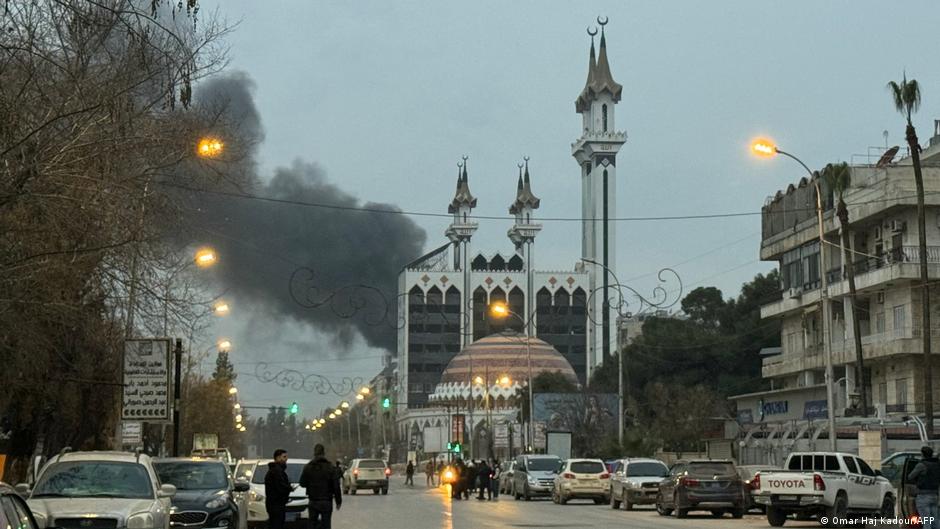
Tens of thousands of civilians evacuated the impacted regions of Aleppo as the military initiated attacks against Kurdish groups. The administration imposed a nighttime restriction, with the ongoing conflict causing disruptions to air travel, businesses, educational institutions, and academic facilities.
The Syrian military carried out new attacks on sections of Aleppo on Thursday, following orders for residents to evacuate regions from which it claimed the Kurdish-backed Syrian Democratic Forces had conducted assaults.
The military issued multiple maps highlighting regions it claimed would be hit during the attacks and advised locals to evacuate for their security. It declared a curfew beginning at 3 p.m. local time (1200 UTC/GMT) in the Sheikh Maqsoud and Ashrafieh areas of Syria’s second-largest city.
The state-run news agency SANA referred to the strikes as “targeted operations” aimed at the military branch of the SDF, the YPG.
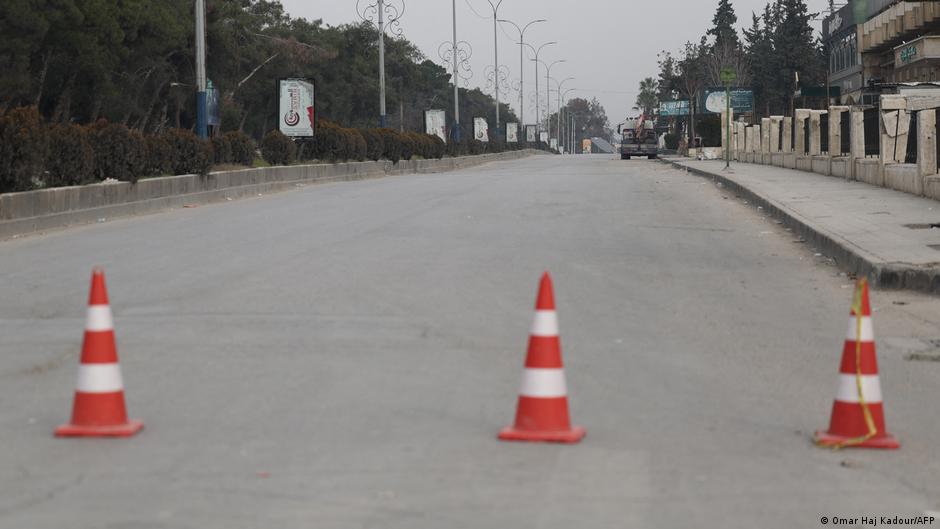
Airline services halted at the airport, with approximately 16,000 people believed to have evacuated
A temporary halt in flights at Aleppo’s airport was prolonged until late Friday due to ongoing conflicts, with AFP news agency stating that stores, universities, and schools were still closed in the impacted regions.
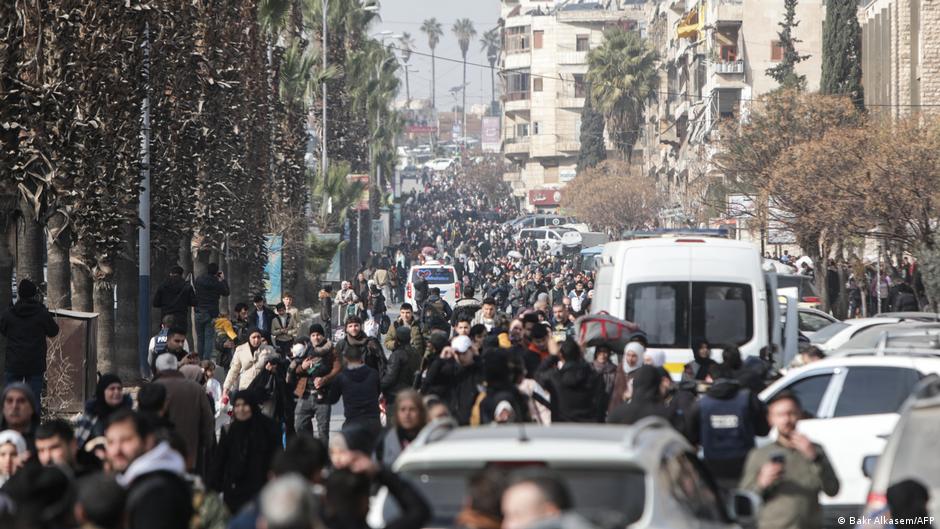
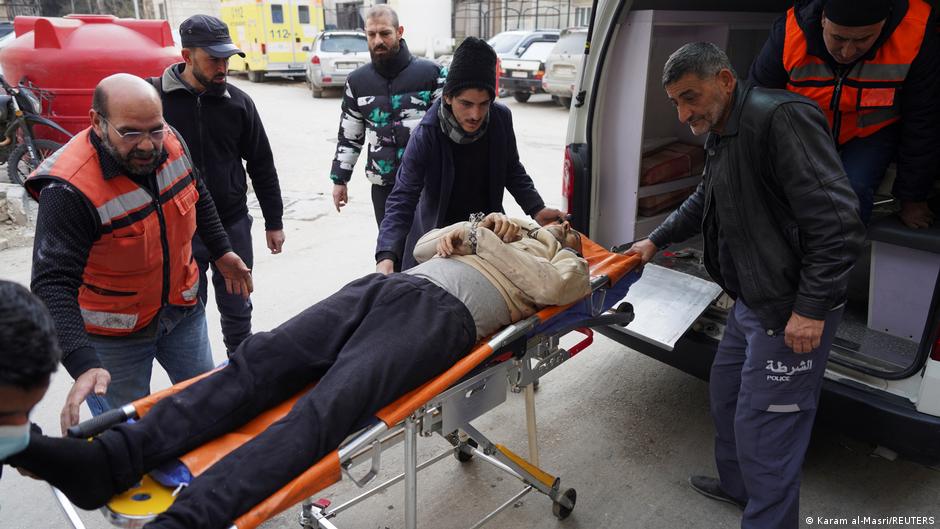
State television, referencing a civil defense official, reported that approximately 16,000 individuals had left the two regions under lockdown on Thursday, with at least 17 fatalities resulting from conflicts during the last three days.
As per the Directorate of Social Affairs and Labor in Aleppo, nearly 140,000 individuals have been uprooted within the broader area due to the ongoing instability.
“A significant number of them have complex medical conditions, are elderly, or are women and children,” stated Mohammad Ali, the operations director of the Syrian Civil Defense in Aleppo.
Challenging discussions between the new administration and SDF
The most recent clash,following smaller-scale conflicts in December, first erupted on Tuesday and has forced thousands of residents to leave their homes.
It occurs during a failure in attempts by Syria’s newly established government, led by President Ahmed al-Sharaa—a former Islamist rebel leader—to integrate Kurdish combat units into a restructured Syrian military following Bashar Assad’s downfall.
Due to the recurring conflicts between Turkish-supported groups and Kurdish forces throughout Syria’s civil war, these initiatives consistently appeared to be difficult, if not impossible.
The leader of the SDF, Mazloum Abdi, who was in Damascus on Sunday for US-mediated discussions aimed at rekindling the integration, stated that assaults on Kurdish regions in Aleppo “harm the prospects of achieving agreements during the negotiation period.”
Growing tensions between Turkey and Israel; US maintains delicate balance
Turkey, which had been a major supporter of al-Sharaa prior to his forces’ unexpected removal of President Bashar Assad in December 2024, considers the Kurdish fighters in Syria as part of the PKK, a Kurdish separatist group classified as a terrorist organization by Turkey, the United States, the European Union, and other entities.
The authorities in Ankara have stated that currently, they are only monitoring events along its southern border extending into northern Syria, but have indicated they would “offer the required assistance” if the Syrian government asks for it. Foreign Minister Hakan Fidan attributed the failure of talks to the SDF’s “inflexible position,” referring to the group as “the main barrier to peace in Syria.”
However, Israeli Foreign Minister Gideon Saar has stated that the “attacks conducted by the Syrian regime’s forces on the Kurdish minority … are serious and perilous.”
The European Union expressed “significant worry” over the increase in hostilities and urged “all parties to show self-control, safeguard civilians, and pursue a peaceful and diplomatic resolution.”
The United States, on the other hand, is balancing carefully. On one side, it has been a major supporter and partner of the SDF, particularly in the previous struggle against the so-called Islamic State in Syria and Iraq.
However, Washington has also supported the removal of President Assad and aimed to back President al-Sharaa’s expressed objective of emerging as a more moderate and inclusive leader during peaceful times, even though he previously led groups that the US classified as terrorist organizations such as the Al Nusra Front.
A representative from the State Department stated on Thursday that the United States was “closely observing the circumstances” and that envoy Tom Barrack was working to encourage additional discussions.
“All parties need to concentrate on creating a peaceful and stable Syria that safeguards and benefits the interests of all Syrians, instead of driving the nation back into a cycle of conflict,” stated the Department of State.
The conflict with Kurdish forces in Aleppo also occurs shortly afterconflicts between different groups and the Alawite minority population in the western part of the country, near the port city of Latakiaat the conclusion of December.
Edited by: Karl Sexton


 jasdooit
Leave a comment