
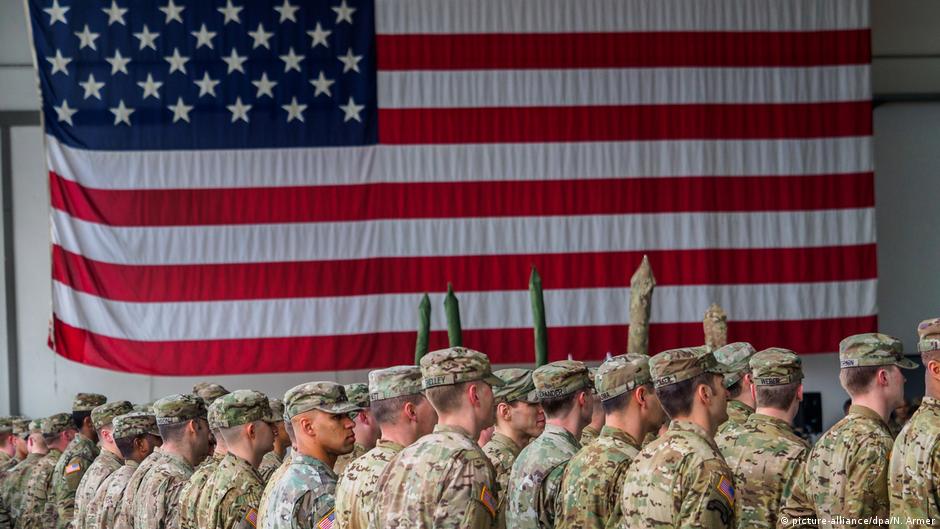
Donald Trump’s interest in purchasing Greenland has sparked doubts regarding the US’s dedication to NATO. The United States has a significant military presence in Germany — an essential element of its national defense strategy following World War II.
Germany has played a crucial role in the United States’ defense strategy in Europe since American troops were part of the Allied forces that occupied the country for a decade after World War II ended. Although the number of soldiers has decreased considerably over time, the U.S. military continues to have a significant presence in Germany, and throughout the years, U.S. military communities have developed around several German towns.
The number of American military personnel stationed abroad has increased substantially in recent years, moving from under 39,000 in 2019 to more than 50,000 by 2024. The only other nation that hosts a similar quantity of US troops overseas is Japan.
The United States increased its military presence in Europe after Russia launched a full-scale invasion of Ukraine in February 2022, with some personnel deployed to facilities in Poland, Romania, and Bulgaria. The US Army currently maintains approximately 10,000 troops at its base in Poland, along with an additional 2,600 at its Army Support Activity (ASA) Black Sea, which encompasses the Mihail Kogalniceau Air Base in Romania and the Novo Selo Training Area in Bulgaria. These forces are periodically replaced.
Role of EUCOM
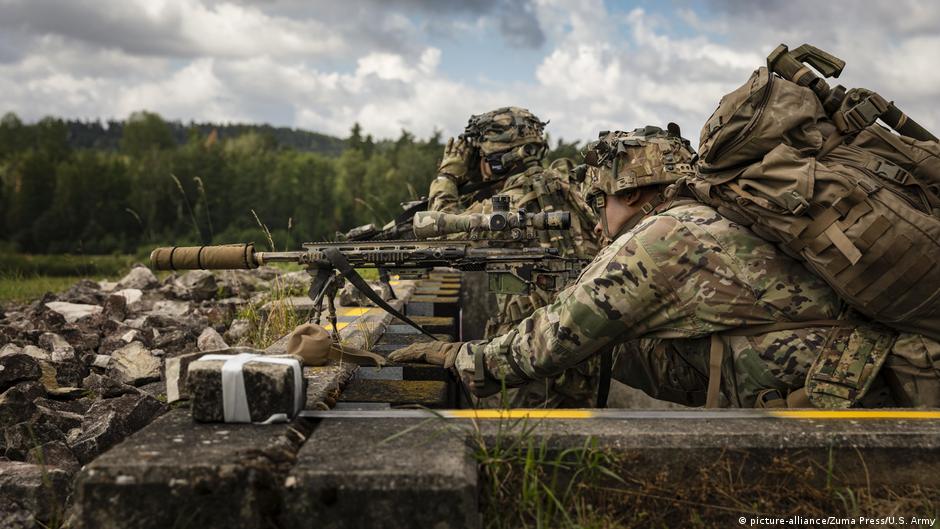
The significance of Germany for the United States is evident through the location of the European Command (EUCOM) headquarters in the southwestern city of Stuttgart, which acts as the central coordination point for all US military forces in 51 mainly European nations.
EUCOM outlines its objective as safeguarding the United States through preventing conflicts, fostering alliances like NATO, and addressing global challenges. It is led by the US Army in Europe, the US Air Forces in Europe, and the US Marine Corps Forces Europe and Africa, which maintain bases in Germany.
Germany hosts five of the seven US Army bases in Europe — the remaining two are located in Belgium and Italy — with the US Army Europe based at the facility in Wiesbaden, a city near Frankfurt in central western Germany.
Data shared by the US military indicates that these five bases, made up of multiple facilities in different locations, currently have approximately 29,000 personnel. This total includes the US Marine Corps Forces for Europe and Africa, which are based in Böblingen, southwest Germany, as part of the US Army Garrison Stuttgart.
Furthermore, approximately 13,000 members of the United States Air Force are stationed in different places throughout Germany — mainly at the two US Air Force installations of Ramstein and Spangdahlem.
A formal government reply to a query from the socialist Left Party in 2023 revealed that the German state also covers part of the expenses related to sustaining US and NATO forces within the country. This amount is increasing. In 2020, the most recent year for which the government released data, Germany provided €108 million ($116 million) to support foreign allied troops stationed there, an increase from €100 million in the previous year.
More than troops
Since US military facilities also hire American civilians and service members may occasionally take their families with them when stationed abroad, significant American civilian populations have developed near certain bases in Germany. Indeed, some US bases in Germany, like the one close to Ramstein, function as miniature towns, featuring their own American shopping centers, schools, postal services, and police departments. At times, the only accepted currency is the US dollar.
One of the most significant instances is the US Army Bavaria Garrison located in Grafenwöhr, close to the Czech Republic border. It stands as the largest US military installation outside the country, both in terms of population and land area, spanning more than 97,000 acres (390 square kilometers).
Military facilities frequently hire numerous local residents, and previous base closures, like the one at the army post in Bamberg in 2014, had a significant impact on the regional economy.
Although Germany has “explicitly given up ownership of nuclear weapons,” as Chancellor Friedrich Merz stated in 2025, the nation has housed US nuclear arms since the 1950s under NATO’s nuclear-sharing program. The precise quantity of US nuclear weapons has not been officially disclosed, but estimates indicate that approximately 10 to 20 B61 bombs are located at Germany’s Büchel air force base in Rhineland-Palatinate. In case of conflict, these would be deployed using German aircraft.
Another point of disagreement is the role of the Ramstein Air Base as a command hub fordrone strikes in Yemenand in other places. This has caused critics to accuse the German government of being involved in extrajudicial killings conducted by the United States.
Allied postwar occupation
Following the Allied occupation of Germany after World War II, which lasted from 1945 to 1955, large numbers of American, British, French, and Soviet soldiers were deployed in the country at any given time.
The eastern region of the country, which officially became known as East Germany in October 1949, came under Soviet administration.
In post-war Germany, the occupation was governed by the Occupation Statute, which was finalized in April 1949, coinciding with the nation’s establishment. This agreement permitted France, the United Kingdom, and the United States to retain their military presence within the country and retain full authority over West Germany’s disarmament and demilitarization processes.
After the military occupation of West Germany came to an official end, the nation resumed authority over its defense strategy, although the Occupation Statute was replaced by a new agreement with its NATO allies.
This agreement, referred to as the Convention on the Presence of Foreign Forces in the Federal Republic of Germany, was finalized in 1954 by West Germany. It enabled eight NATO countries, among them the United States, to maintain a continuous military presence within Germany. The treaty continues to govern the rules and circumstances under which NATO forces are currently based in Germany.
The number of US military personnel has been decreasing since the end of the Cold War in 1990, when, as reported by the German government, approximately 400,000 foreign troops were stationed in Germany. About half of these were American military personnel, but they were progressively removed as tensions with the remaining Soviet Union diminished, and conflicts in other regions, like the first Gulf War in Iraq, required more US military presence.
Although the number of American soldiers in Germany has increased in recent years, the current figure remains a small portion of the level seen during the peak of the Cold War.
Edited by: Rina Goldenberg
This piece was first released in August 2019, whenThe first-term President, Donald Trump, stated he intended to withdraw American forces from Germany.and revised on January 9, 2026, to incorporate changes in US politics across different presidential terms.
While you’re here: Each Tuesday, editors summarize developments in German politics and society. You can subscribe here for the weekly email newsletter, Berlin Briefing.
Author: Ben Knight

 jasdooit
Leave a comment