
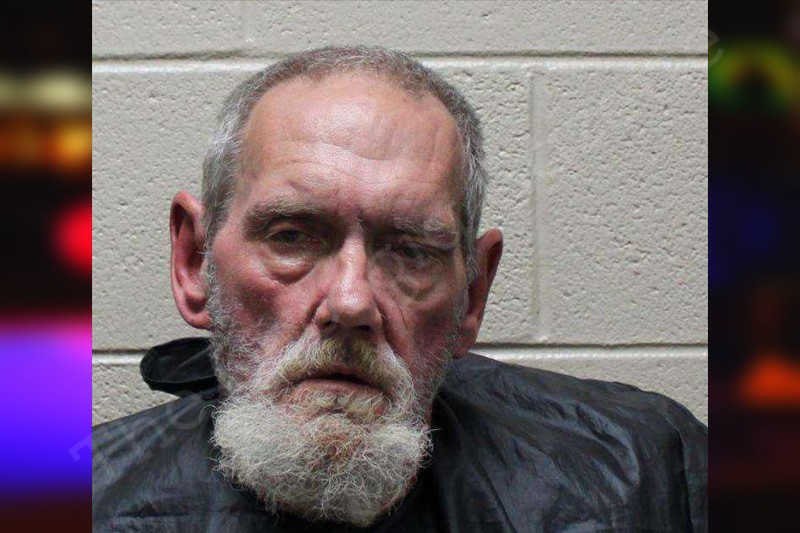
In the early hours of January 1, as fireworks illuminated the sky and families throughout Nigeria welcomed the New Year with hope and prayers, 13-year-old Timothy Daniel was found lifeless on the ground in the Ete community within the Ikot Abasi Local Government Area of Akwa Ibom State.
His blood and brain matter spread across the ground, thanks to a single, merciless shot to the head from a soldier’s rifle.
Timothy was killed by a soldier whose attire and weapon should never have granted him the right to take a life.
This is yet another instance of military impunity directed at an unarmed, young citizen. The military officials are responsible for this act of arson.
Therefore, Nigeria needs to put an end to the rule of aggressive individuals in uniforms.
Timothy’s life was tragically ended before he could witness the dawn of New Year’s Day.
His offense was bravery combined with a touch of innocence. His consequence was execution.
This was not a coincidence. Nor was it an act of self-defense. It was murder, straightforward and undeniable, carried out by a lascivious rogue in military attire who viewed his power as a permit to intimidate, attack, and take lives.
The facts are as shocking as they are angering. Timothy and his 15-year-old sister had just left a crossover church service, looking for a brief moment to use the restroom after several hours of worship.
Close by, a soldier assigned to guard duty at an oil company facility chose to act aggressively. He is said to have made inappropriate advances toward the young woman; she rejected him strongly. Unfazed by her refusal, this weak individual slapped her backside in an exaggerated demonstration of superiority.
As Timothy, a courageous young man standing up for his sister’s honor, stepped forward to face the attacker, the soldier did not react with speech or control, but with deadly violence: a bullet to the head. Timothy fell lifeless immediately. A child’s life was ended because of a wounded pride.
This uncontrolled murderer is worthy of nothing less than the harshest punishment allowed by law—capital punishment for murder, as Nigerian legal principles require for such deliberate brutality.
The Constitution safeguarded Timothy’s life, yet it was unlawfully taken, creating an unfillable gap within his family and the community. He was defenseless, pure-hearted, and brimming with potential.
However, in a nation where law enforcement frequently serves as judge, jury, and executioner, his passing represents just the most recent mark on a history of unchecked violence.
Timothy Daniel is entitled to justice, not empty sympathy, not temporary sadness, not online discussions, but quick and firm responsibility that acts as a warning in a nation suffering from the serious lack of professionalism among its so-called guardians.
Extrajudicial executions have turned into an odd standard in Nigeria, where armed personnel use their weapons as instruments of fear.
Unlawful detentions, abuse, and fatalities while in custody are widespread, transforming those who protect peace into dealers of death.
Unarmed citizens are killed for refusing to pay bribes. A basic remark causes the dressed-in-uniform criminal to raise his weapon and shoot.
Protesters in Nigeria who advocate for peace are aware that they may face tear gas, injuries, detentions, and more simply for exercising their legal rights.
In 2019, a parent was fatally assaulted by law enforcement while transporting their two children to school in the Nyanya region of the FCT due to a minor traffic infraction.
His wife and children watched in horror as their breadwinner gasped his last breath, another family shattered by state-sanctioned brutality.
This aggressive soldier in Ikot Abasi, who ought to be fighting terrorists in the North, should not go unpunished.
Rather than concentrating on threats to national security, military personnel are increasingly diverted and involved in civilian conflicts, a perilous contradiction that undermines their professional dedication.
Regrettably, they direct their weapons against the people they pledged to safeguard.
This demands urgent institutional reform: strip away the veil of impunity, enforce strict rules of engagement, and remind these forces that they exist to serve the people, not lord it over them.
The past is filled with such horrors, each one serving as a severe criticism of institutional breakdown.
The Apo Six massacre of 2005 is still one of Nigeria’s most notorious incidents: five auto parts sellers and a young woman were killed at a roadblock in Abuja.
The police openly labeled them as armed thieves, placing guns as a weak attempt to hide the truth. An investigation panel revealed the falsehood, resulting in a hesitant apology from the Olusegun Obasanjo administration and minimal compensation of $20,300 per family. However, apologies cannot bring the deceased back to life.
From March 2019 to February 2020, TheCable documented a minimum of 92 cases of police-perpetrated extrajudicial executions—without including abuses that occurred during the COVID-19 period or deaths while in custody.
Security personnel act as though their uniforms provide them with sacred protection, disregarding proper procedures without any limits.
The same pattern occurs with unsettling consistency. In November 1999, troops destroyed a whole village in Odi, Bayelsa State, following the killing of some police officers by a few troublemakers. Traces of this unjust vigilante action reappeared in Okuama, Delta State, and further afield.
In times of conflict, there are established rules of engagement. However, Nigeria’s military often violates these, killing civilians under the guise of “collateral damage” even during periods of peace.
The Zaria incident in December 2015, carried out by the Army, resulted in the deaths of numerous Shiite worshippers in a senseless retaliation following a conflict with an Army official.
In more recent times, unintended drone attacks have resulted in the loss of civilian lives: Tudun Biri in Kaduna State in 2023, Safana in Katsina in February 2025, and incidents in Zurmi and Maradun, Zamfara.
These are not standalone mistakes; they indicate a flawed system in which accuracy and responsibility appear to be overlooked.
The military and security organizations need to go back to the beginning—enhance their professionalism, clarify their boundaries, and restore confidence. Unarmed citizens should not be regarded as adversaries to be eliminated.
A vital beginning: ensure wayward officers are held responsible quickly and openly. Too many escape punishment for serious offenses.
Two police officers received the death penalty for their role in the Apo Six killings, while Officer Matthew Egheghe was given the death sentence in 2014 for killing Victor Emmanuel in Yenagoa in 2011. However, the majority of those responsible go unpunished, encouraged by a tradition of secrecy. This situation needs to end.
Demonstrations are increasing regarding the death of Reene Good, 37, at the hands of an ICE officer in Minneapolis on Wednesday. Indeed, Minnesota asserts that the U.S. federal government is hindering inquiries into the incident, paving the way for a heated conflict.
Hence, fairness for Timothy Daniel should not remain trapped in a bureaucratic stalemate. The individual responsible for taking his life on New Year’s Day must endure the complete force of the law—legal action, sentencing, and capital punishment if appropriate. Anything less is not merely a breakdown of the system; it is a deliberate acceptance of wrongdoing, fueling a pattern where the defenseless bear the highest cost.
The administration of President Bola Tinubu, the Nigerian Army, and the judicial system need to take immediate action: conduct comprehensive investigations, pursue prosecutions aggressively, and implement significant reforms.
May Timothy’s blood call out in vain, marking the end of this era of fear. Leaders wearing military or police uniforms must no longer be permitted to drain the nation further. Nigeria’s children deserve security, not gunfire.
The Nigerian military, the oil corporation concerned, and the Akwa Ibom State administration are obligated to provide proper compensation to Timothy’s bereaved family.
Provided by SyndiGate Media Inc. (Syndigate.info).
 jasdooit
Leave a comment