
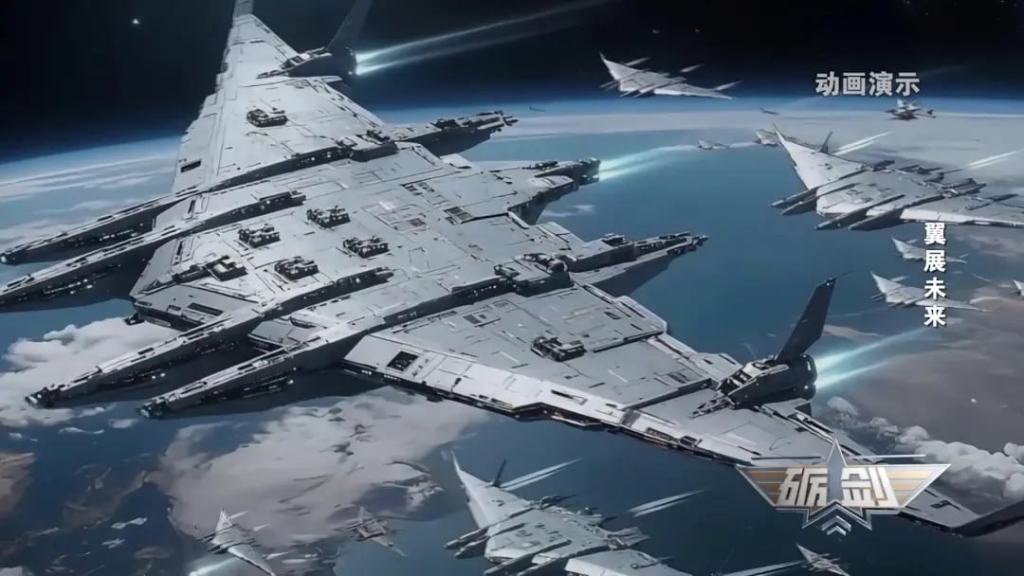
China is showcasing its aspirations for space supremacy by advancing a “Chinese Star Wars” initiative, which details a cutting-edge aerospace defense system. Lijian, a publication affiliated with CCTV’s military channel, reported on the 10th that the Nantianmen (Nántiānmén, meaning Heavenly Gate) plan is turning into a tangible project. Introduced in 2017 by AVIC (China Aerospace Industry Corporation), the Nantianmen plan represents a strategic vision for future military capabilities, incorporating an “integrated air and space defense system” that utilizes advanced fighter jets, drones, and other assets across air and space domains.
The main apparatus of the Nantianmen plan is the “Luaniao (Luánniǎo),” a Helicarrier (aircraft-carrying aircraft) inspired by a legendary bird. As stated by Lijian, the Luaniao is intended to measure 242 meters in length, 684 meters in width, and have a maximum takeoff weight of 120,000 tons. It represents a practical version of the Helicarrier, the aerial aircraft carrier that functions as a base in the Hollywood movie *The Avengers*.
The Luaniao is set to accommodate as many as 88 unmanned space fighters known as “Xuan Nü (Xuánnǚ),” inspired by a war goddess from Chinese mythology renowned for her tactical prowess. The Xuan Nü is characterized as an extremely agile unmanned fighter equipped with hypersonic missiles and capable of engaging in battle beyond the atmosphere.
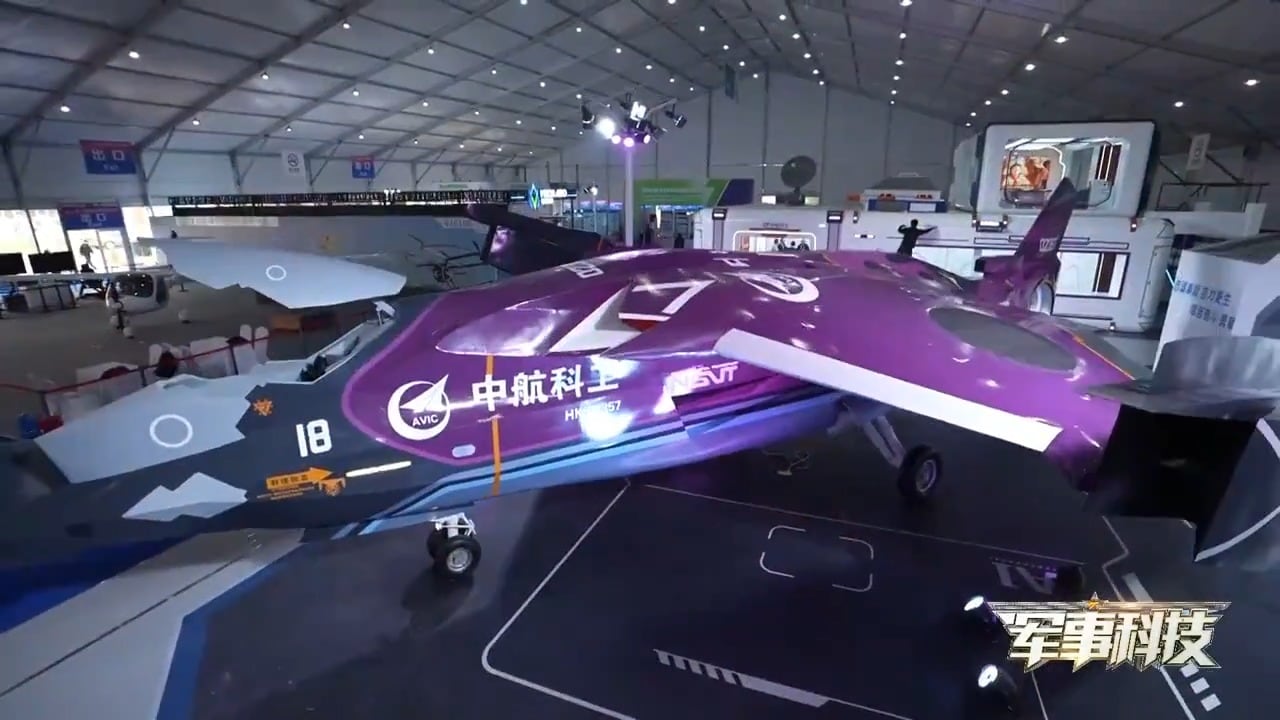
China has recently introduced models of aerospace weapons outlined in the Nantianmen plan at different defense exhibitions. At the 2024 China International Aviation and Aerospace Exhibition, a model of the Baidi (Báidì), an unmanned stealth aircraft, was presented. Last year, at the 7th Tianjin International Helicopter Expo, a model of the Zihuo (Zǐhuǒ), a vertical takeoff and landing fighter included in the Nantianmen plan, was demonstrated. The Zihuo is equipped with an artificial intelligence (AI) system that allows for independent decision-making and can reach speeds of up to 800 km/h. It is said to be designed specifically for search missions and disaster relief. The Luaniao has also been seen multiple times at the Zhuhai Airshow, suggesting that its development has moved into a more advanced stage.
Lijian noted that the weapons outlined in the Nantianmen plan challenge current standards in aerodynamics, propulsion, and flight techniques, commenting, “Although these designs are still in the conceptual phase, they offer a significant pathway for the advancement of future aerospace technology.” Chinese military analyst Wang Mingzhi (Wáng Míngzhì) remarked, “The Nantianmen plan represents an idea that combines various advanced technologies into one system,” and added, “The issue is no longer whether it can be achieved; instead, we should focus on what will be accomplished first.”




 jasdooit
Leave a comment