
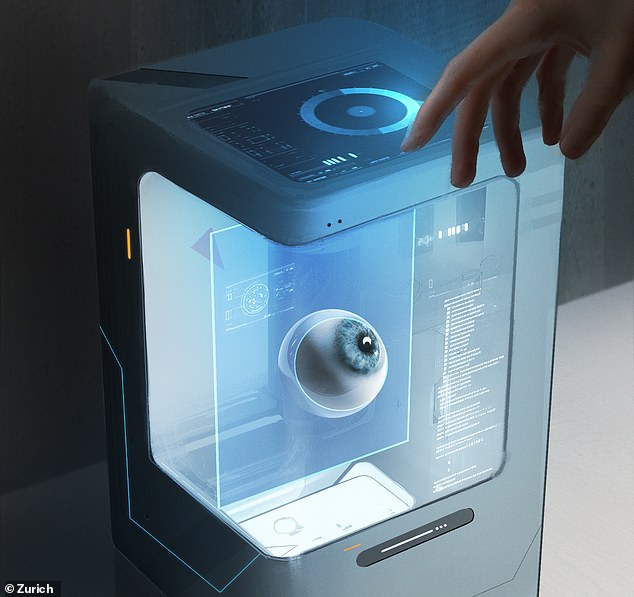
Organ transplants created using bioprinting technology, a space elevator, and robotic companions could seem like futuristic ideas – yet they may be achievable by the year 2050.
As stated by futurist Tom Cheeswright, he has forecasted the most thrilling advancements expected to enhance our lives by the midpoint of this century.
He has teamed up with astrophysicist Dr Alastair Reynolds to develop the most remarkable advancements that may soon be integrated into our daily lives.
This also involves tailor-made retinas, a nutrition plan centered around cultured meats and insects, and the end of the smartphone.
It has become popular to lament a future controlled byAI, robotics, and continuous technological advancement, but in reality, there’s a lot to be excited about,” Mr. Cheesewright stated.
If you step back and examine the advancements achieved in the 21st century, such as unraveling the human genome and the rapid growth of renewable energy as a primary power source, it’s evident that human creativity has the ability to surpass doubt.
In every sector, ranging from healthcare and housing to retail and travel, we are witnessing initial indications today of innovations that have the potential to improve our lives.
“If we support these courageous goals and leverage these advancements, the next 24 years could become the most remarkable period of human development in our extended history.” So, what are some of the innovations we can anticipate?

Artificially printed body components may substitute malfunctioning organs
The group is convinced that the healthcare system will be significantly different from its current state.
The move from treatment to prevention will lead to individuals enjoying longer, healthier lives, they stated.
However, new technologies will significantly enhance therapeutic effectiveness as well.
Easy access to 3D bioprinters will enable the creation of intricate organs such as kidneys, livers, or even eyes using patients’ own cells, eliminating the risk of rejection and removing the need to wait for compatible donors.
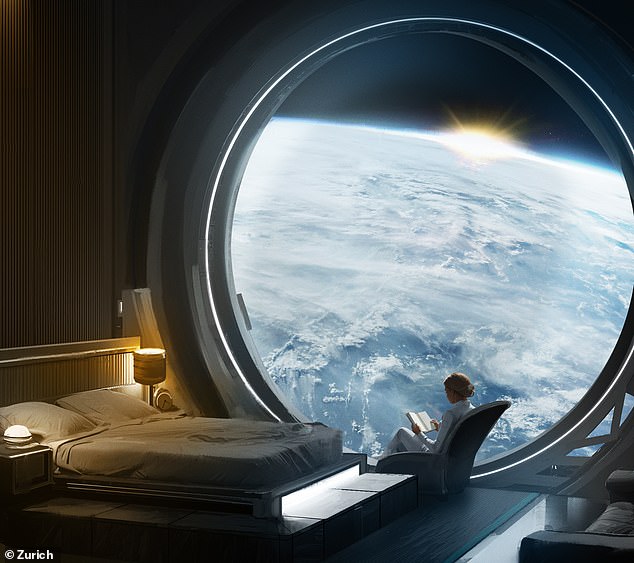
Work on the initial space elevator will begin soon.
“The upcoming era of space travel and exploration will involve the building of the world’s first space elevator, a massive structure designed to transport both goods and people into orbit,” they stated.
Smoother, more efficient, and less intense than a rocket, the final climb will last several weeks, providing a sustainable method to leave Earth’s gravity, accompanied by breathtaking scenery.

Androids and robotic roommates will be widely seen
By 2050, robotic roommates are expected to become sufficiently useful and affordable to be widespread, if not entirely common, in British households, according to the team.
Built to be small and simple to keep when not in use, they can help with simple home chores such as washing and ironing garments, disposing of trash, and maintaining cleanliness.
With sophisticated AI, these roommates will surpass manual tasks, providing companionship to individuals seeking dialogue or teamwork.
Synthetic meats and insects offer alternative sources of protein.
Experts think the amount of meat we consume will keep decreasing as alternative protein options become more widespread, and those who still eat meat choose quality rather than quantity.
Cultivated meat is expected to become affordable and delicious enough to serve as a practical option for individuals seeking to decrease their meat intake for ethical reasons.
In the meantime, they anticipate that insects will also be included in numerous menus. Although we are not likely to start consuming them in their whole form anytime soon, when processed into a powder, they offer a valuable source of protein and impart a nutty taste to pasta and bread.
The end of the smartphone era
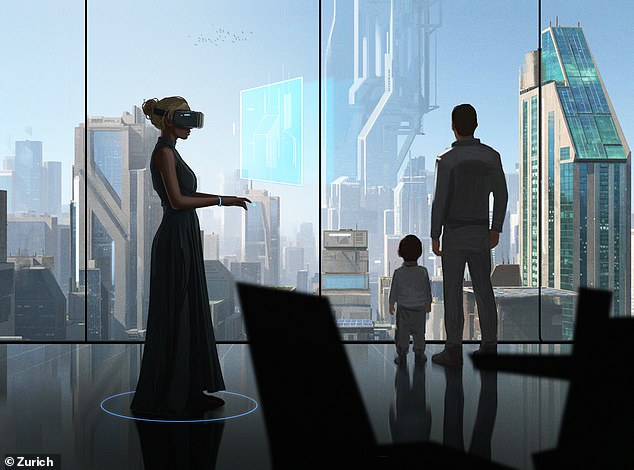
‘It could be difficult to envision at the moment, but we are at the threshold of the final age of portable gadgets,’ they remarked.
Over the next 25 years, smart glasses are expected to be the primary device for viewing and interacting with our surroundings. Household screens will also keep getting smaller, almost becoming invisible, with televisions turning into ultra-thin displays that resemble wallpaper, applied to surfaces without losing any of their high-definition quality.
According to research from Zurich, only one out of six UK adults feel positive about the future of the world, with Generation Z being four times more hopeful than Baby Boomers.
The team say their project, called ‘Meet Tomorrow, is intended to motivate and encourage individuals by generating enthusiasm for what lies ahead.
“Smartphones, streaming services, video conferencing, and digital assistants were all considered science fiction 25 years ago at the start of the new millennium, yet they have now become a normal part of daily life,” said Dr. Reynolds, who is also a science fiction author.
Change is unavoidable, making the prospect of looking ahead to the middle of the century an enticing opportunity for any writer.
How dedicated gamers might appear in two decades due to prolonged periods bent over their gaming systems
He has red, bloodshot eyes, a damaged skull, and burned hands — and in twenty years, you could end up the same if you don’t look after your health while gaming, according to experts.
Michael — the pale and hunched-over gamer of the future — is a disturbing example that illustrates how leaning over gaming systems could impact dedicated players.
This warning was created by experts using worldwide reports about the physical effects of the gaming lifestyle.
The group suggest several approaches for players to look after their well-being — such as frequent stretching, maintaining a healthy diet, and ensuring proper water intake.
The pandemic-induced self-isolation has resulted in a surge in online gaming, with players dedicating nearly 19 percent more time on average to gaming, according to specialists.
Although facing resistance from scholars and the gaming sector, the World Health Organization has officially classified video game ‘addiction’ as a mental health condition.

- Are we approaching the era of human immortality, with advanced nanobots set to transform medicine by 2030?
- Could Will Dyson’s bold £8 million-per-week investments in cutting-edge technology spark a new age of home advancements by 2025?
- Will innovations in technology take humanity towards a future filled with unprecedented advancements or potential catastrophe in 2025?
- Can artificial intelligence reveal the key to living forever? Learn about Bryan Johnson’s vision to overcome aging through technological innovation by 2039!
- Will biological chips and eyes with internet capabilities represent the final evolution of humans in the future?




 jasdooit
Leave a comment