
Locate a compact, durable carry-on bag that enables easy access to your laptop.
When this request was sent to an AI through a smartphone, travel bags immediately showed up in a suggested list. Once a desired item was chosen, a “Buy” button appeared, and the payment was made with just a few taps. There was no need to go to a shopping mall website. From searching to paying, the whole process happened within the smartphone’s AI in just a few seconds.
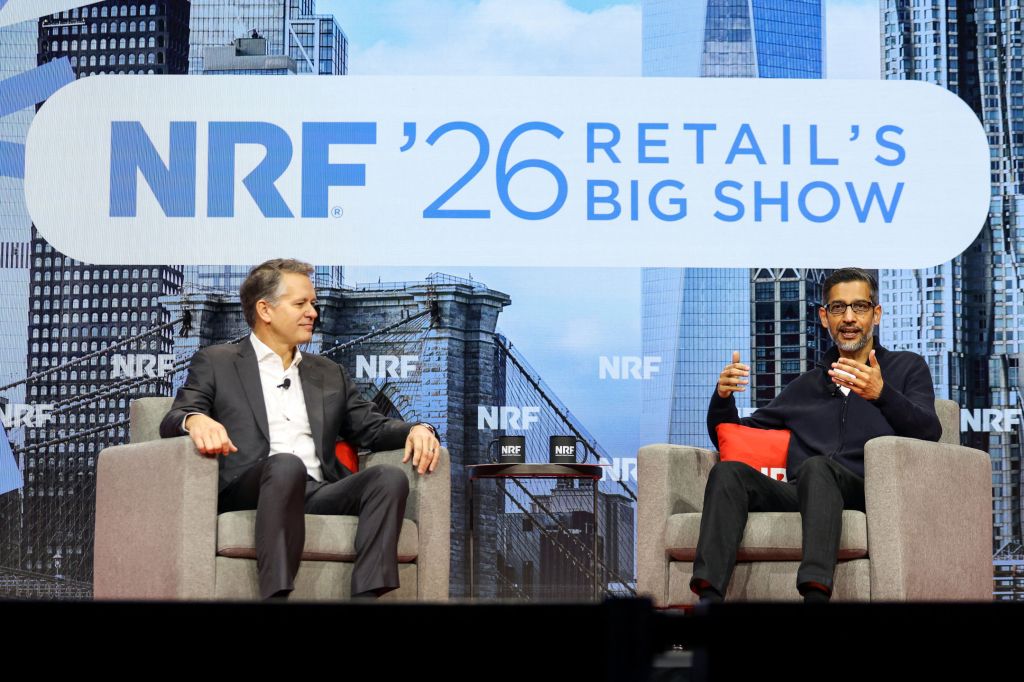
This was a scene from Google’s AI shopping service, launched on the 11th (local time) via its official blog. On the same day, during the National Retail Federation (NRF) event in New York, Google revealed its foray into the AI shopping market through collaborations with major retailers, including Walmart. The company mentioned that AI would extend beyond just suggesting products, comprehending customer needs, and managing the entire process—from comparing options, making choices, processing payments, to delivery—marking the beginning of an “agentic (secretary-style) commerce era.” Experts believe that tech companies, aware of the revenue constraints from AI chatbot subscriptions such as Gemini or ChatGPT, are now implementing advertising and commission-based models in AI search and commerce to generate income from the technology.
◇‘AI Platform Shift’… Redefining the Guidelines of Shopping
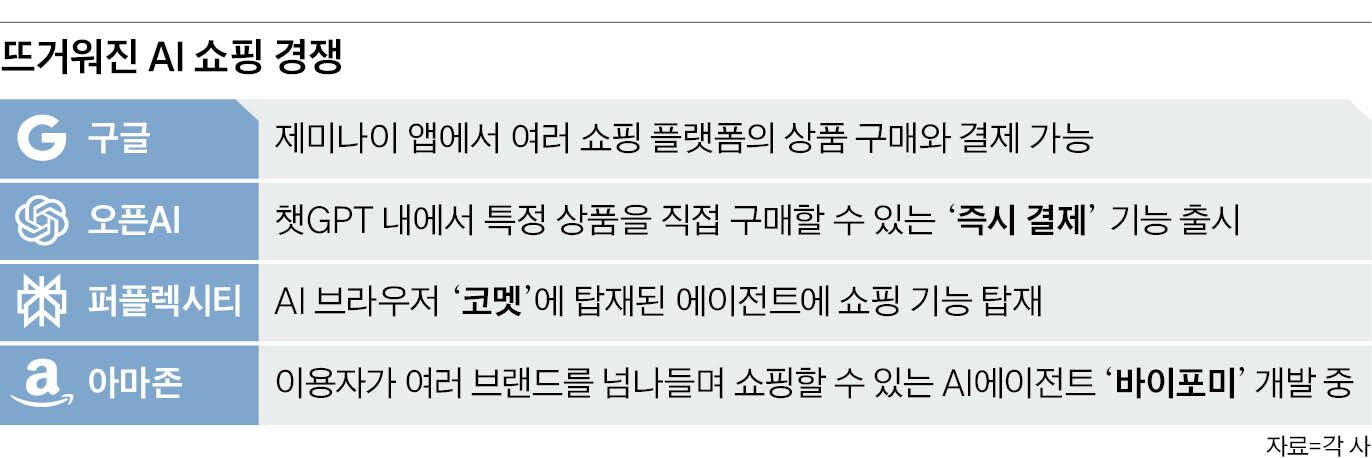
Sundar Pichai, the head of Google, stated, “We are launching a new open standard for agentic commerce that links customers and retailers to boost sales.” Using the “Universal Commerce Protocol (UCP),” created in collaboration with Walmart, Target, Shopify, Wayfair, Etsy, and other companies, Google intends to facilitate purchases and payments across various shopping platforms through its AI search feature and Gemini app.
AI shopping has emerged as a “competitive arena.” In September of last year, OpenAI introduced an “Instant Payment” function in ChatGPT, enabling direct purchasing of certain items. In October, it broadened AI shopping capabilities via a collaboration with Walmart, and in November, it launched “Shopping Research,” where AI helps with product exploration. Perplexity is also working on comparable AI shopping features, while Amazon is developing its own shopping AI.
The cause of this intense rivalry lies in the fact that retail is an industry offering clear financial opportunities. Artificial intelligence can systematically gather information about consumer preferences and likes while supporting buying decisions, and businesses can also generate income through transaction fees. A professional within the technology sector referred to it as “a competition focused on AI revenue generation and control over future data.”
◇‘Eil-gu (In the End, Google Wins)’?
It is anticipated that Google will take the forefront in the AI-driven shopping sector, thanks to the extensive user data it has gathered through platforms such as Gmail and Drive. Google currently handles more than 50 billion product listings worldwide in real time, with over 2 billion of these being updated on an hourly basis. This information encompasses pricing, inventory status, and customer feedback.
OpenAI does not possess this feature. Although OpenAI introduced a “Shopping Research” function in November of last year, which uses AI to locate and compare items, it has encountered delays in broadening the service because of challenges in combining fragmented data like pricing, inventory levels, different product versions, sales offers, and delivery rules.
The Information, a U.S.-based IT news platform, mentioned, “It remains uncertain how AI will impact shopping, but the difference between Google and OpenAI is clearly decreasing.” A source within the technology sector noted, “The AI-driven retail competition is a fight to control the operating system of the retail industry.”




 jasdooit
Leave a comment